
Upstox Originals
Three giants, one market, and trillions at stake

5 min read | Updated on May 18, 2026, 16:36 IST


SUMMARY
What could happen if some of the world’s largest AI and space companies go public in 2026? Mega IPOs from SpaceX, OpenAI, and Anthropic—together potentially valued at close to $3 trillion—may be on the horizon. These firms are leading transformative technological shifts. However, with elevated valuations and all three still operating at a cash burn, an important question remains: does the growth story really justify the optimism?

SpaceX is eyeing a $2 trillion valuation, and looking to raise $75 billion | Image: Shutterstock
You might have heard the headlines: mega IPOs are knocking on the door this year. And leading the pack? SpaceX.
It's eyeing a $2 trillion valuation, and looking to raise $75 billion in one shot. Yes, $75 billion. That's enough to make it the largest IPO the world has ever seen, leaving Saudi Aramco's $25.6 billion debut behind and easily dwarfing the likes of Tesla and Meta.
OpenAI and Anthropic are lining up right behind it. And together? These three could soon command a combined valuation of nearly $3 trillion, roughly 60% of India’s entire stock market value today.
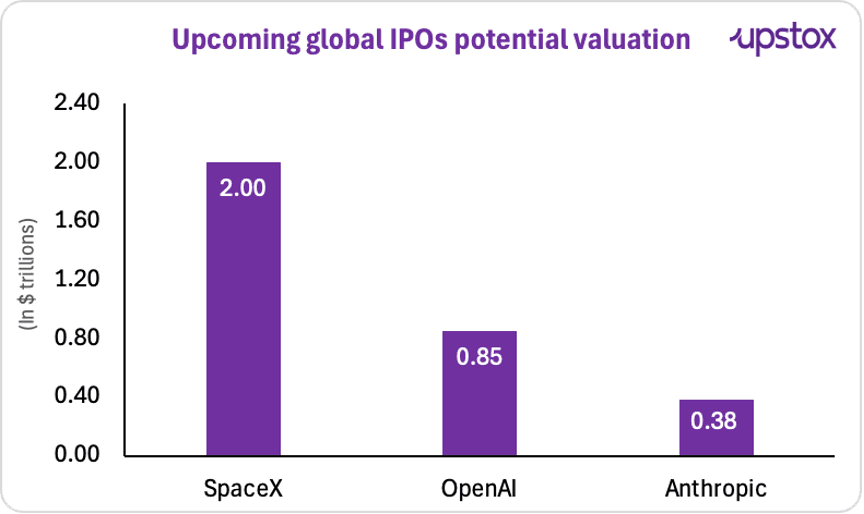
Source: State Street Investment Management
Sounds exciting, right?
But here's the catch. As per most market experts, all of these IPOs are overvalued, and none of them are profitable yet. SpaceX alone posted a nearly $5 billion loss last year on $18.6 billion in revenue. OpenAI and Anthropic? Also deep in the red.
And that begs the question: are these IPOs the deal of the decade, or the bubble of it? To answer that, you need to look at three things:
Valuations stretched. Profits? Still catching up.
| Company | Valuation | Valuation Multiple | Losses |
|---|---|---|---|
| SpaceX | $2 trillion | 108x revenue | Lost $5 billion in 2025 |
| OpenAI | $852 billion | 65x sales | Expected to lose $14 billion in 2026; HSBC estimates $218 billion cash burn between 2026–2029 |
| Anthropic | $380–500 billion | 13x–17x revenue | Lost $4 billion in 2025; projected $11 billion losses in both 2026 and 2027; not expecting to turn a profit until 2030 |
Source: News articles
SpaceX recently merged with xAI, which has added ~$100 million in revenue last year, but with limited or no profits.
The AI industry is still in a nascent stage, but it is witnessing fierce competition. As such, these companies are expected to incur huge capex to build the underlying AI infrastructure, model training costs, among others. With costs piling up, profits are still further down the road.
For example, Anthropic does not expect to become profitable till 2030.
Can history repeat?
In March 2000, Cisco Systems briefly became the world's most valuable company. Then the bubble burst. The stock fell 90%, hitting $8.60 by October 2002, and investors who bought at the peak had to wait 26 years just to break even.
To be clear, we are not saying history will repeat this time around as well. But history has definitely taught investors one thing – making gains at such stretched valuations is a herculean task in the best of market conditions. Given the ongoing geopolitical concerns, rising inflation, and concerns around the general AI bubble, the road ahead looks tough for investors.
US markets, already pricey?
And then there's the market itself. The S&P 500 is trading at a P/E of 30x, well above its long-term average of 19x. So these IPOs aren't just expensive on their own, they're entering an already expensive market. Now throw in a fresh wave of trillion-dollar listings, and it's easy to see where the hype (and the money) could flow next.
Read more about this in our recent piece: US markets at all-time highs, is the party about to end?
Wait, then what's driving all the buzz?
These companies are truly at the cutting edge of innovation. The global cycle right now is being driven by AI and deep tech, areas where with very few listed options. So for investors looking for that kind of exposure, these companies do stand out.
SpaceX, more than just a rocket company. It's a bunch of businesses rolled into one, reusable rockets, contracts with NASA, and Starlink.
And Starlink is the real revenue driver here. It's basically the internet from space, powered by SpaceX's own launches, and runs on 10,000+ satellites in low Earth orbit. (Wait, internet from space? Yep. Here's how it works.)
Today, Starlink serves 10 million+ users across 150+ countries and pulled in $10 billion in revenue in 2025 alone.
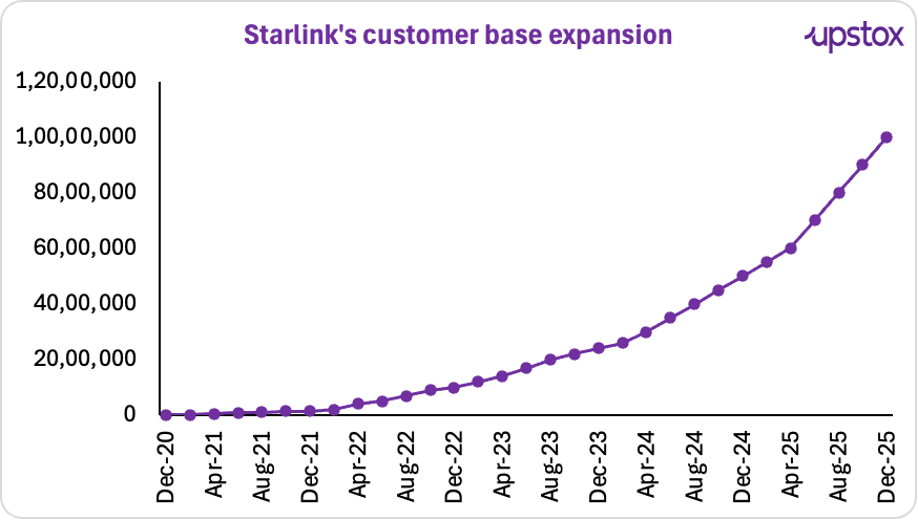
Source: News articles
Then there’s ChatGPT. It has reached over 900 million weekly users, nearly 15% of the entire internet, and has been growing at around 165% CAGR since late 2023.
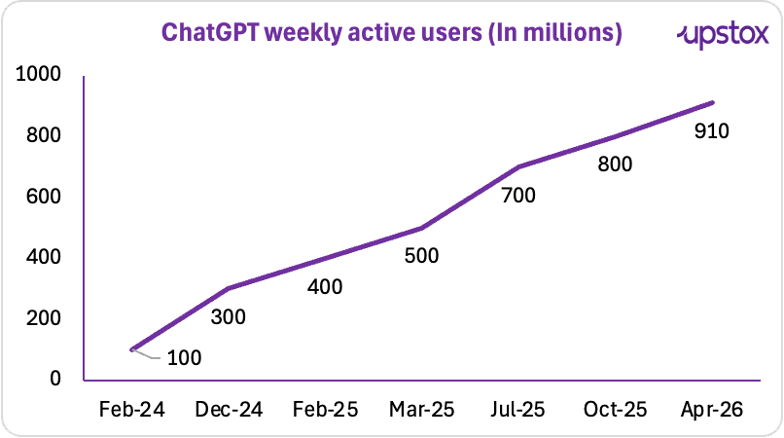
Source: OpenAI
Anthropic, known for its Claude AI models, is gaining traction with businesses. Over 500 customers now spend $1M+ a year (including 8 of the Fortune 10), and mid-tier spending has grown 7x. Claude Code has already pushed revenue run-rate past $2.5B, with ~19M web and ~7M mobile users.
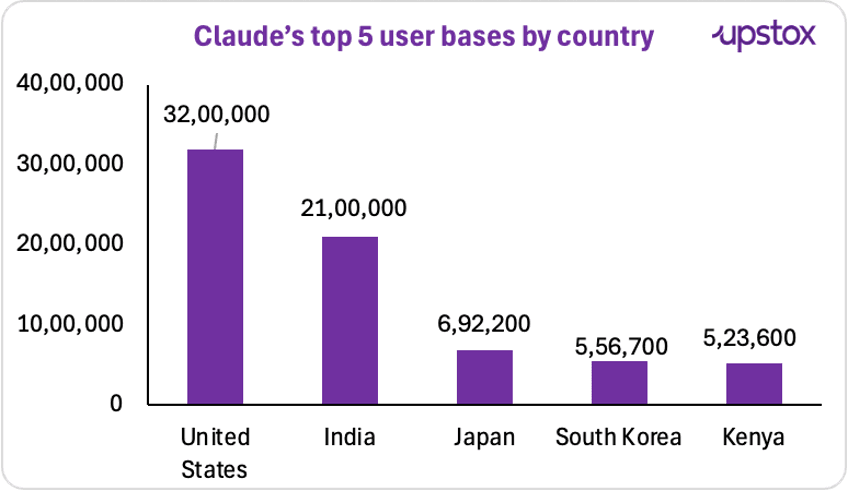
Source: News articles
And perhaps that explains why markets are still willing to look past the losses. Because despite the risks and stretched valuations, these companies are operating in areas where very few listed businesses currently exist.
Before you go
Whether these IPOs eventually justify their sky-high valuations or not, they signal something much bigger: global markets are increasingly rewarding companies building AI and deep-tech infrastructure at scale. And for Indian investors, this could mark a shift toward a new kind of global investing cycle, one driven less by traditional industries and more by frontier technologies shaping the next decade.
About The Author
Next Story

