
Upstox Originals
Delhi’s worst Diwali air in five years signals a wider north India smog crisis

5 min read | Updated on November 25, 2026, 14:13 IST

SUMMARY
Delhi recorded its worst Diwali pollution in five years in 2026, caused by local traffic, regional emissions and firecrackers despite strict winter curbs. Toxic smog is also affecting other cities of the northern plains. With air purifier sales doubling and young non-smokers falling ill, residents are struggling to survive the annual crisis.
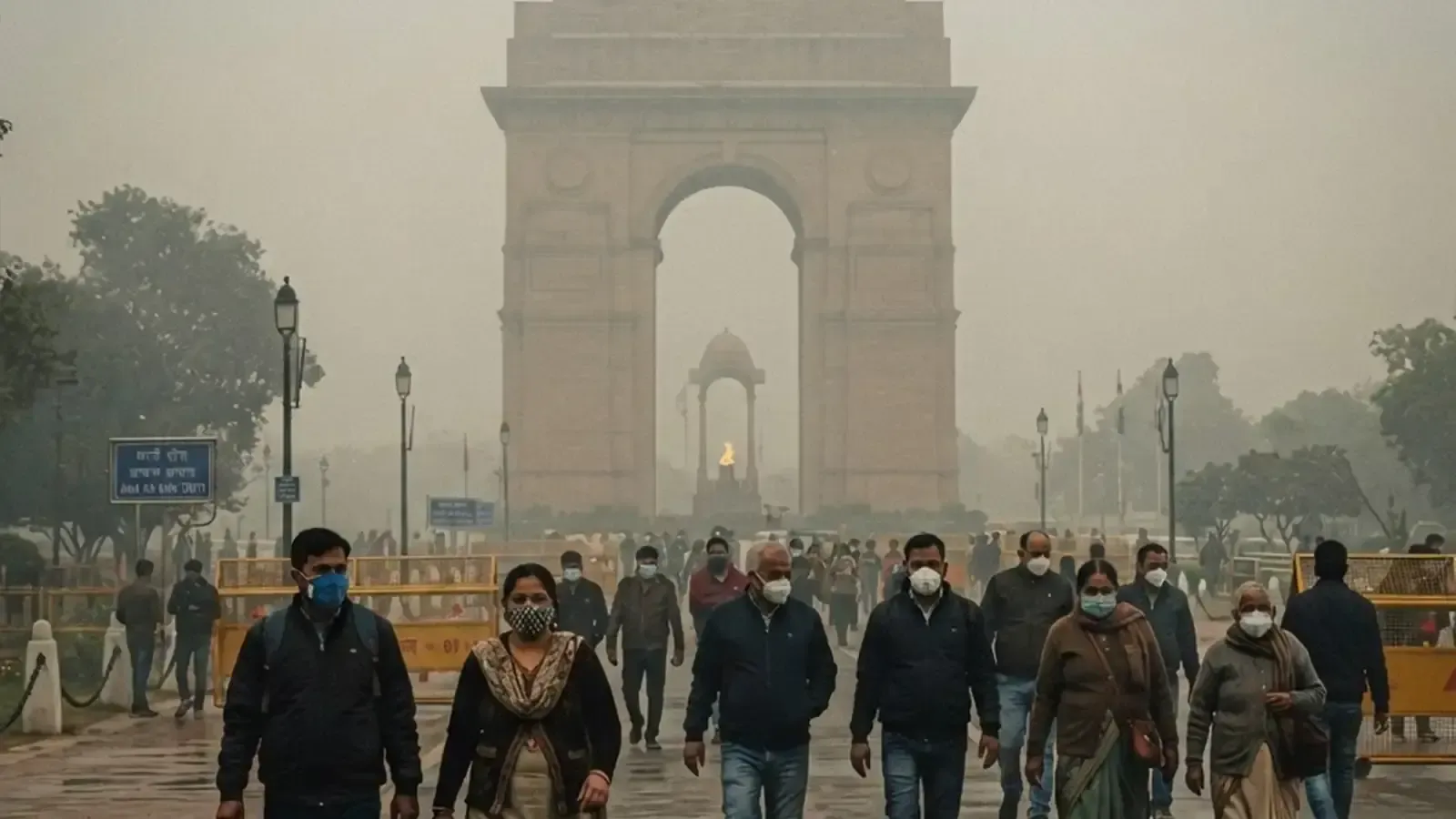
International trackers such as Swiss-based IQAir have recorded air quality readings in Delhi close to 1,000 on some days this year | Image: Shutterstock
Delhi woke up to a thick smog on the morning after Diwali, a trend that citizens have got used to over the years. But this year was different. According to the Central Pollution Control Board (CPCB), Delhi recorded its most polluted Diwali day in five years (since 2021) and its worst Diwali-eve air quality in a decade (since 2016). The smog in the morning after firecrackers made it difficult to breathe. Several active winter measures were in place, including vehicle and fuel curbs, doubling of existing parking charges at authorised parking sites, bans on dust-generating demolition and construction activities. However, the situation remains much the same. What’s more, the air pollution crisis spreads across the cities of north India and is not restricted to the national capital.
According to a November 2026 review by the Centre for Research on Energy and Clean Air (CREA), 31 of the 38 Indian cities exceeded the national PM2.5 standard in October 2026, putting them outside the ambit of the 130-city National Clean Air Programme (NCAP). In October 2026, six of India's 10 most polluted cities were in Uttar Pradesh , three were in Haryana, and one was in Tamil Nadu.
What’s causing the pollution?
The winter months create the perfect conditions for air pollution to set in. Temperatures fall and winds get slower. This traps pollutants close to the ground, not letting them disperse. Smoke from burning crop residue in neighbouring states adds to the problem. Emissions from vehicles and factories as well as dust from construction sites also contribute to the haze. Firecrackers on Diwali deal the final blow to these already hazardous conditions.
But a notable shift was witnessed in 2026. Severe smog persisted despite a lower proportional share from farm fires. According to the Centre for Science and Environment, between November 1 and 8, stubble burning accounted for roughly 14% of Delhi's PM2.5 whereas regional NCR transport and local vehicular emissions formed the dominant year-round baseline that firecrackers managed to push over the edge.
The Winter Action Plan
The Delhi government announced its action plan to combat smog even before it arrived. The plan will be in place from November 1 to February 28. Vehicles that fail to adhere to emission standards are denied. The entry of older, more polluting vehicles registered outside Delhi is restricted. Parking fees have also been increased and private vehicles are being discouraged from plying on the streets. Many offices are allowing half of their employees to work from home and have also introduced staggered office timings for staff in a bid to decrease pollution levels.These measures are different from the Graded Response Action Plan (GRAP) that kicks in each year to control the situation.
However, the success of these measures only depends on how well they are implemented. Parthaa Bosu, strategic adviser at the Environmental Defense Fund, a non-profit group focused on delivering climate solutions, explained in an interview to the BBC, “There are a lot of positive changes as far as planning is concerned, but when it comes to execution, we probably still stand at the same level." But other analysts point out the need to set targets for every sector, including power generation, industry and transport. Another source are secondary pollutants. Gases in the air react with sunlight, water vapour to form harmful particles. Moreover, pollutants travel into Delhi from neighbouring states, compounding the problem. Experts talk about the need for the wider northern region to work together to tackle air pollution.
Pollution is no longer just a Delhi crisis
The Indo-Gangetic plain stretching from Punjab and Haryana through Uttar Pradesh and Bihar to West Bengal, is a landlocked basin bordered by the Himalayas to the north. During the winter months, smoke, dust and industrial gases blow down this corridor, covering smaller towns and cities within this region. Moreover, while Delhi-NCR has put in place measures to mitigate pollution levels, smaller towns have seen economic growth without any regulations around curbing pollution.
Breathing in toxic air
Pollution is harming people’s health in every way. During winter months, government monitoring stations in Delhi frequently record Air Quality Index or AQI readings above 300, classified as "very poor". International trackers such as Swiss-based IQAir have recorded readings close to 1,000 on some days this year. These are alarming levels and way above WHO’s recommended average of PM2.5 levels.
A 2025 report by the Energy Policy Institute at the University of Chicago estimated that air pollution could reduce life expectancy in Delhi by up to 8.2 years. Air-purifier sales have surged this year in Delhi NCR. Retailers such as Croma reported that its air purifier sales volumes more than doubled in 2026. An Amazon India spokesperson confirmed to PTI that air purifier sales on the platform doubled in the week immediately following Diwali. Historically, Delhi-NCR has accounted for nearly 80% of India's total air purifier sales volume.
According to the World Health Organization, air pollution causes inflammation, oxidative stress, and cellular harm in lungs, brain, heart and other organs. It contributes to roughly 6.7 to 7 million premature deaths worldwide each year. Fine particulate matter or PM2.5 is known to travel into the blood stream causing immediate and chronic symptoms.
Pulmonologists at AIIMS and Apollo Hospitals have flagged a surge in young, previously healthy non-smokers presenting with persistent dry cough, chest tightness and throat inflammation.
Air purifiers and masks cannot be the only way to survive inside this smog. Policy makers need to shift from reactive emergency bans to coordinated multi-state management of the crisis with strict year-round enforcement. Until that is done, clean air will remain an unaffordable luxury for the common man.
Disclaimer: Views and opinions expressed in this article are the author’s own and not of Upstox.
About The Author
Next Story

