
Upstox Originals
What is holding back India’s piped gas transition

5 min read | Updated on June 02, 2026, 13:54 IST


SUMMARY
Could India’s kitchens eventually run like our internet connections, always on, no refills needed? That’s the vision behind India’s massive push toward Piped Natural Gas (PNG). It’s cleaner, safer, and could reduce dependence on imported LPG cylinders. But building a nationwide gas pipeline network is far harder than delivering cylinders door-to-door. So the real question is: can India scale PNG fast enough to truly change how its kitchens cook?
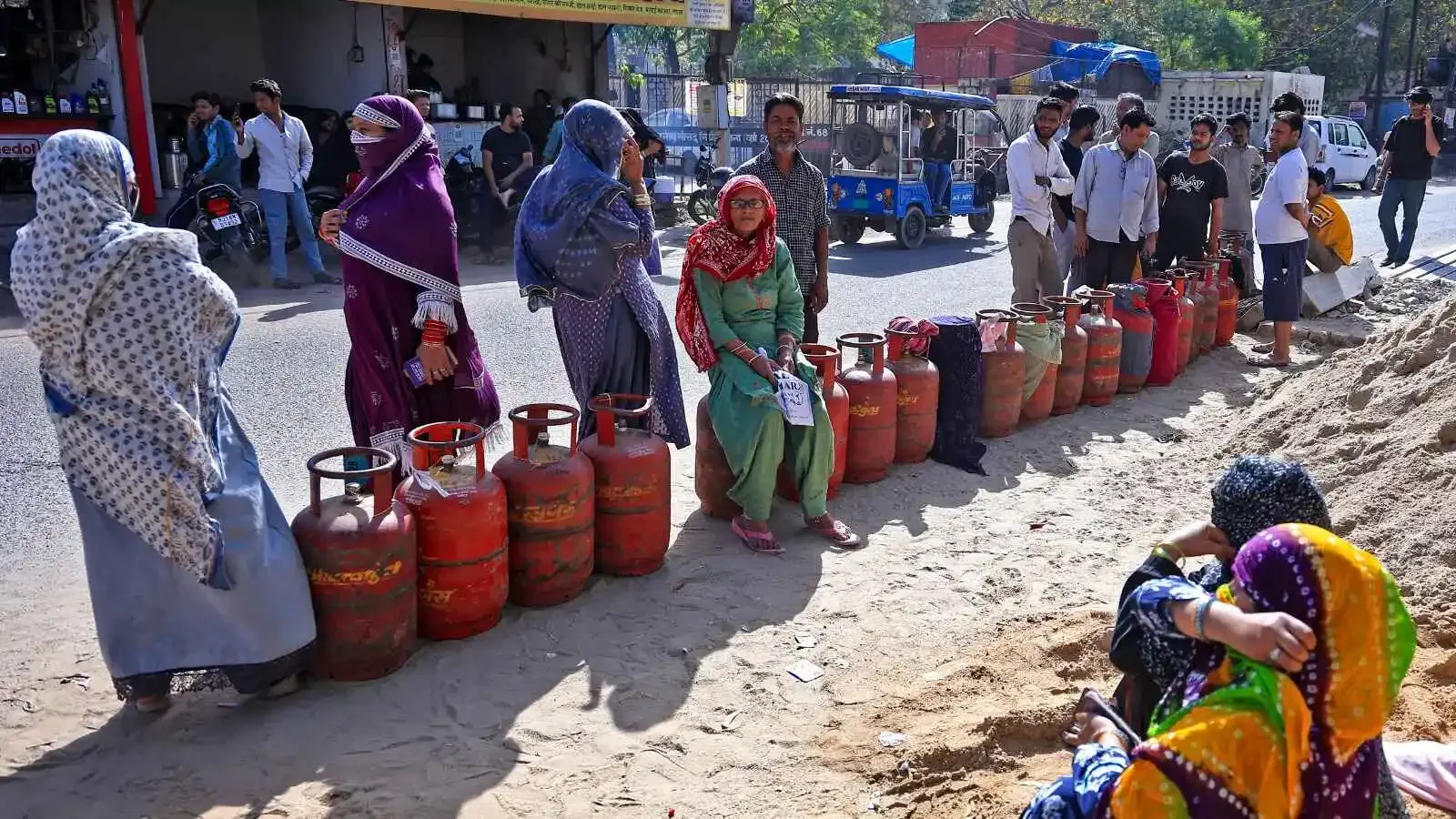
India already has 33.2 crore LPG connections and about 1.7 crore PNG ones. | Image: Shutterstock
If you've ordered an LPG cylinder, you know the struggle: packed slots, 4–5 day delays, even week-long waits.
Well, this shortage has led to the government aggressively pushing the usage of piped natural gas (PNG).
But, can India actually make this switch?
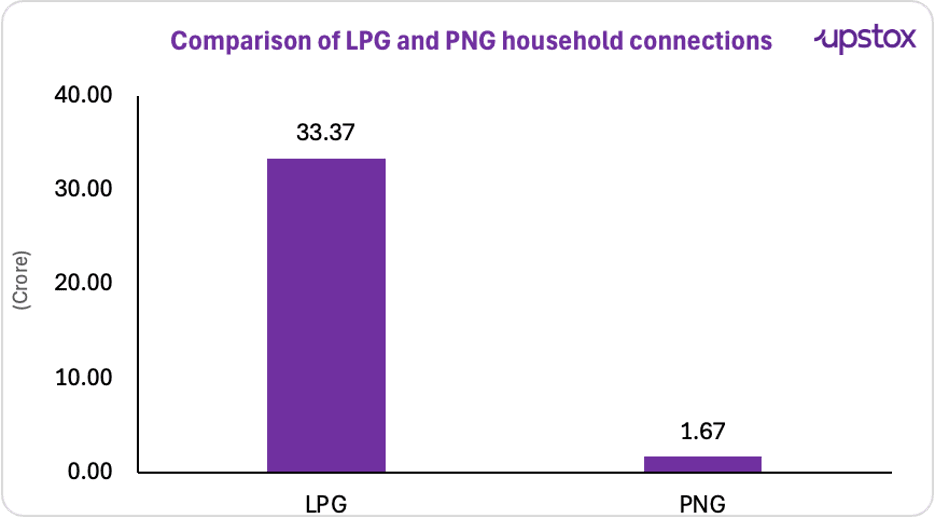
You see, India already has 33.2 crore LPG connections, with household kitchens accounting for over 88% of LPG consumption. PNG, meanwhile, has grown from 93 lakh domestic connections in March 2022 to 1.67 crore today. But only around 1 crore of these are estimated to be active users.
The government's target? 12.6 crore PNG homes by 2032. That means going from 1 crore users to 12.6 crore in just 8 years. A 12x jump.
Replacing LPG fully with PNG would require 45 billion cubic meters of gas annually, equivalent to filling 18 million Olympic-sized swimming pools.
And that's just the gas. What about pipelines? Workers? Subsidies? The missing infrastructure?
Source: News articles
But both the fuels are imported, what's the real advantage of PNG?
Nearly 50% of India’s gas demand is already met domestically, while LPG still depends heavily on imports from Saudi Arabia and the UAE. And with LPG reserves at just 140,000 metric tonnes against daily consumption of 90,000 tonnes, buffers could run dry in under 2 days if supplies are disrupted.
PNG also has a safety edge. Natural gas is lighter than air and flows at just 21 millibar pressure, nearly 200 times lower than LPG cylinders.
Is PNG cheaper?
Yes.
PNG and LPG are measured differently. LPG comes in 14.2 kg cylinders, while PNG is billed in Standard Cubic Metres (SCM).
Think of PNG like an electricity bill, you only pay for what you use. A family of 4 typically consumes around 6–10 SCM of gas every month. And, PNG tariffs are usually ₹50–65 per SCM.
After fixed charges and taxes, the final monthly bill usually comes to around ₹600–900. That’s roughly the same cooking usage as 1–1.5 LPG cylinders, making PNG around 10–35% cheaper for many households.
A quick comparison:
| Parameter | PNG Gas | LPG (14.2 kg Cylinder) |
|---|---|---|
| Avg. household monthly usage (family of 4) | ~6–10 SCM | ~1–1.5 cylinders |
| Estimated monthly fuel cost | ~₹600–900 | Mumbai: ~₹912.5–1,369 Delhi: ~₹913.0–1,370 |
| Billing method | Metered monthly billing | One-time cylinder purchase |
| Extra charges | ₹5,000–7,000 refundable security deposit | NA |
Source: Mint, data as of May 2026
So, why isn't everyone switching already?
Where are the gas plumbers?
The government wants 100,000 new PNG connections installed every single day. Current reality? CGD companies are managing 8,000–10,000 connections daily.
That's just 10% of the target.
And the reason: there aren't enough trained gas plumbers. According to a May 25 Indian Express report, this skills shortage has become a major drag on the entire rollout.
Now, you might be thinking: "Wait, doesn't India have plumbers?"
Yes. About 800,000 of them. But here's the problem, 80% can't find work. And why? Because over 90% lack formal training and gas-training certification. And even if you train them, the pay is a problem. The average plumber earns ₹18,000–20,000 per month. Gas plumbers working for CGD contractors? They're paid on a piece-rate basis, basically, per connection installed.
No subsidy = no switch
Then comes the subsidy factor.
LPG has long enjoyed subsidy support in India, especially through schemes like the Pradhan Mantri Ujjwala Yojana (PMUY), under which over 10.3 crore free LPG connections were distributed to low-income households. In 2024–25, these subsidies exceeded ₹13,200 crore.
PNG, meanwhile, never received a similar nationwide subsidy push. PNG is much newer. We have only been building it seriously for the last 10 to 12 years.
The geography trap
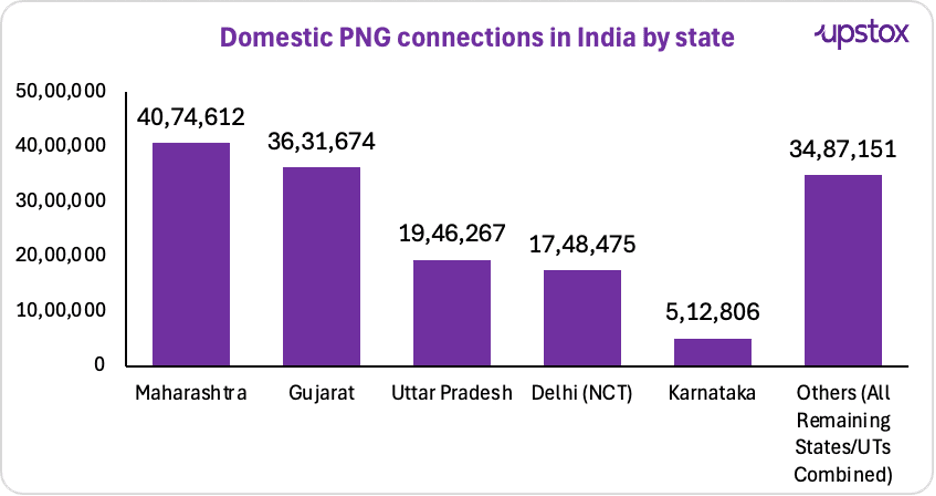
The PNG network remains geographically concentrated, with penetration largely confined to western and northern India.
Gujarat leads with 39.7% penetration, and eastern India has just 1.4% penetration, South India 1.5%, and the Northeast around 2%.
Source: PPAC
The delay problem
You’d think the biggest roadblock is obvious: no pipelines, cause we have all been hearing this. After all, natural gas can't be squeezed into cylinders like LPG. It needs to travel through underground pipes to reach your kitchen.
But here's the twist, even places with pipelines aren't getting connections. Delays can still happen because pipeline projects often run into last-mile infrastructure and approval bottlenecks.
So, what's being done about it?
India is rapidly expanding its piped natural gas network as the government confirmed that nearly 7.99 lakh PNG connections have been gasified since March 2026. But targets are still lacking.
States have been told to speed up approvals for city gas pipelines. Waive road restoration charges. Remove bottlenecks.
Recently, the Centre also tightened LPG rules. Under the new system, households shifting to PNG must surrender their LPG connection within 30 days, meaning no more cylinder refills.
The government calls this "flexibility." If you move to a non-PNG area later, you can restore your LPG connection through a “transfer voucher” - meant for transferable employees, tenants, students, migrant families.
And the plumber problem? City gas companies found a workaround. They're hiring regular water plumbers and running 3–4 week crash courses to quickly build a workforce for installations.
So yes, things are moving. But whether crash courses and fee waivers can solve delays and missing infrastructure? Well, that's still an open question.
About The Author
Next Story

