
Upstox Originals
Time in the market or timing the market: What should an investor do?
.png)
3 min read | Updated on June 11, 2024, 17:37 IST


SUMMARY
Keep it simple! How important is that advice in your investment journey? In this article, we evaluate the benefits of disciplined long-term investing.

Markets have delivered 13.9% annual returns over the long term
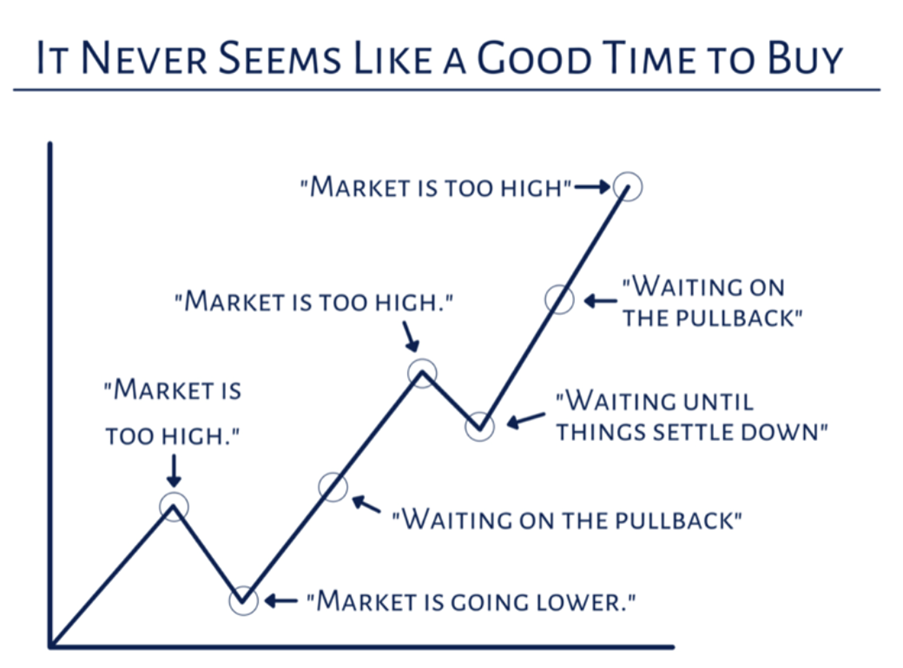
A common dilemma investors face is the perpetual feeling that it’s never the right time to buy. They are either thinking market being "too high" or waiting for a pullback or for things to "settle down". This pattern underscores a timeless truth in investing: timing the market perfectly is almost impossible.
Source: Quality Compounding
Let’s understand and evaluate this dilemma.
The Indian equities market has grown at a compound annual growth rate (CAGR) of approximately 13.9% over the past 34 years.
This, in itself, should tell investors something. Investing in the markets over the long term pays off! And that time spent in the market is much more important than trying to time the market.
But if this is not enough, let us further explain the importance of disciplined investing.
Don’t try to time the markets
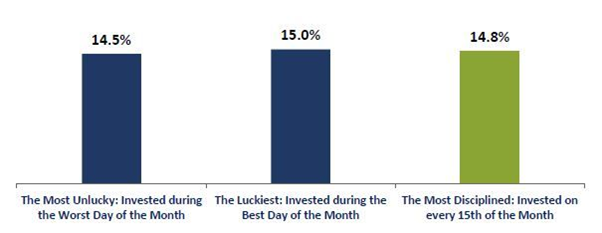
The chart below shows the returns that an investor would have earned under three different scenarios:
- investment made during the worst day of the month (when the markets were at the lowest);
- investment made during the best day (markets at the highest) and
- disciplined SIP investment done on one particular date.
As can be seen from the chart below, investors seem to achieve similar returns, regardless of the timing!
SIP Return analysis over a 25 year period across different scenarios
Source : Whiteoak Capital. SIP Returns are calculated for the period Sept-96 to Dec-23
Finally, for those still wondering this is the market top and should we actually be investing?
In the table below, we have analysed returns an investor would generate if they invested at different market peaks. Let’s take the 2020 COVID-19 crash as an example. If you had invested at the peak (right before the crash of 38%), you would still have made an annualised return of 16% till May 2024.
What is the point? Once again, the same one: disciplined long-term investing is your best friend.
This underscores the market's ability to recover and deliver substantial long-term gains. Short term volatility, whether caused by any election result or an economic slowdown, should not deter a long term investor.
Trends in market returns from various peaks
| Major falls > 20% since 2000 | Absolute decline* | Nifty 50 TRI* (Annualised Returns- From peak till 6th June, 2024) |
|---|---|---|
| 2000 Dotcom Bubble | -50% | 10% |
| 2004 Indian Election Uncertainty | -30% | 11% |
| 2008 Global Financial Crisis | -59% | 10% |
| 2010 European Debt Crisis | -27% | 12% |
| 2015 Global Market Selloff (Yuan Devaluation) | -22% | 18% |
| 2020 COVID-19 Crash | -38% | 16% |
Source: NSE, investing.com; *Approximate numbers
To conclude, crisis definitely creates investment opportunities. But rather than trying to catch the bottom or time the high, investors are better sticking to disciplined long-term investing.
About The Author
Next Story

