
Upstox Originals
Pulsar turns 25: The bike that carried Bajaj almost alone
5 min read | Updated on August 05, 2026, 15:24 IST


SUMMARY
Bajaj Pulsar turns 25 this year and still accounts for two out of every three bikes the company sells in India. That reliance has a cost: for the first time in years, a rival has outsold the Pulsar. Bajaj's answer is its biggest Pulsar refresh in years, and analysts are already calling it the one thing that could affect the stock's near-term story.
Stock list
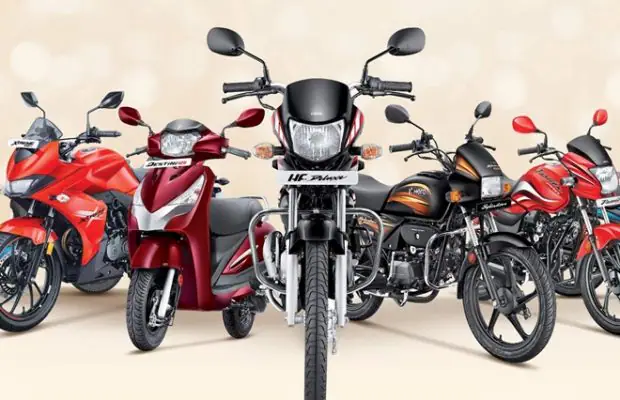
The Bajaj Pulsar will complete 25 years in 2026. | Image: Shutterstock
One unique thing about the Bajaj brand in India is that every generation associates with it in different ways. Ask your parents and grandparents, and the first thing they recall is the popular slogan – “Humara Bajaj”. This is synonymous with Bajaj Chetak, a scooter that dominated the Indian roads in most of the 1980s and 1990s. Ask a slightly younger generation, and they will tell you about the Pulsar.
It is a bike that helped popularise performance-oriented motorcycles among mainstream Indian buyers. And in 2026, as the bike completes 25 years, the Pulsar still remains a core part of the Bajaj Auto portfolio, driving almost 66% of its India two-wheeler sales. However, the iconic Pulsar is losing its grip on the Indian roads, and Bajaj might need to step up efforts to regain share, if it intends to keep dominating the Indian two-wheeler market.
Why is the Pulsar so important?
The original Pulsar 150 was launched in November 2001, when India's motorcycle market was dominated by mileage-focused 100cc commuters.
What made the Pulsar different? Muscular styling balanced by sturdy performance and at a price that worked for the common commuters. Since then, Bajaj has expanded the range from 125cc to 400cc. As a result, the company has sold more than 2 crore Pulsars in over 50 countries.
This bike came at a time when the company was facing stiff competition from then market leader Hero MotoCorp. Rajiv Bajaj, the current MD at Bajaj Auto, is very candid about just how central the Pulsar was to the company's survival. In a 2009 Forbes India profile, he explained that after years of failing to out-compete Hero Honda's Splendor, he decided that the company had to stop trying to beat the market leader at its own game.
That thinking led to the Pulsar, a niche performance bike rather than a mileage-focused commuter. Despite a shaky start, the bike did what was expected of it: pull Bajaj out of a losing race with Hero to build its own identity.
Speaking to Forbes India again in 2018, on the Pulsar's 17th anniversary, Bajaj noted that it was "not only the first Bajaj-designed product but also the first successful Bajaj-designed product," and credited it with helping take Bajaj from a newcomer to the world's third-largest motorcycle maker in less than two decades.
The Pulsar's importance to Bajaj Auto today is hard to overstate. In April 2026, Pulsar sales alone accounted for 66.37% of the company's total domestic motorcycle dispatches. No other model comes close.
How the rest of Bajaj’s lineup stacks up
The success of Pulsar is a double-edged sword for Bajaj. It led to heavy reliance on this one model, while market share in other segments was slipping. Its domestic two-wheeler market share fell from 11.54% in 2024 to 10.78% over the first nine months of 2025, and stood at 10.5% in the April-June 2026 quarter.
Is the Pulsar itself loosing ground?
To worsen matters, on its home ground (150–200cc segment), the Pulsar might be losing to peers. As seen in the chart below, In FY26, TVS Motor's Apache range alone outsold Bajaj's entire competing portfolio (from the Pulsar all the way to the Husqvarna) combined. For Honda, we have considered the Unicorn and for Yamaha, we have considered the FZ, R15 and MT-15 models.
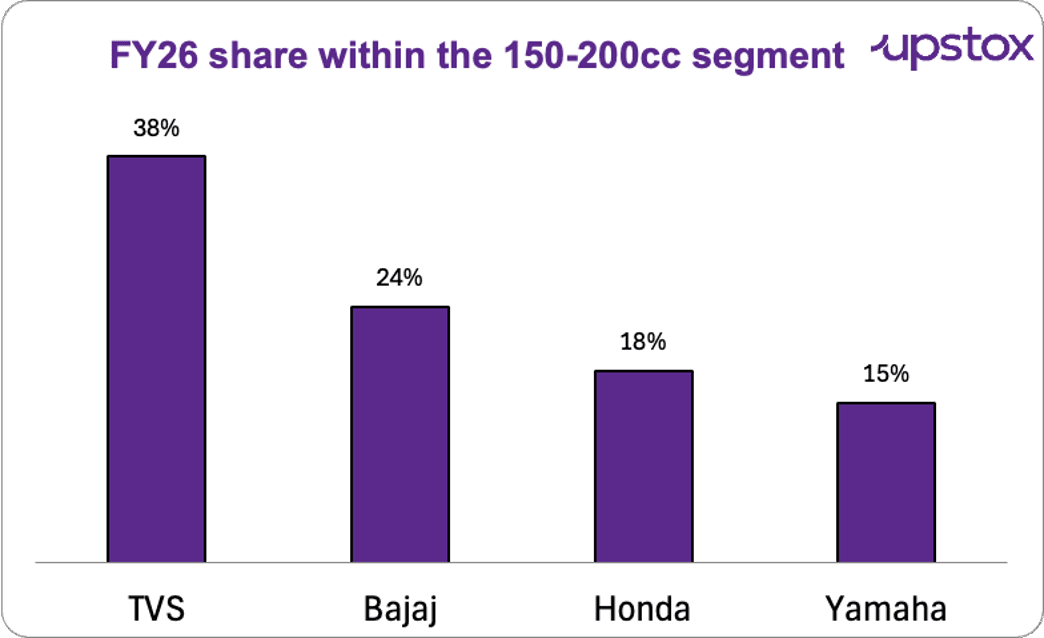
Source: Autocar Professional
At a model-to-model level, the Apache has come dangerously close to Pulsar’s monthly sales. In fact, it has actually been leading in almost every month in 2026.
| Month (2026) | Pulsar units | Apache units | Leader |
|---|---|---|---|
| March | 55,360 | 47,081 | Pulsar |
| April | 48,190 | 49,390 | Apache |
| May | 49,994 | 53,900 | Apache |
| June | 40,730 | 55,382 | Apache |
Source: Rushlane reports (compiled from manufacturer dispatch or secondary sales data)
This is not a story of Pulsar collapsing, but it is definitely a warning signal.
What is Bajaj doing?
Bajaj's response has been to lean further into Pulsar. It has announced an aggressive product pipeline: a new 150cc Pulsar, a new 125cc Pulsar, ten facelifts across the 160–400cc range, and two entirely new sub-brands in the 125cc segment, most timed for the run-up to this year's festive season.
In summary
The Pulsar remains one of the best-known motorcycle brands in the country, with genuine scale and a loyal following built over 25 years. But a business-as-usual approach is no longer working, and genuine innovation is needed if Bajaj Auto wants to ensure another 25 years of dominance.
For anyone tracking Bajaj Auto as a business, the story to watch over the next two quarters is simple: does the Pulsar refresh win back the ground it lost to the Apache? Or does Bajaj's growth increasingly come from exports and electric vehicles instead, while its home-market motorcycle business keeps thinning out to one very good bike? Given, Bajaj’s history, it is safer to say, they wont concede space in the Indian markets so without a good fight.
About The Author
Next Story

