
Upstox Originals
Markets have never been calm — and that's not a bad thing

4 min read | Updated on June 29, 2026, 13:45 IST


SUMMARY
Everyone treats uncertainty like a recent arrival—tariffs, wars, monsoons. But pick any year, and there’s always something. The idea that calm is around the corner is comforting, but false. Markets are inherently uncertain, and the edge lies in separating noise from signal—and using it, not fearing it.
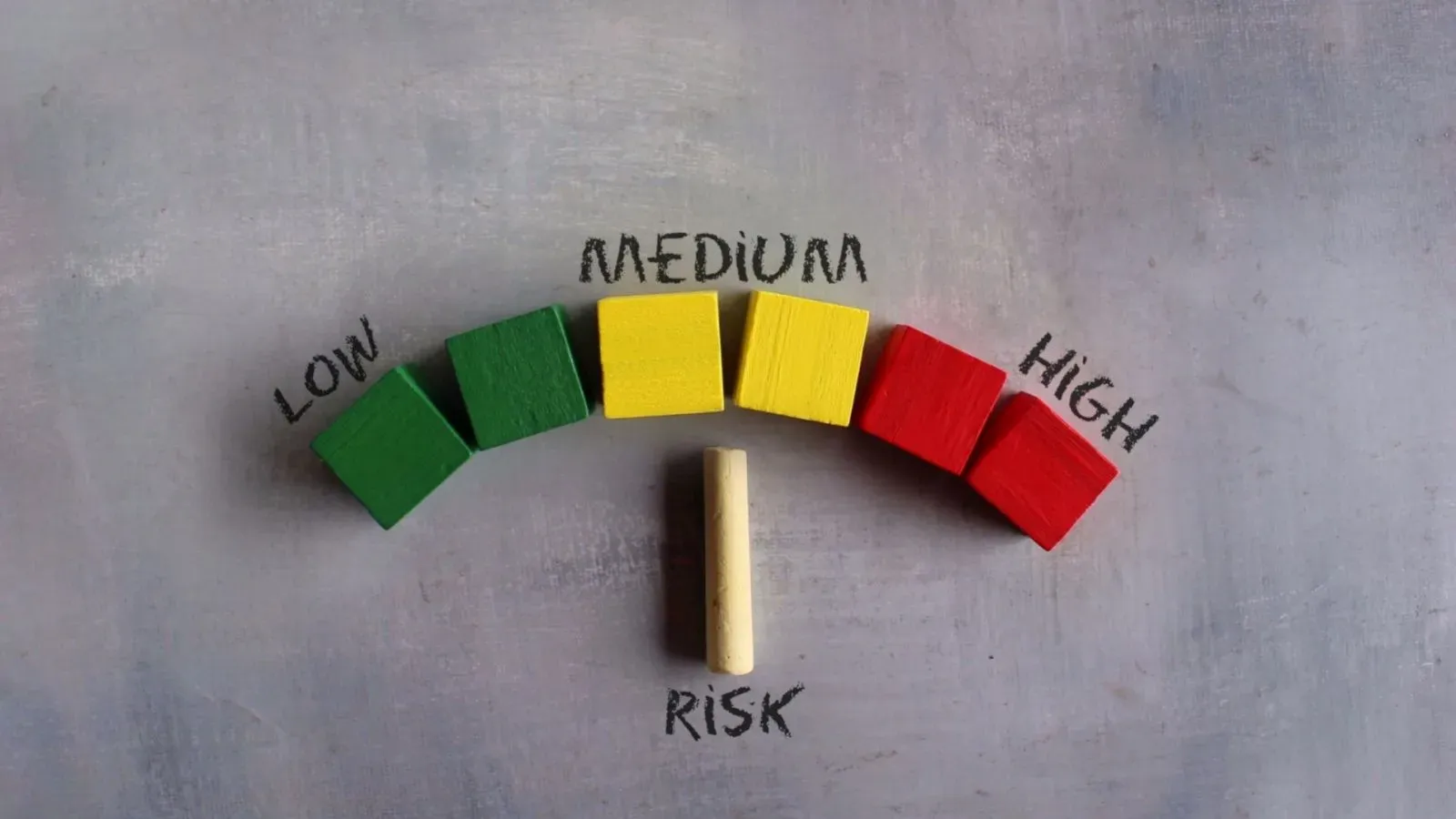
Risk is a constant part of investment. |Image: Shutterstock
Ask an investor when the markets were last calm, and you will usually get a vague gesture backwards. Before the tariffs. Before the war. Before the monsoon started, everyone started to worry. There was, the feeling goes, a quieter time, and we just happened to be living through the noisy stretch.
It is a comforting story. It is also completely false.
Pull up almost any year on the calendar, and you find the same scene: an investor somewhere, white-knuckled, certain that this was the shock that would finally break the rules. Only the names change. And the single most useful lesson in investing is hiding in that repetition.
Every year brings its own alarm
Let's go back to August 2015. China devalued the yuan without warning, and on the 24th — a ‘Black Monday’ — the Sensex fell 1,624 points, almost 6% in a session, its biggest single-day fall to that date.
A year later, demonetisation and Donald Trump's election happened on the very same day. As a result, the index plunged more than 6% intraday before closing 1% lower. In 2018, IL&FS—a financier everyone thought was too big to fail—defaulted, and on one September afternoon, the housing lender DHFL lost 42% of its value in hours.
Then came COVID, a war in Europe, a homegrown election shock, and a global trade war—each, in its moment, was described as unprecedented.
| Year | The scare |
|---|---|
| 2015 | China's surprise yuan devaluation |
| 2016 | Demonetisation + Donald Trump's first win |
| 2018 | IL&FS default, NBFC liquidity scare |
| 2020 & 2021 | COVID lockdown |
| 2022 | Russia invades Ukraine |
| 2023 | Israel - Gaza war escalation |
| 2024 | Donald Trump was re-elected on the promise of huge tariffs |
| 2025 | Trump's 'Liberation Day' tariffs |
| 2026 | US-Israel-Iran War |
Source: News articles
And here is the catch: the table above is not even exhaustive. These are just the highlights. For example, in 2020 came the BSVI regulations that spiked the cost of two- and four-wheelers by 5% - 20%. In 2026, now that the war in West Asia is dying down, India faces the challenge of a below-average monsoon, which could lead to rural distress.
Uncertainty is always around the corner. The point, however, remains that despite all these shocks and the fall in the markets, the Indian markets have continued to rise.
The panic is loud; the recovery is quiet
Here is the part that matters most. Return to June 4, 2024. On Monday, exit polls had sent the Sensex to a record high. On Tuesday, the votes came in below expectations and it crashed 5.7%. By Wednesday, the index was up 3.2%. By Friday, it had fully recoveredp.
That is the asymmetry running through all of market history: panics are loud, recoveries are gradual and (sometimes) long. The most expensive decision is almost always the one taken in panic. Noise and impact are different things. Confusing the two is exactly how steady investors get talked into panic. India’s next challenge
That brings us to the monsoon. The IMD has cut its 2026 forecast to 90% of the long-period average and put the odds of a deficient season at 60%, with El Niño building over the Pacific. That is a genuine risk, which is worth watching closely.
In closing
None of this is a forecast of where the index will go next or what you should and should not do, and it is certainly not a nudge to buy or sell anything. It is simply the historical record.
The investors who came through the last decade intact were the ones who spread their money widely enough that no single shock could sink them and stayed disciplined enough not to bolt every time the headlines turned dark. Discipline is what lets you stay invested long enough to be right.
About The Author
Next Story

