
Upstox Originals
How companies are quietly raising prices

5 min read | Updated on May 27, 2026, 11:39 IST


SUMMARY
Inflation in India is no longer arriving through loud price hikes, it is slipping in quietly through smaller packs, platform fees, disappearing discounts, and subtle pricing tweaks. From ₹5 biscuit packs to food delivery apps, companies are finding smarter ways to protect margins without triggering consumer sticker shock. The result is a more subtle, psychological form of inflation woven into everyday life.
FMCG, telecom, airlines, and digital platforms are all facing increasing cost pressures. | Image: Shutterstock
Your regular grocery run somehow costs more every few months, even when you are buying the same things. The biscuit packet get over quicker than you remember, food delivery apps quietly add extra charges at checkout, airline tickets feel cheaper until seat-selection and baggage fees appear, and the discounts that once flooded shopping apps seem to have quietly vanished.
Everyday life is getting more expensive again. Only this time, inflation is arriving less through dramatic price hikes and more through subtle adjustments companies hope consumers will not notice immediately.
Across FMCG, restaurants, airlines, and consumer brands, companies are increasingly talking about rising input costs and margin pressure. And instead of shocking consumers with blunt price increases, many are finding quieter ways to pass those costs along.
Why this inflation cycle feels different
Inflation itself is not new. What is changing is the kind of pressure companies are dealing with, and the way those costs are now reaching consumers.
Over the past few years, businesses have already absorbed repeated shocks from commodity volatility, higher packaging costs, and supply-chain disruptions. Now, disruptions around the Strait of Hormuz and rising crude oil prices are once again pushing up freight, logistics, and transportation costs across industries.
Rising fuel prices do not just affect petrol pumps. They ripple through delivery costs, airline economics, packaging, transportation, and eventually the price consumers pay for everything from groceries and mobile recharges to food delivery and travel.
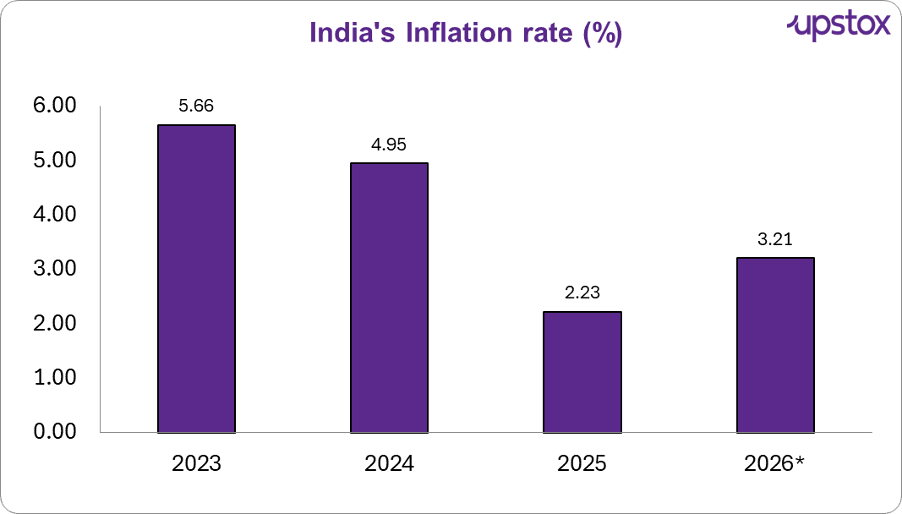
Source: Trading Economics, CPI press release. Note: 2026* data reflects average January–April 2026.
While headline inflation cooled after 2023, cost pressures never fully disappeared. And with crude oil and freight costs rising again, companies are increasingly preparing for another round of pricing adjustments, though not always through obvious price hikes.
For India, where everything from edible oil and packaging material to logistics remains closely linked to global prices, even distant disruptions can quietly feed into everyday consumption.
Companies are signalling pressure
None of this is accidental. Across sectors, companies are trying to protect margins without triggering an immediate price shock for consumers. That balancing act is now showing up clearly in corporate commentary.
FMCG companies
-
HUL recently said it had implemented price hikes in the range of 2–5% while also reducing pack sizes in certain categories to offset inflation in crude-linked raw materials and packaging costs. The company said material cost inflation was running at around 8–10%.
-
Britannia has warned of rising inflation across inputs such as palm oil, fuel, packaging, and cocoa, while signalling selective price hikes and grammage adjustments to protect margins. The company also said some larger packs could see direct price increases.
-
Nestlé India has flagged elevated coffee and cocoa prices as a pressure point on margins, with management indicating that selective pricing actions may become necessary if commodity costs remain high.
Telecom, airlines, and digital platforms
-
Telecom companies raised tariffs sharply in 2024 as the industry pushed for “tariff repair” after years of aggressive price competition.
-
Airlines have increasingly monetised baggage, seat selection, meals, and priority - boarding instead of relying only on higher base fares.
-
Food delivery and quick-commerce platforms have steadily layered on platform fees, handling charges, and surge pricing, even as discounts have become less generous.
What stands out is that very few companies are talking about dramatic across-the-board price increases. Instead, many are trying to preserve affordability on the surface, keeping key price points or headline prices attractive while quietly changing quantity, fees, promotions, or add-ons underneath.
The stealth inflation playbook
For many companies, raising prices directly is often the last resort, especially in India’s mass market, where consumers are highly sensitive to visible price changes.
That is why stealth inflation has become increasingly common. Sometimes the price stays the same, but the quantity quietly reduces. In other cases, discounts disappear, delivery apps add convenience fees, or brands push consumers toward premium products.
| Product / service | Earlier | Now |
|---|---|---|
| Parle-G ₹5 pack | 64g at ₹5 | 55g at ₹5 |
| Haldiram’s Aloo Bhujia ₹10 pack | 55g at ₹10 | 42g at ₹10 |
| Edible oil packs | Standard 1L/500ml packs dominant | 910ml, 895g, 800ml packs increasingly common |
| Zomato platform fee | ₹2 per order in 2023 | ₹10–₹12 per order by 2025 |
| Swiggy platform fee | ₹2 per order in 2023 | Up to ₹15 per order in some markets by 2025 |
| Blinkit handling charges | ₹2 handling charge in early 2024 | Around ₹11 handling fee, plus surge/rain fees |
| IndiGo front-row seat selection | ₹1,500 before 2024 | ₹2,000 after revision |
| Telecom mobile tariffs | Major prepaid plans before 2024 hikes | Tariffs raised 13–27% by telecom operators |
Source: Mint, The Economic Times, Business Standard, and Financial Express and company disclosures
Individually, these changes can feel minor, a few grams less here, a ₹10 fee there, a slightly higher recharge plan elsewhere . But together, they show how companies are increasingly spreading inflation across the consumer experience instead of relying only on one large visible price hike.
The strategy differs across sectors, but the calculation is increasingly the same: pass on rising costs without making consumers feel a visible price increase. The consumer pushback phase
Consumers may not notice every smaller pack or added platform fee immediately. But over time, they do notice when value starts slipping. A ₹250 food order quietly turning into ₹350 at checkout is becoming an increasingly familiar part of urban consumption in India.
That creates a difficult balancing act for companies. Stealth inflation is designed to protect demand without triggering sticker shock. But if pushed too far, it risks weakening the very trust companies are trying to protect.
About The Author
Next Story

