
Upstox Originals
Exploring opportunities in India’s warehousing sector
.png)
6 min read | Updated on August 30, 2024, 14:32 IST


SUMMARY
Since the last 5 years, warehousing demand has outpaced supply by a whopping ~40%. India's warehousing industry is emerging as a cornerstone of the country's logistical infrastructure. The sector has seen significant growth, driven by the rapid expansion of e-commerce, organized retail, and manufacturing. This article explores the landscape of the warehousing industry.

warehousingthumb.jpg
Snapshot of India’s warehousing industry
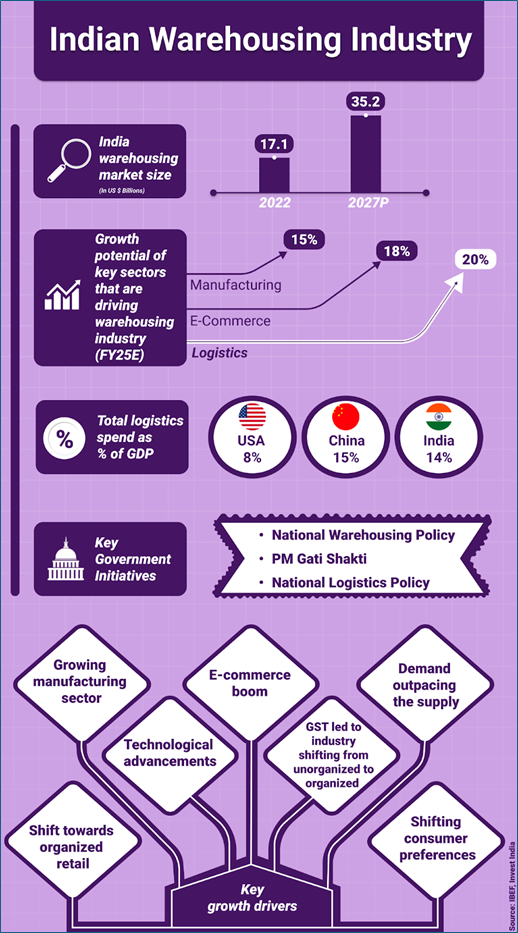
Government reforms like GST and e-way bills have driven formalization and efficiency in the overall logistics sector. These changes will directly impact warehousing companies, as efficient logistics require advanced storage solutions. With the rise of e-commerce, demand for modern warehousing will grow, making it a key component in the streamlined supply chain of the future.
The warehousing industry forms part of the overall logistics sector. At the moment, most of the warehousing services are being offered by logistics companies - as a part of their effort to ensure control of the entire value and supply chain - from transport to storage. As logistics infrastructure improves it will pave demand for warehousing spaces also since untapped areas will require warehousing infrastructure to cater to the demand.
How big is India’s warehousing industry?
The Indian warehouse market is predicted to reach $35.2 billion by 2027, with a CAGR of 15.6% from 2022. The sector has experienced rapid growth, with a remarkable CAGR of 44% between FY17 and FY20 mainly because of the GST-led shift from unorganized sector to organized sector.
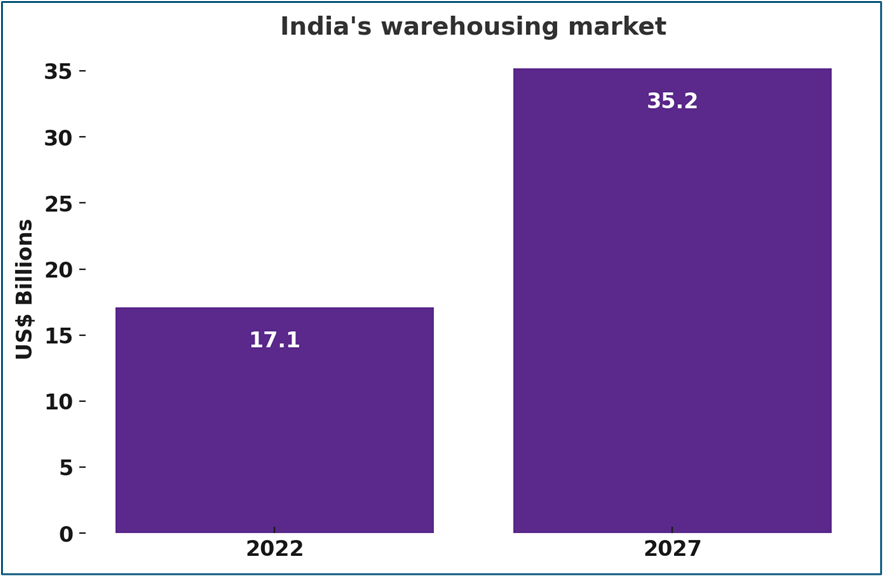
Source: JLL India, Research and Market, Yahoo Finance
Despite this significant expansion, the Indian warehousing industry remains underdeveloped when compared to global standards -as can be seen from India's per capita warehousing stock (availability of warehousing area per person). This disparity highlights the substantial potential for growth in India's warehousing sector.
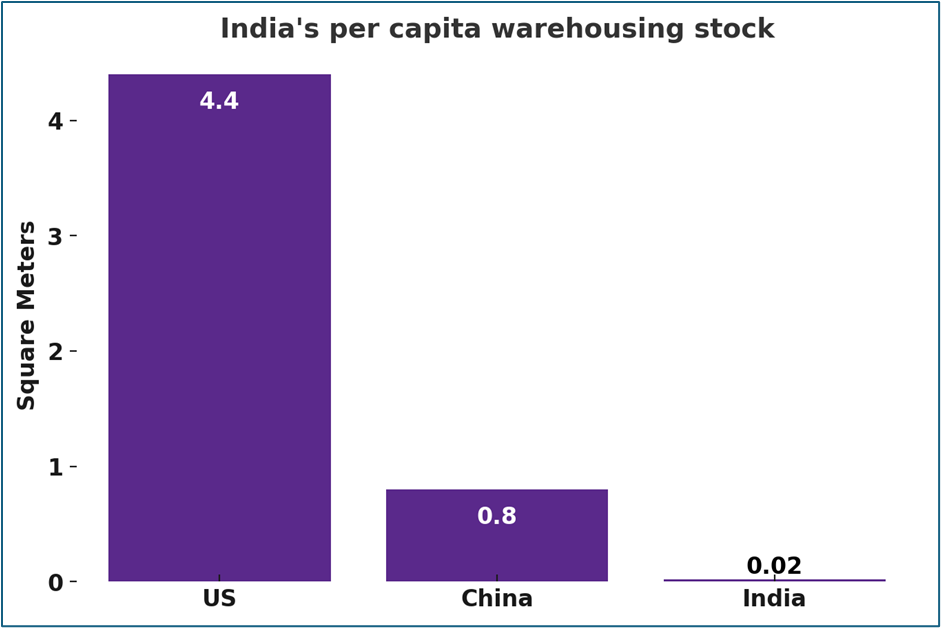
Source: JLL India, Research and Market, Yahoo Finance
Moreover, the industry needs to be more cohesive, with 90% of warehouses being smaller than 10,000 square feet.
Logistics: Key driver of warehousing growth
India's logistics expenses are significantly higher than those of developed nations, with the country spending about 14% of its GDP on logistics compared to the 8-9% seen in countries like the US, Germany, Singapore, and Japan.
Around 50% of elevated costs can be attributed to inefficiencies in transportation infrastructure like warehousing presenting potential opportunities in the warehousing sector also if logistics cost needs to be reduced.
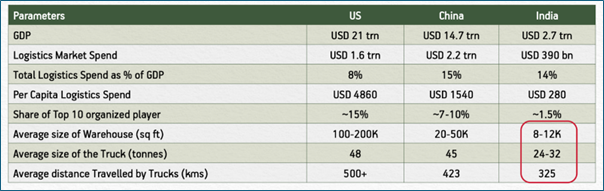
Source: IBEF
Government initiatives to bolster growth
- Launched PM Gati Shakti - National Master Plan for Multi-modal Connectivity for infrastructure connectivity projects which is expected to contribute $1.5 trillion to the economy as per ET.
- Manufacturing initiatives like Performance Linked Incentives and Make in India, boosted demand for warehousing with 44% CAGR growth in warehousing during FY17-20.
- The infrastructure status given by the government to the logistics sector along with capex allocation for the sector increased by 30% to INR 10 Lakhs crores in FY25.
- Establishing Free Trade Warehousing Parks offering lucrative trade parks.
- The National Warehousing Policy was introduced to cut supply chain costs.
- The National Logistics Policy introduced the Comprehensive Logistics Action Plan (CLAP), which encompasses eight focal areas ranging from digital integration to the facilitation of logistics park development.
Drivers of Growth in the Warehousing Industry
- E-commerce boom - E-commerce is the primary driver of the warehousing industry's growth during FY24 with a ~15% share in warehousing demand led by rising penetration in terms of products, geography, and sellers, as per Anarock's report.
- GST led to industry shifting from unorganized to organized - With the rollout of GST, smaller, localized, and inefficient warehouses became uncompetitive, leading to a shift towards organized players with 50% of warehousing demand was from large warehouses as per Colliers.
- Technological advancements - The adoption of technology and automation in warehousing is gaining traction. The warehousing technology like tracking, supply chain automation, material handling automation, and automated warehousing planning is expected to grow by 26% on a CAGR basis for the period FY 24-26, as per an EY report.
- Shift towards organized retail - This shift towards organized retail is expected to further increase the demand for larger and more sophisticated warehousing solutions whose demand is outpacing the supply, as per ET report.
- Shifting consumer preferences: Consumers' changing preferences, such as a greater focus on convenience and quicker delivery times, are pushing businesses to expand their warehousing capabilities.
- Demand outpacing the supply - Since the last 5 years, warehousing demand has outpaced supply by a whopping 40% along with healthy rental yield as per media reports.
Key challenges facing the warehousing industry
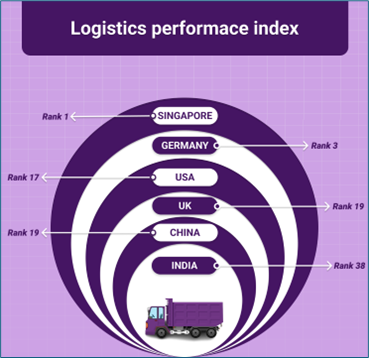
Source: LPI report, 2023
Which stocks will benefit?
There are no pure-play warehousing companies of considerable size, hence logistics companies have been considered that offer warehousing services forming part of their holistic logistics offerings
| Stock | ROE % | EBITDA Margin % | PE Ratio | 3 yr Stock Price CAGR % |
|---|---|---|---|---|
| Container Corp | 10.9 | 23.2 | 46.3 | 14.2 |
| Mahindra Logistics | -10.4 | 4.5 | NA | -11.4 |
| Allcargo Logistics | 4.8 | 3.7 | 46.7 | 13.4 |
| Delhivery | -2.4 | 3.3 | NA | NA |
| Allcargo Gati | -4.1 | 3.7 | NA | -14.2 |
| Blue Dart | 22.7 | 16.9 | 65.1 | 12.8 |
| Aegis Logistics | 15.0 | 15.2 | 45.2 | 39.6 |
| Snowman Logistics | 3.0 | 20.2 | 115.2 | 21.9 |
Source:Screener; As on 30-Aug-24
Conclusion
The Indian warehousing industry is undergoing a transformation, driven by rapid growth in e-commerce, organized retail, and manufacturing. While challenges such as land acquisition, regulatory hurdles, and infrastructure deficiencies persist, the sector's potential remains vast. Key players are well-positioned to capitalize on this growth, offering compelling opportunities for investors.
As the industry continues to evolve, companies that can innovate, scale, and adapt to changing market dynamics will be at the forefront of India's economic expansion.
About The Author
Next Story



