
Upstox Originals
Can Air India cut losses by cutting free meals?
5 min read | Updated on July 06, 2026, 15:29 IST


SUMMARY
Every year, Air India serves millions of meals and pays hundreds of crores for the privilege. Now, with losses mounting and a Basic fare trial quietly stripping meals off select domestic tickets, the airline is asking a question it long avoided: is the complimentary meal a cherished full-service perk, or just an expensive habit?
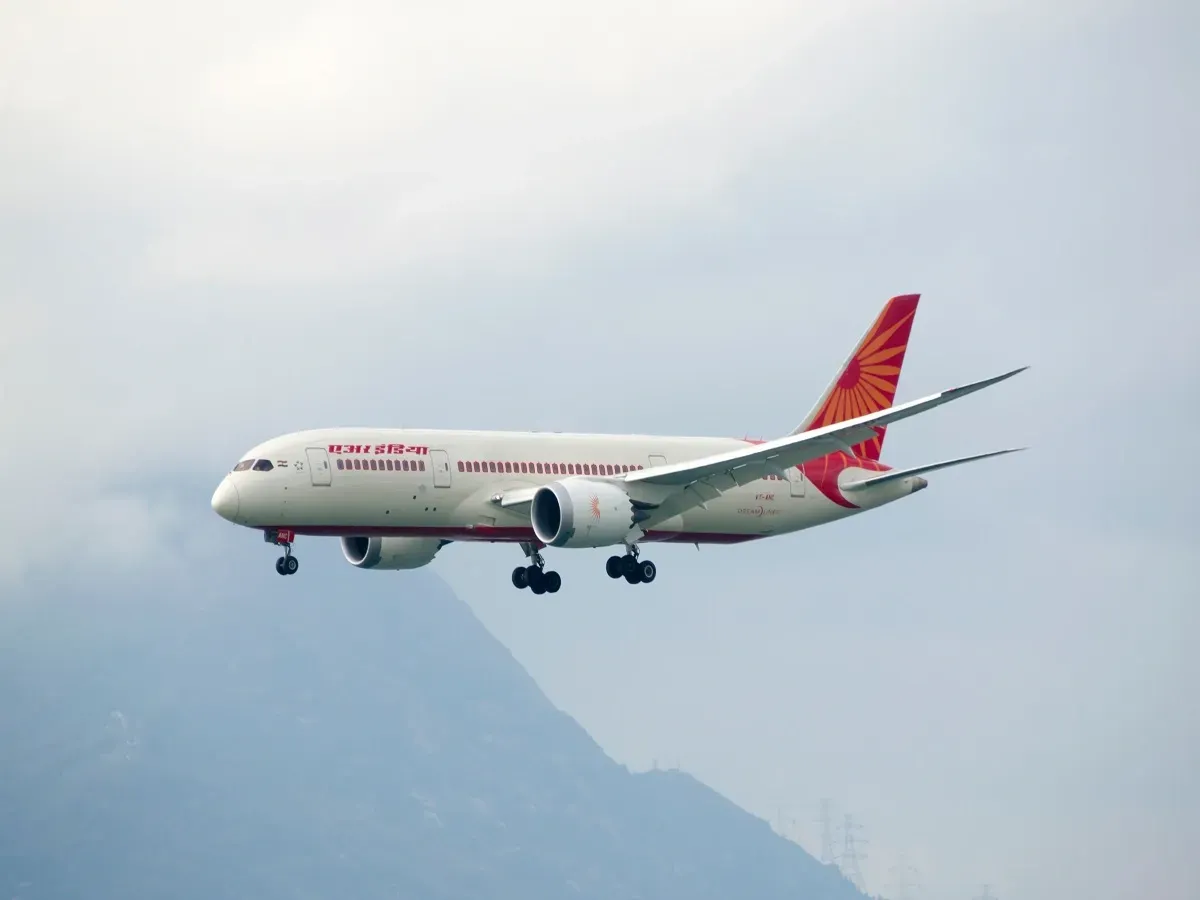
Air India Group holds ~27% domestic market share and leads international traffic among Indian carriers. | Image: Shutterstock
For most Air India passengers, a complimentary meal has simply been part of the flying experience. That may be changing. The airline is testing whether passengers would rather skip the meal and save money.
Recently, on a pilot/trial basis, Air India has introduced an optional Basic fare on select domestic routes that excludes complimentary meals, giving passengers the choice to pay less in exchange for fewer inclusions.
As the airline battles mounting losses, even a sandwich has become a financial decision. Tata Group-controlled Air India reported a net loss of ~₹26,800 crore for FY26 despite higher revenues and recovering passenger traffic.
For now, the no-meal fare is available only on select routes as part of the trial. But it raises a much bigger question: what if Air India eventually expanded this model across all eligible economy flights?
Why are Air India's losses mounting so rapidly?
The airline has been on a turnaround journey since Tata reacquired it, but external shocks keep piling up. High fuel costs (often 30-40% of expenses), a weaker rupee, airspace disruptions from West Asia conflicts, and intense competition from low-cost carriers (LCCs) have squeezed margins. The carrier has already slashed international schedules, including 40% cuts to North America operations and suspensions on routes like Delhi-Chicago and Delhi-Newark, as part of cost controls.
Here's a quick snapshot of the financial trajectory (approximate figures compiled from reports):
| Fiscal Year | Revenue (₹ crore) | Loss (₹ crore) |
|---|---|---|
| FY23 | ~41,600 | ~15,414 |
| FY24 | ~51,365 | ~10,122 |
| FY25 | ~78,636 | ~10,859 |
| FY26 | -79,150 | ~26,800 |
Source: Singapore Airlines (SIA) global financial disclosures
Air India Group holds ~27% domestic market share and leads international traffic among Indian carriers. Yet yields remain under pressure in a market trained on ultra-low fares.
Is cutting down free meals a solution?
Yes, but only to an extent.
Air India has already taken the first step by introducing a Basic fare on select domestic routes that excludes complimentary meals on a pilot or trial basis. The bigger question is: what if the airline eventually expanded this option across all eligible short-haul economy flights?
The following is the author's estimated calculation, intended for illustrative purposes:
- Annual passengers: ~45 million
- Economy & short-haul flyers: ~60–70%
- Average meal cost: ~₹250 per passenger
That means Air India could be spending roughly ₹675–800+ crore a year on meals alone.
Now, if 30–50% of eligible passengers choose a cheaper no-meal fare, the airline could save, or earn through ancillary revenues, around ₹200–400 crore annually. Sounds impressive? Well, compare that with Air India's ₹26,798 crore loss in FY2026. Even the higher-end estimate would cover less than 2% of the annual loss.
So, cutting free meals isn't a silver bullet. It's more like picking up loose change while carrying a mountain of debt. It can improve margins at the edges, but Air India's turnaround will ultimately depend on tackling the big-ticket issues, fuel costs, fleet utilisation, debt, operational efficiency, and higher-yield international traffic.
But, don’t these free meals provide a competitive advantage?
For a full-service carrier, yes, but expectations are shifting. Hot meals have long differentiated Air India from airlines like IndiGo. Passengers value them on longer domestic or international flights.
However, on short hauls, many, especially younger travellers and budget-conscious families, now prioritise lower fares over in-flight dining, often carrying their own food or eating pre-departure.
Air India’s move to make meals optional on select routes, with potential savings of over ₹250 per ticket, reflects this reality. It gives flexibility without fully erasing the perk for those who want it.
How are global airlines cashing in on ancillary revenues?
Unbundling is the global playbook. Ancillary revenues (meals, baggage, seats, etc.) are projected to hit $157 billion worldwide in 2025, or ~15.7% of total airline revenue, up from ~9% in 2016. Legacy carriers and LCCs alike are blurring lines through hybrid models. Even full-service names like Delta, United, Lufthansa, and Qatar offer “Basic” or “Light” fares that strip out inclusions.
| Year | Global Ancillary Revenue ($ bn) | % of Total Airline Revenue |
|---|---|---|
| 2016 | ~67 | 9.1% |
| 2024 | ~148 | 14.9% |
| 2025 | 157 | 15.7% |
Source: IdeaWorksCompany
In India, with ~350 million annual passengers, this trend is accelerating. Per-meal costs of ₹150–350 make unbundling a logical step for cost savings and new revenue from willing payers.
What happens if Air India gets this right (or wrong)?
Done right, tiered fares, Basic (no frills, lower price), Value (meals included), Premium; deliver flexibility, stimulate demand in India’s fast-growing market, and support economic multipliers through more travel, tourism, and jobs. It positions Air India as a pragmatic hybrid without fully becoming a budget carrier.
Mishandled, it could spark passenger backlash, market share loss to LCCs, or diluted service perception. Yet the era of fully bundled full-service is fading. With Tata’s backing, Star Alliance benefits, and integration progress, Air India has the tools for thoughtful evolution.
Free meals aren’t sacred forever in a price-sensitive market. Smart unbundling offers a balanced path: affordable tickets for volume, monetised perks for yields. This could help convert heavy losses into sustainable growth; benefiting passengers, the airline, and India’s broader aviation-driven economy.
About The Author
Next Story

