
Personal Finance News
Home buying after RBI repo rate hike: 5 things homebuyers should know

4 min read | Updated on October 07, 2026, 15:46 IST


SUMMARY
RBI repo rate hike to 5.50%: Know what higher interest rates could mean for home loan EMIs, affordable housing, property demand and homebuyers.

Before booking a property, compare loan offers, calculate the EMI under different interest-rate scenarios.
The Reserve Bank of India (RBI) has raised the repo rate by 25 basis points to 5.50%, its first rate hike since February 2023. The move comes amid higher crude oil prices, rising inflation risks and continued geopolitical uncertainty.
1. Home loans could become more expensive
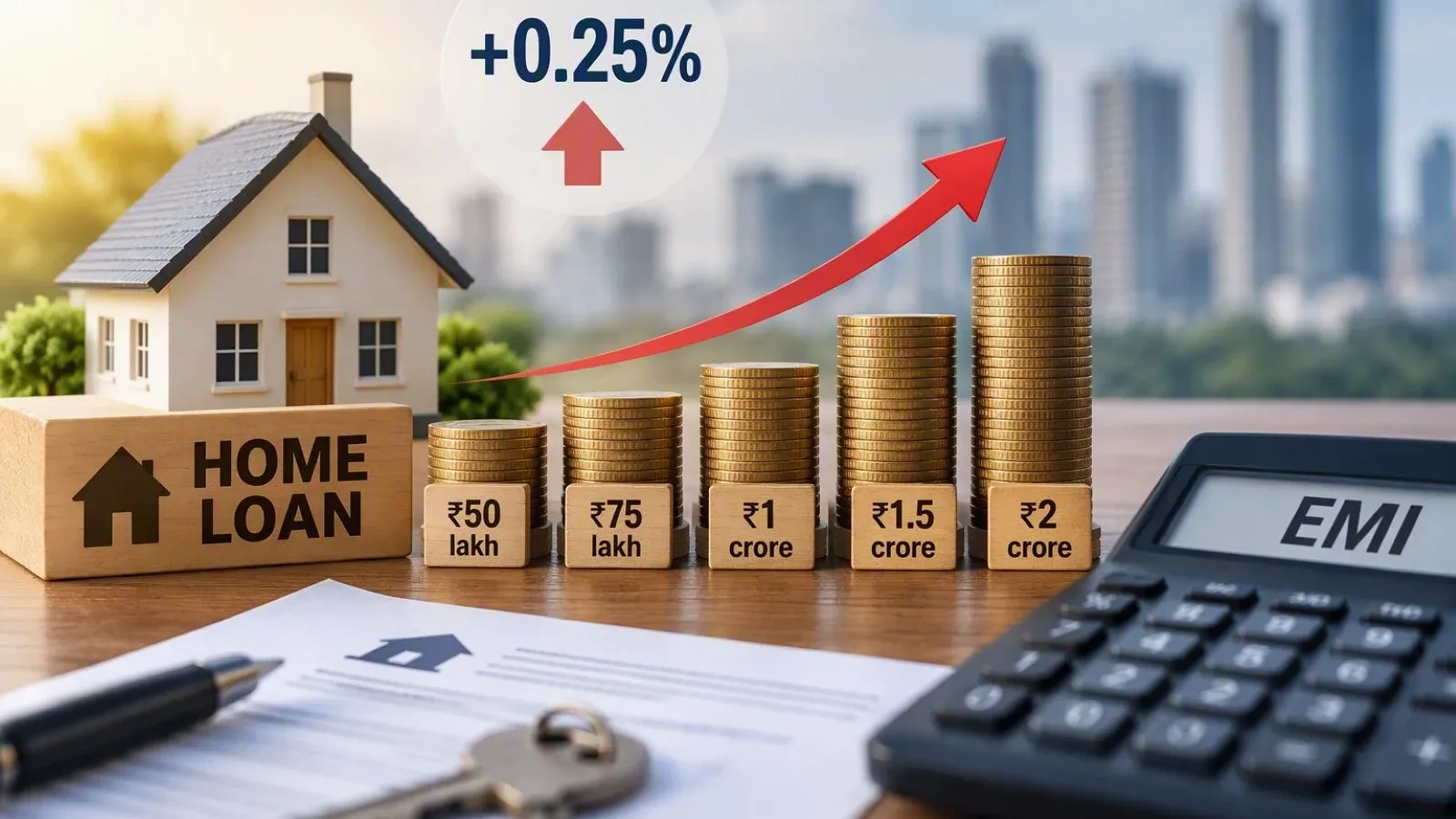
The repo rate hike can affect floating-rate, repo-linked home loans. Depending on the lender, borrowers could see their EMI increase or their loan tenure extended.
The immediate impact of a 25-basis-point increase is likely to be limited. Amit Prakash Singh, Co-founder & CBO, Urban Money, said:
“For real estate, this is a measured intervention rather than a disruption. Housing demand remains fundamentally strong, and a stable macro environment will ultimately be more important for the sector than a modest, near-term movement in borrowing costs.”
For existing borrowers, however, even a small rate increase can add to the total interest cost over a long loan tenure. Fresh borrowers should therefore check whether their EMI remains comfortable if rates move higher.
2. Affordable housing buyers could feel the pressure more
The impact could be more noticeable for first-time buyers and households with tighter budgets.
Residential prices in the top seven cities have already risen significantly. Anuj Puri, Chairman, ANAROCK Group, said higher borrowing costs could make buyers more selective and extend decision timelines, particularly in price-sensitive segments.
According to ANAROCK data, the top seven cities recorded around 1,00,220 housing sales in Q3 2026, up 3% year-on-year and 10% from the previous quarter. Affordable housing accounted for 16% of these sales.
Puri said: “With the rate hike, dearer home loans will make buyers more selective and cause decision timelines to extend, particularly in the price-sensitive segments.”
He added: “Even a modest increase in EMIs will result in deferred purchase decisions or budget recalculations among affordable housing buyers.”
For buyers in this segment, reassessing the loan amount may be more sensible than stretching the budget to buy a more expensive property.
3. Housing demand may remain resilient
A repo rate hike does not automatically mean a sharp slowdown in housing demand.
Anshuman Magazine, Chairman & CEO - India, South-East Asia, Middle East & Africa, CBRE, said:
“We expect the impact of the rate hike on housing demand to stay measured, particularly in the mid and premium segments, where the underlying demand is still healthy.”
He added: “The sector has demonstrated resilience through this cycle, supported by robust growth fundamentals and strong buyer intent.”
The bigger question for homebuyers is whether the latest increase remains a one-off move or becomes the beginning of a longer tightening cycle.
4. Developers could become more selective
Higher interest rates can also increase the cost of capital for developers, potentially affecting project launches, funding decisions and construction plans.
Sharad Mittal, Founder & CEO, Arnya RealEstates Fund Advisors, said: “For the real estate sector, the immediate impact is likely to be a marginal increase in the cost of capital, but the sector enters this phase with stronger fundamentals and resilient end-user demand.”
He also highlighted another concern for the sector: “In the near term, construction cost escalation due to supply-side shocks resulting from geopolitical uncertainties is more important for the real estate sector than a 25-50 bps increase in interest rates and its potential impact on end-user demand.”
For buyers, this makes the developer's financial strength, project execution and underlying demand important factors when choosing a property.
5. Should you buy now or wait?
If you have a stable income, adequate down payment and an EMI that comfortably fits within your monthly budget, the latest repo rate hike alone may not be a reason to postpone a purchase.
However, buyers should not calculate affordability only at today's interest rate. It is worth checking the EMI at a slightly higher rate and keeping enough financial cushion for other costs such as registration, maintenance and insurance.
Rishi Anand, MD & CEO, Aadhar Housing Finance, said: “For the housing finance sector, the increase could have some impact on borrowing costs, with EWS and LIG households and first-time homebuyers likely to remain more sensitive to changes in affordability.”
At the same time, he said: “The underlying need for affordable housing remains strong, supported by rising aspirations and continued economic activity.”
What homebuyers should do
Related News



About The Author
Next Story

