Market News
UltraTech, ACC, Ambuja: Risks and tailwinds shaping cement stocks after Q1 FY27

6 min read | Updated on August 18, 2026, 10:12 IST


SUMMARY
Listed cement makers have reported sales volume growth of up to 27%, except second-largest maker Ambuja Cement, which reported a 14% decline.
Stock list
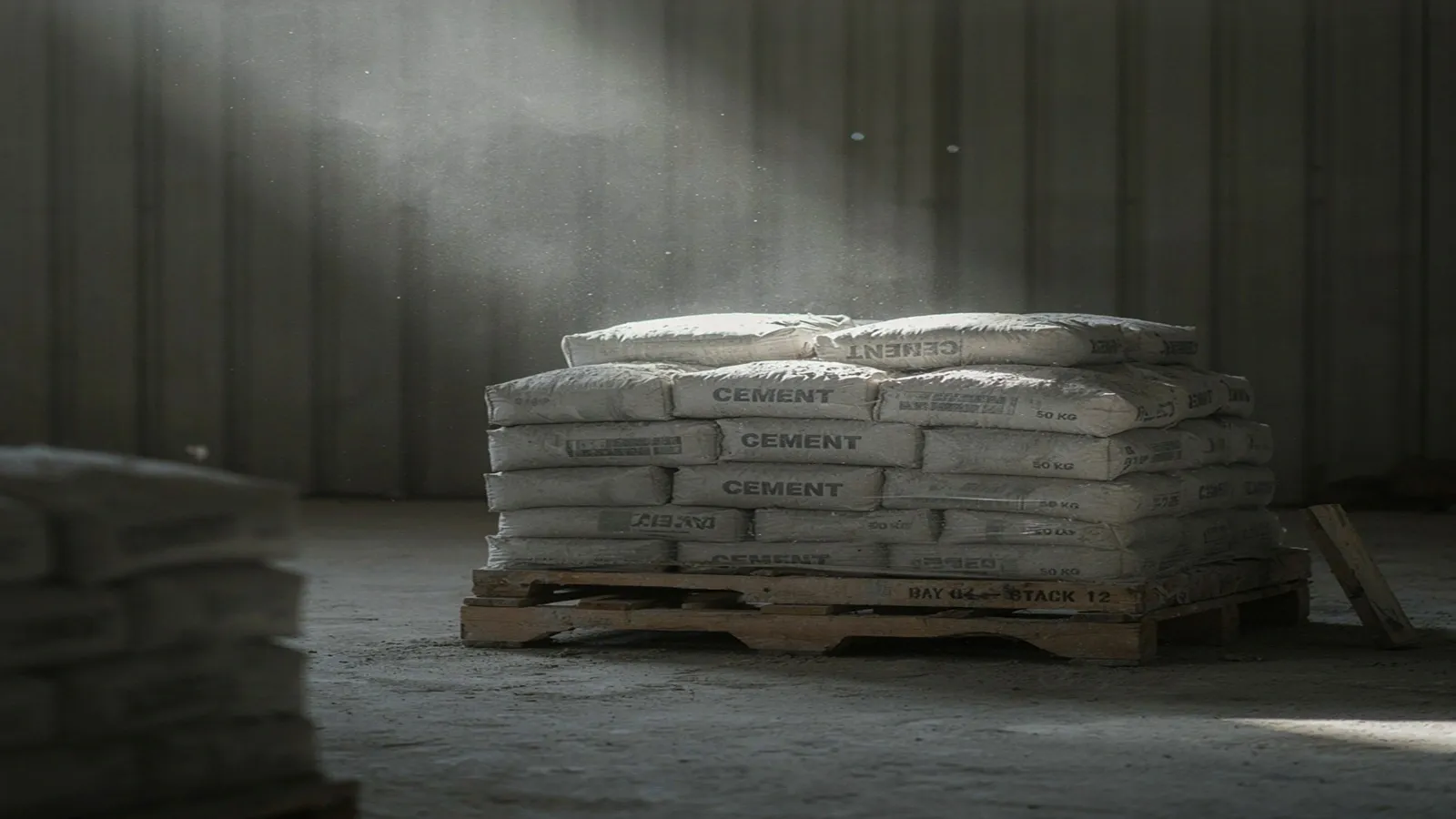
In June 2026, India Ratings and Research said that cement demand growth is expected to moderate to mid-single digits in FY27 from about 8% in FY26. Image: Maginific (AI-generated)
A look at Q1 FY27 earnings show that leading cement manufacturers have reported a divergent set of earnings in the June quarter, as capacity additions, market share gains and improved demand across key regions helped healthy volume growth, while elevated fuel and raw material costs weighed on profitability for several players.
Listed cement makers have reported sales volume growth of up to 27%, except second-largest maker Ambuja Cement, which reported a 14% decline, said a report by PTI.
Most of the companies reported double-digit sales growth, while profits came under pressure due to rising energy costs, subdued realisations and the lingering impact of geopolitical disruptions in West Asia.
Moreover, cement makers reported a rise in premium portfolio and improved their trade mix to enhance realisations, protect margins and offset rising fuel, freight and raw material costs.
Besides, they are also optimistic about FY27, with 7-8% volume growth.
Leading cement maker UltraTech Cement and fifth-largest player Nuvoco Vistas posted healthy profit growth, while Ambuja Cements, Shree Cement, Dalmia Bharat, JK Lakshmi Cement and Birla Corporation reported a decline in net profit even as their revenues grew in double digits, the report added.
What is the outlook?
In June 2026, India Ratings and Research said that cement demand growth is expected to moderate to mid-single digits in FY27 from about 8% in FY26 amid inflationary pressures and the possibility of an El Nino weather event.
However, the sector is also likely to witness nearly 100 million tonnes (MT) of fresh capacity addition over FY26 and expects the capacity utilisation to be around 68-69% in FY27, the ratings agency said.
"While the sector will witness a significant input cost inflation given the increase in fuel costs, the moderate demand environment, coupled with continued capacity additions, can restrict the increase in cement realisations to low-to-mid single digits," said the report, quoting its Director Khushbu Lakhotia.
Moreover, as companies are expected to pass on only part of the higher input costs, EBITDA per tonne may decline about 15% year-on-year in FY27.
"With only a partial pass-through of input cost increase, the EBITDA/MT could decline around 15 per cent year-on-year, after a similar recovery in FY26," it said, adding that this will impact small companies (tier-2 players) more.
Large Tier 1 players have adequate balance sheet headroom and financial flexibility to absorb the impact without impacting the credit profile, but tier-2 players could witness stress, given their concentrated geographical presence and limited financial headroom, ICRA said.
Crisil Ratings, in its latest report in July 2026, said that the operating margin of cement makers is expected to reduce by ₹50-75 per tonne this fiscal (FY27) to ₹925-950 per tonne as against around ₹1,000 per tonne in fiscal 2026 (FY26), on the back of elevated input costs due to the ongoing West Asia conflict.
However, it said that operating cash flows should improve as domestic demand holds steady. This, along with strong balance sheets, will help sustain stable credit profiles across the sector.
How input costs are getting elevated due to West Asia crisis
The West Asia conflict is raising costs for cement companies mainly through costlier fuel and freight, not because cement is imported.
Cement plants rely heavily on fuels such as petcoke, coal and diesel to run kilns and transport cement. When tensions in West Asia push up crude oil prices and disrupt shipping routes, the prices of imported petcoke and coal rise, while freight and logistics costs also increase.
As a result, cement makers spend more to produce and deliver every tonne of cement, putting pressure on their operating margins even if demand remains healthy.
Here is how leading cement firms fared in Q1 FY27
UltraTech Cement reported a 17.23% rise in consolidated net profit to ₹2,603.72 crore for the June quarter, on revenue from operations that grew 15.85% to ₹24,648.20 crore. Its domestic sales volumes rose 13.1% to 39.2 million tonnes.
In contrast, Adani Group firm Ambuja Cements reported a 36.6% decline in profit after tax (PAT) to ₹660 crore, as revenue fell 7.51% to ₹9,474 crore. Its total sales volume dropped 14% to 17.1 million tonnes during the quarter.
"The quarter was characterised by stable cement demand, supported by infrastructure, housing, and construction activity, while profitability across the industry remained under pressure from the higher imported fuel prices, elevated freight costs, and geopolitical developments in West Asia," said Ambuja Cements CEO Vinod Bahety in the earnings call.
The decline in volumes was attributed to a calibrated reduction in exposure to the non-trade segment, an exit from some low-profitability regions in the South and East, and a delay in ramping up newly acquired assets.
Its Director Karan Adani said the company is not chasing low-return volume. "The variable cost of producing the cement at a lower EBITDA or at a marginal EBITDA generally doesn't make sense," he said.
Shree Cement, the country's third-largest cement group by capacity, reported a 17.48% decline in consolidated net profit to ₹531.12 crore, even as revenue from operations rose 18.03% to ₹6,233.13 crore.
Its cement sales volume grew 17% year-on-year to 10.23 million tonnes, from 8.74 MT a year earlier, while total sales volume, including clinker, rose 17.2% to 10.49 MT.
Dalmia Bharat's consolidated net profit fell 51.4% to ₹192 crore, largely on account of exceptional items, even as revenue from operations rose 7% to ₹3,890 crore. Its sales volume grew 9% to 7.6 million tonnes.
Nuvoco Vistas Corp, the building materials arm of the Nirma Group, bucked the trend with a 19.87% rise in consolidated profit to ₹159.63 crore, on the back of an 8.9% rise in revenue to ₹3,128.71 crore. Its consolidated cement sales volume rose 5% year-on-year to 5.3 million tonnes.
On the demand trend, its CFO Maneesh Agrawal said: "I am looking at a demand anywhere between 7 and 8% in the next three quarters."
How cement stocks have fared
Cement stocks have remained under pressure over the past month despite healthy volume growth reported by most manufacturers in the June quarter, as investors remained cautious over margin compression and elevated input costs.
Ambuja Cements has emerged as the weakest performer, with its shares declining nearly 5% in the last 30 days, followed by ACC (-4.8%) and Nuvoco Vistas (-4.4%). UltraTech Cement has slipped about 2.8%, while JK Lakshmi Cement has fallen 2.5%. Ramco Cements has been relatively resilient, with a marginal decline of 0.5% during the period.
Related News


About The Author
Next Story