Market News
SBI Card stock rises 4% after Q1 earnings show; do analysts predict recovery ahead?

5 min read | Updated on July 27, 2026, 12:39 IST


SUMMARY
SBI Card shares gained around 4% on Monday, July 27, after the company's healthy Q1 performance, driven by the commission and fees income growth in the period. Here's what analysts predict next.
Stock list
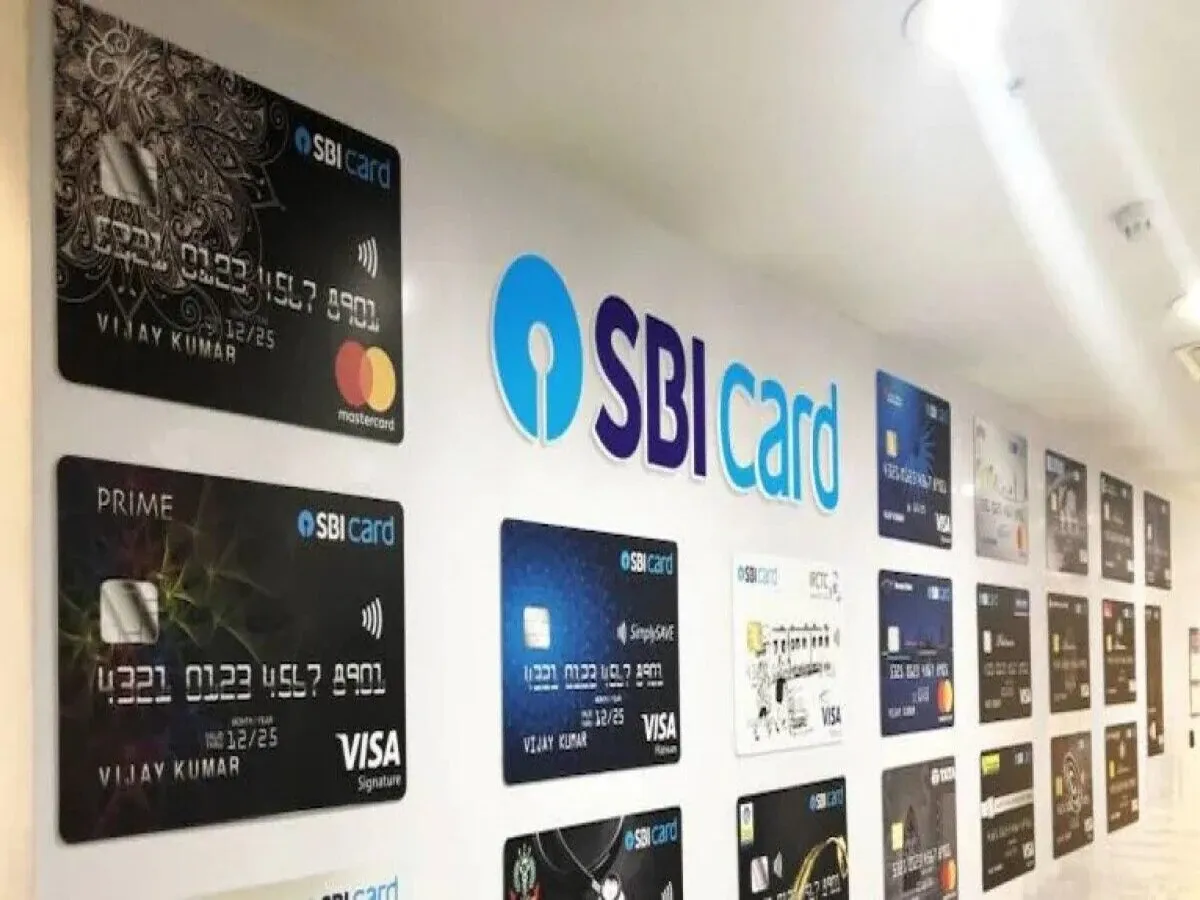
SBI Cards shares gained nearly 4% to their intraday high of ₹642.65 on Monday, July 27.
SBI Card shares surged around 4% during the morning market hours on Monday, July 27, as equity investors focused on the healthy Q1 financial performance of the company for the financial year 2026-27, due to an increase in commission and fees income supporting overall revenue growth.
Shares of SBI Card gained nearly 4% to their intraday high of ₹642.65 apiece during Monday’s market session, compared to ₹618.75 apiece in the same period a year earlier, according to NSE data.
After touching the day’s high level, the company shares were trading 3.3% higher at ₹639.35 on July 27. NSE filings showed that the firm announced its Q1 earnings report after market hours last week on Friday, July 24.
Experts predict that the company's increasing card additions can potentially lead to a lift in spending and receivable growth with a lag, amid the management’s outlook of stabilising credit costs from the current level and recovery in the second half of the current fiscal year.
How did SBI Card perform in Q1 earnings?
NSE data showed that SBI Cards and Payment Services posted a 19.5% surge in its net profit after tax (PAT) to ₹664.44 crore in the first quarter of the financial year 2026-27, in comparison to ₹555.96 crore in the same period a year earlier.
On a sequential basis, the non-banking financial company’s (NBFC) PAT surged 9% to its June quarter levels, from ₹609.30 crore in the fourth quarter of FY26.
The company’s overall revenue from core operations advanced 3.35% to ₹5,040.55 crore, from ₹4,876.92 crore in the same quarter of the previous financial year, as per the exchange data.
Although SBI Card’s interest income dropped on a year-on-year (YoY) basis, the income from fees and commission services surged in the period under review, boosting the overall Q1 earnings.
The financial statements showed that the interest income declined 3% to ₹2,420.63 crore, compared to ₹2,493.15 crore in the same period a year earlier. While the income from fees and commission services surged 9.7% to ₹2,405.54 crore in the first quarter, from ₹2,191 crore a year ago.
Here’s what analysts say
Analysts from CLSA said that SBI Card is witnessing a healthy asset quality improvement even though the loan growth for the NBFC firm remains in low single digits, with persisting pressure over the last few quarters.
“Asset quality is not just off the peak in terms of slippage but far below normalised levels. On the business front, card acquisition picked up while retail spending growth remained in low teens,” they said.
On the costs front, the experts from leading investment firm, Jefferies, said that the company’s credit costs should ease further over the upcoming period.
“SBI Card has stepped up card additions. This can lift spending and receivables growth with lag, but pace is uncertain,” said Jefferies analysts after reviewing the company’s Q1 earnings.
The company management expects its credit cost to see a ‘stable’ to ‘declining’ trend from its current levels, while the potential for some growth recovery remains in the second half of the current fiscal year.
Market analysts are also predicting that the company’s business is likely reaching its lowest point after three quarters of decline, approaching a trough, which is usually followed by a potential recovery phase.
“The lone bright spot was a sequential recovery in revolver & EMI balances after three quarters of decline, suggesting business may be approaching a trough,” said the analysts from Bernstein.
Drop in finance costs
Along with the increase in overall revenue from core operations, the finance cost expense for the NBFC company reduced on a year-on-year basis, adding support to the increase in overall profits in the period under review.
SBI Card’s finance costs dropped 8.4% YoY to ₹744.53 crore, in comparison to ₹812.82 crore in the same quarter of the previous financial year, as per the NSE filings.
However, on a sequential basis, the NBFC firm’s financing costs increased 4.3% to ₹744.53 crore, from ₹713.62 crore in the same period a year earlier.
Asset quality growth
The financial statements also showed that SBI Card’s asset quality witnessed a healthy growth in the June quarter results, in comparison to the same period of the previous financial year.
The gross non-performing assets (NPAs) declined by 103 basis points to 2.04% of the gross advances as of the April to June quarter, from 3.07% in the same quarter of the previous financial year.
“Net non-performing assets were at 0.83% as of June 30, 2026, as against 1.42% as of June 30, 2025,” the company said in its official statement.
How have SBI Cards shares performed?
SBI Card shares have lost nearly 38% in the last five years, down 26% in the last three years, and witnessed a more than 28% decline in their value in the past one-year period, according to NSE data.
On a year-to-date (YTD) basis, the company’s stock has lost 26%, but the shares gained 1.3% in the last one-month period. The exchange data also showed that the shares were trading 1.8% in the last five market sessions.
Shares of SBI Card surged to their 52-week high of ₹965 on October 23, 2025, while the 52-week low was at ₹565.45 on June 11, 2026. The company’s market capitalisation (m-cap) was at ₹61,379 crore as of the trading session on Monday, July 27, 2026.
Related News


About The Author
Next Story