Market News
HUL shares rebound 5% from 52-week low level; here’s what Jefferies, Goldman Sachs and other analysts said post Q1 FY27 earnings

4 min read | Updated on July 29, 2026, 14:55 IST


SUMMARY
HUL reported a 3% decline in its consolidated net profit to ₹2,673 crore for Q1 FY27, following a one-off tax credit during the quarter.
Stock list
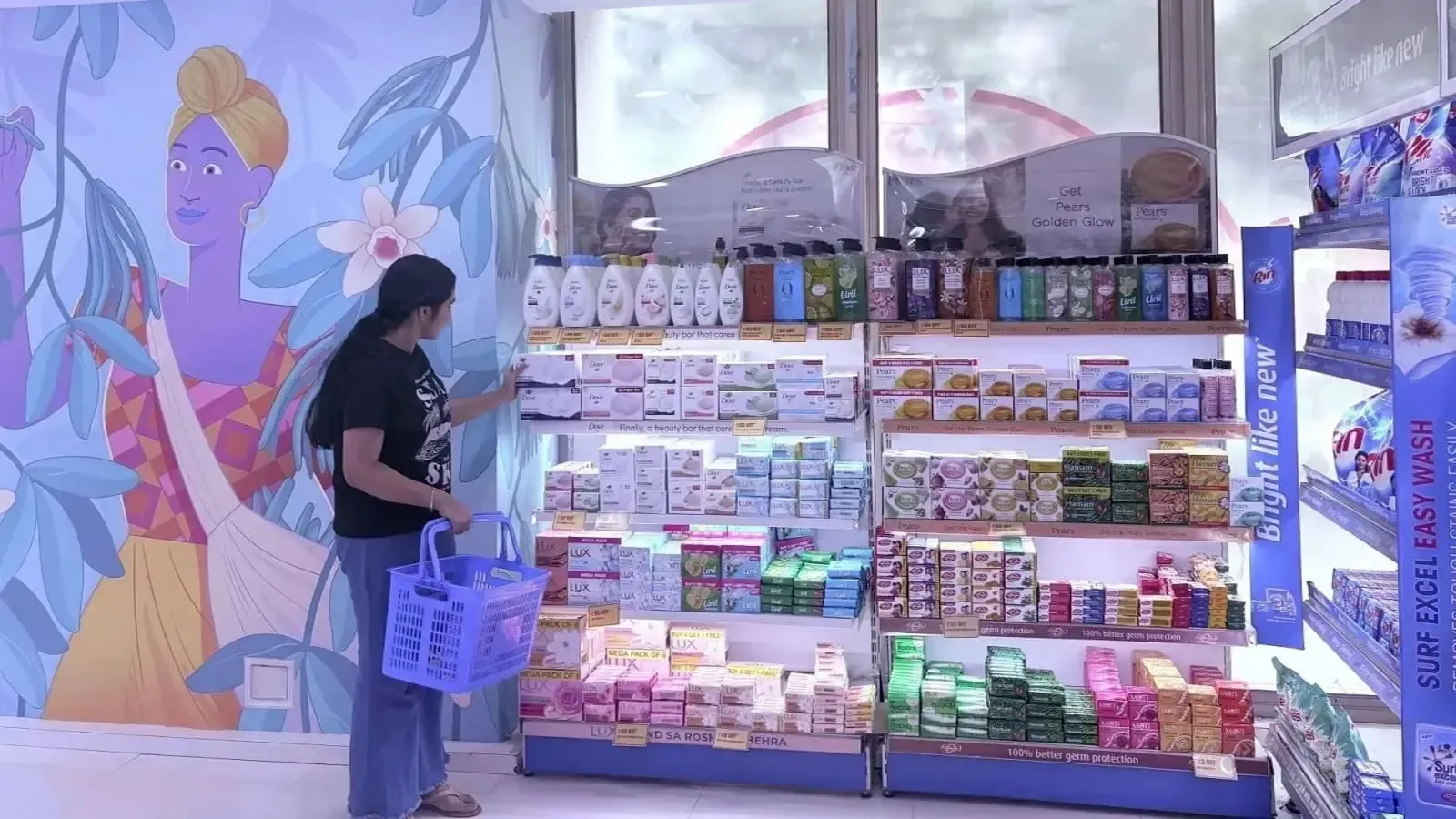
On the operation level, HUL’s EBITDA decreased marginally to ₹3,947 crore in the reporting quarter as against ₹3,640 crore in Q1 FY26. Image: Shutterstock
At 2:55 PM, shares of HUL were trading at ₹2,117.20 apiece on the National Stock Exchange, gaining 4.67%. It was one of the top contributors on the NIFTY50 index.
The rise comes after the management’s commentary following the FMCG major’s June quarter earnings. HUL Chief Financial Officer Niranjan Gupta said the company had passed on only half the inflation through pricing in the June quarter yet maintained its earnings before interest, tax, depreciation and amortisation (EBITDA) margin at 23%, within its guided range.
"We will continue to take some calibrated, measured steps on pricing and we will continue to drive savings as well," Gupta said, reiterating the 2-5% sequential inflation estimate for the current quarter.
HUL's planned price hikes are less about boosting profits and more about protecting margins amid rising input costs. The key monitorable for investors will be whether the company can maintain volume growth while passing on higher costs to consumers.
HUL Q1 FY27 earnings
HUL reported a 3% decline in its consolidated net profit to ₹2,673 crore for Q1 FY27, following a one-off tax credit during the quarter. It has seen a net profit of ₹2,756 crore in the same quarter of the previous fiscal year.
The company’s total income stood at ₹17,341 crore in Q1 FY27 in contrast to ₹15,757 crore in the corresponding quarter of last year, marking a growth of 10%.
On the operation level, HUL’s earnings before interest, taxes, depreciation, and amortisation (EBITDA) decreased marginally to ₹3,947 crore in the reporting quarter as against ₹3,640 crore in Q1 FY26.
The margin contracted to 22.76% in Q1 FY27 in contrast to 23.1% YoY. The firm said that the EBITDA margin remained within the guided range while navigating a volatile operating environment.
Here's what analysts said
Jefferies
Jefferies noted that while HUL’s Q1 performance came in slightly below expectations, the sharp 7% decline in the share price appeared disproportionate to the extent of the miss. The analysts highlighted that although there were a few areas of weakness, particularly in home care margins and growth across personal care and food segments, these were largely offset by other factors, resulting in only a modest shortfall at the EBITDA level.
They further pointed out the company’s consistent improvement in growth and profitability over the past few quarters. Management commentary was considered reasonable, with expectations of stable demand trends and margins likely to remain within the guided range, indicating no major deterioration in the overall outlook.
Goldman Sachs
Analysts from Goldman Sachs in a note on Wednesday said that HUL’s revenue growth is showing signs of improvement, with expectations of further acceleration through FY27. The analysts also highlighted that the home care segment delivered strong growth and is likely to gain additional momentum as price-led growth comes into play over FY27.
Despite input cost inflation, the analysts expect the company to sustain its EBITDA margins, indicating resilience in overall profitability.
Macquarie
HUL’s Q1 performance was broadly in line with Macquarie analysts’ expectations, although volume growth moderated on a sequential basis. The analysts further flagged continued weakness in the soaps segment, attributing it to ongoing inflationary pressures, which remained an area of concern during the quarter.
However, they said that the overall FMCG demand outlook remains stable heading into Q2 despite inflationary headwinds. Premium products continue to grow ahead of mass segments across markets, while analysts believe that clarity on a pickup in volume growth will be key to near-term performance.
Morgan Stanley
Analysts from Morgan Stanley described HUL’s Q1 FY27 commentary as optimistic and said overall demand conditions are expected to remain stable. They highlighted that inflation has not impacted demand so far, with both rural and urban demand trends holding steady during the period.
They added that while the demand environment remains resilient, the progression of the monsoon and geopolitical developments will be key monitorables going ahead, as these factors could influence near-term trends.
As of July 29, 2026, HUL has a total market capitalisation of ₹4.92 lakh crore, NSE data showed.
Related News


About The Author
Next Story