Market News
NIFTY FMCG surges 17% in a month: Falling palm oil, price hikes and demand recovery fuel rally; 7 factors explained

10 min read | Updated on November 26, 2026, 10:16 IST

SUMMARY
The sharp recovery comes amid a combination of favourable developments for the sector. Global palm oil prices have corrected sharply amid rising inventories in Malaysia, crude oil prices have softened from recent highs, and several FMCG companies have raised product prices to protect their margins.
One of the biggest potential positives for FMCG companies is the sharp correction in global palm oil prices.
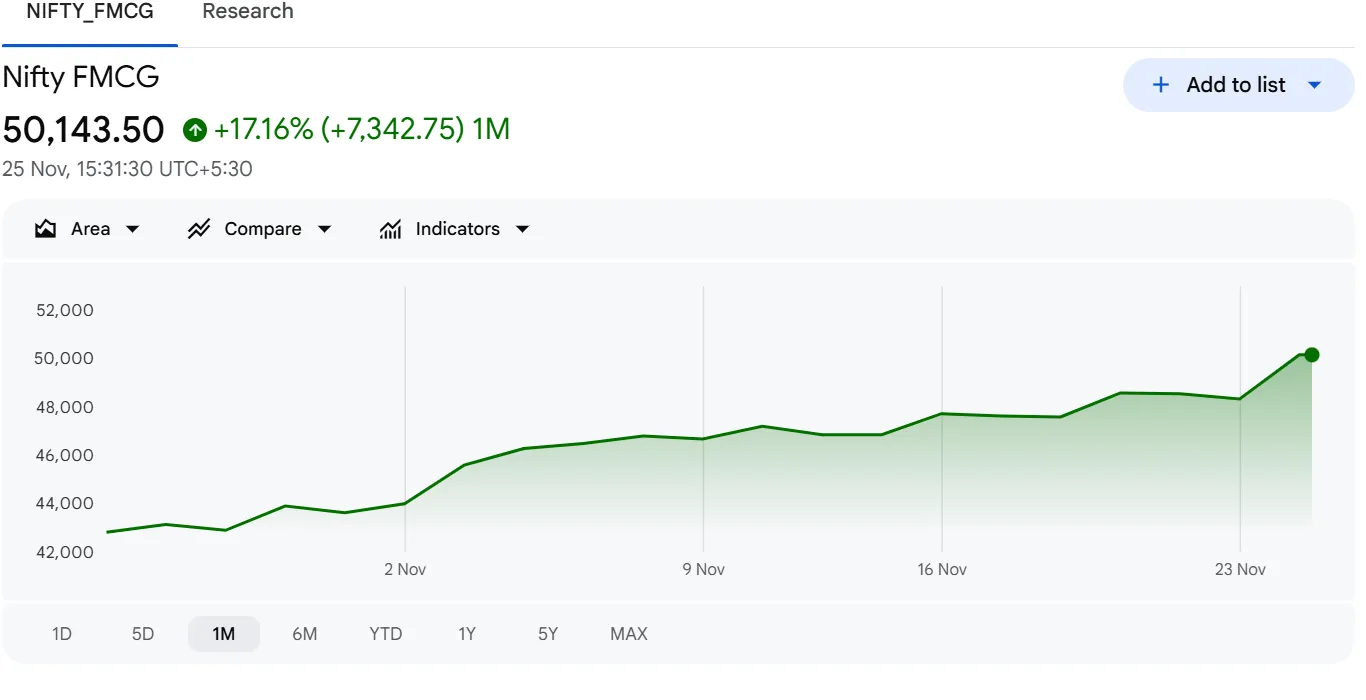
The NIFTY FMCG index has staged a sharp comeback on Dalal Street, gaining over 17% in a month and emerging among the best-performing sectoral indices. The rally has brought consumer goods companies such as Hindustan Unilever (HUL), Dabur India, Godrej Consumer Products, ITC, Marico and Britannia Industries back into the spotlight, after a prolonged period of underperformance.
The sharp recovery comes amid a combination of favourable developments for the sector. Global palm oil prices have corrected sharply amid rising inventories in Malaysia, crude oil prices have softened from recent highs, and several FMCG companies have raised product prices to protect their margins.
At the same time, consumption trends are showing signs of improvement, particularly in rural markets.
Palm oil prices tumble amid record inventories in Malaysia
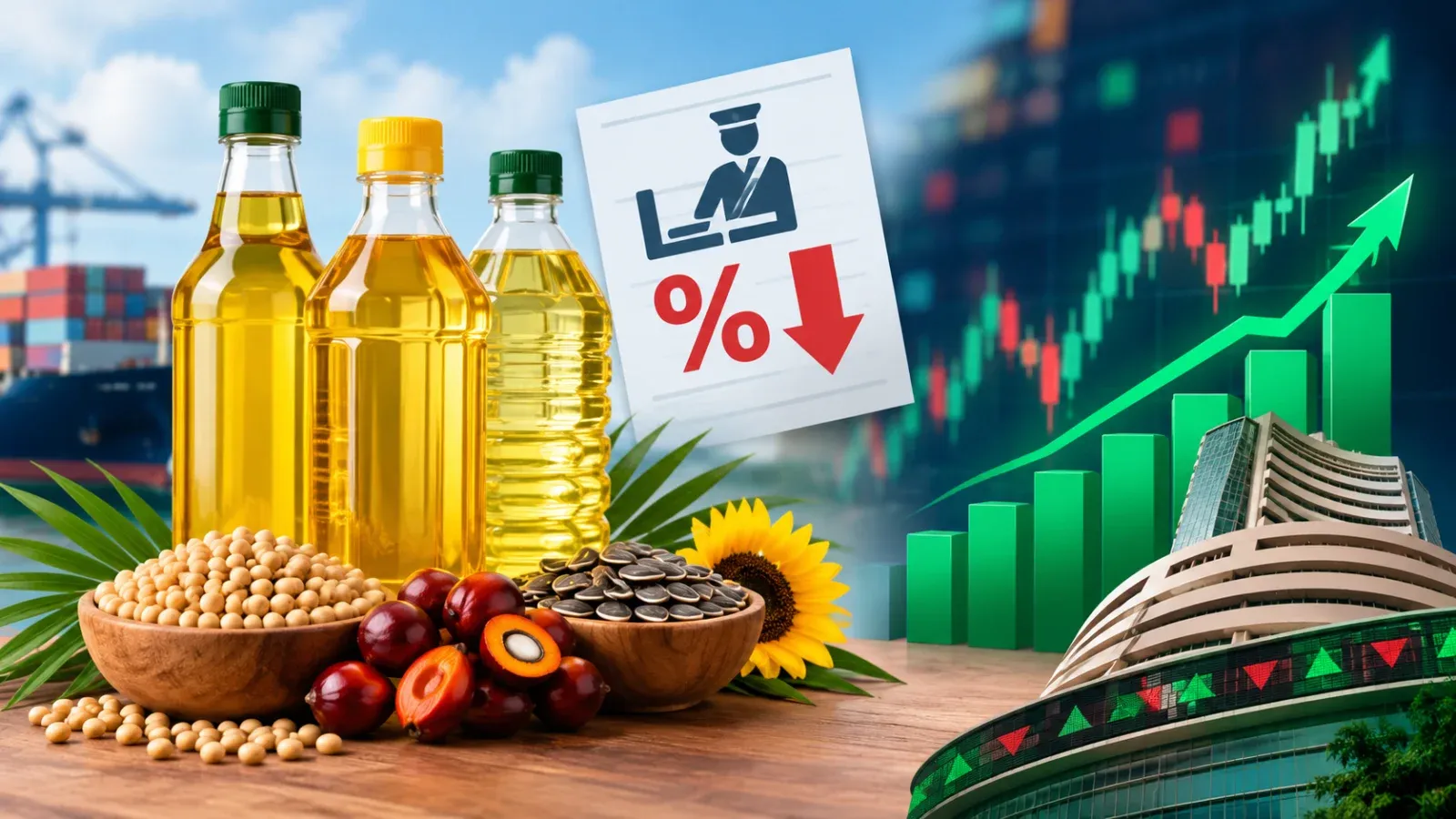
One of the biggest potential positives for FMCG companies is the sharp correction in global palm oil prices.
Palm oil futures on the Kuala Lumpur exchange fell for a fifth consecutive trading session on November 23, approaching their lowest closing level since March. Prices have declined around 18% from their September peak, weighed down by excess supply and uncertainty surrounding a potential export tax waiver.
Malaysia has witnessed a build-up in inventories following stronger-than-expected production. The growing supply glut has also raised concerns about storage capacity, with further accumulation potentially forcing processing mills to limit purchases of oil palm fruit from smallholders.
The latest official Malaysian Palm Oil Board (MPOB) data also highlights the supply build-up. The country’s total palm oil inventories increased 3.15% month-on-month to 3.62 million tonnes in October 2026. Crude palm oil stocks rose 7.46% to 2.32 million tonnes during the month.
India is a major importer of palm oil, which is an important raw material for several consumer goods manufacturers. It is used in edible products, packaged foods, soaps and personal care products, besides serving as a feedstock for oleochemicals.
Companies such as HUL and Godrej Consumer Products have exposure to palm oil and its derivatives through their home and personal care portfolios. Food companies also use palm oil and other edible oils in several packaged products.
A sustained decline in palm oil prices could lower procurement costs for these companies, helping them improve gross margins. The benefit could be particularly meaningful for businesses with significant exposure to edible oils and palm-based derivatives.
However, the impact will depend on procurement contracts, inventory cycles and the extent to which lower commodity prices are passed on to consumers.
Falling crude oil prices offer relief on another front
Apart from palm oil, crude oil prices are another important input-cost variable for the FMCG sector.
Crude oil is not just an energy commodity. It is also a key feedstock for the petrochemical industry, which supplies several raw materials used by consumer goods manufacturers.
For instance, crude-linked derivatives are used to manufacture surfactants, solvents and other chemicals that go into detergents, shampoos, soaps and personal care products. Plastic packaging materials, including bottles, containers and flexible packaging, are also linked to petrochemical prices.
- Detergents and home care: Lower prices of certain crude-linked chemicals and surfactants can reduce manufacturing costs.
- Personal care: Companies manufacturing shampoos, soaps and other personal care products could benefit from softer prices of petrochemical-based ingredients.
- Packaging: Lower prices of crude-linked polymers can reduce the cost of plastic bottles, containers and packaging materials.
- Transportation: Softer fuel prices can help moderate freight and distribution expenses across the supply chain.
This is particularly relevant for companies such as HUL, Godrej Consumer Products and Dabur, which have sizeable home and personal care businesses.
Brent crude futures slipped below $88 per barrel during early trade on November 25, as concerns over a potential global supply glut weighed on prices. However, prices subsequently rebounded, with Brent settling at $94.61 per barrel following fresh geopolitical concerns.
The broader moderation in crude prices from recent highs nevertheless offers a potential cost benefit, although sustained lower prices will be important for the relief to feed through into company earnings.
Price hikes could support margins as input costs moderate
Another important factor supporting the FMCG sector is the pricing action undertaken by companies to offset elevated raw-material costs.
Several manufacturers have increased product prices over recent months, either by raising maximum retail prices (MRPs), reducing grammage or implementing calibrated price revisions across their portfolios.
Meanwhile, Dabur India has indicated that it is considering calibrated price increases across its portfolio amid persistent input-cost pressures.
The pricing actions are significant because they could help companies protect product realisations even as some commodity prices begin to soften.
This followed an earlier increase from ₹115 to ₹125 in June, taking the cumulative price increase to around 17.4% this year.
While ITC’s cigarette business has its own demand and taxation dynamics, the price revision highlights the company’s calibrated approach to managing cost pressures and protecting realisations.
The combination of higher selling prices and lower input costs could create a favourable operating environment for FMCG companies.
When raw-material prices rise, manufacturers generally attempt to pass on some of the additional costs to consumers through price increases. If input costs subsequently moderate, companies may be able to retain the higher product realisations while benefiting from lower procurement expenses.
This could support gross-margin expansion and improve operating profitability over the coming quarters.
However, the extent of the benefit will depend on whether companies can sustain volumes at higher prices without losing market share.
Consumption trends are showing signs of improvement
The FMCG rally is not just about lower commodity prices and better margins. Improving consumption trends are also providing support to the sector.
Non-urban markets led the recovery, registering 16.1% growth, while urban markets recorded 10.1% growth.
The report attributed the improvement to a combination of festive demand, better retail execution, wider product availability, and price increases.
Importantly, while price increases of 8-9% remained a key contributor to value growth, volumes also showed signs of recovery after several subdued months.
The improvement in rural demand is particularly important for FMCG companies, given their extensive exposure to smaller towns and villages.
A sustained recovery in consumption could help manufacturers increase sales volumes, improve capacity utilisation and achieve better operating leverage.
This would provide an additional earnings trigger beyond the potential benefit from lower input costs.
Investors are returning to defensive stocks amid improving market sentiment
The sharp rally also reflects a change in investor preference.
FMCG companies are traditionally considered defensive investments because their products cater to regular household consumption. Demand for everyday essentials tends to be relatively resilient even during periods of economic uncertainty and stock market volatility.
After a prolonged period of underperformance, investors appear to be returning to consumer-facing businesses amid improving earnings prospects and expectations of a recovery in margins.
The recent buying has also coincided with a broader improvement in foreign investor flows into Indian equities.
The shift in foreign institutional investors’ (FII) stance towards India is reflected in their investments, with net inflows reaching a record $13.2 billion so far this month, the expert said.
The renewed interest in large-cap companies, coupled with improving expectations around consumption and profitability, has helped FMCG stocks attract buying interest.
Strong Q2 earnings add to optimism around FMCG stocks
Despite rising input cost pressures, most major players across the food, personal care and home care segments reported low- to high-double-digit profit growth, aided by price hikes and cost-management measures. However, ITC’s sharp decline in profit, amid falling cigarette sales, weighed on the overall sector performance.
The 18 FMCG companies in the Nifty 250 index, including ITC, reported a marginal 0.9% year-on-year rise in combined adjusted net profit, while net sales grew 15.4%, beating market estimates. Excluding ITC, the picture was considerably stronger: combined adjusted profit rose 11.7%, and revenue increased 18.3%, both ahead of Street expectations.
This suggests that the underlying earnings momentum across the FMCG sector remained healthy despite the subdued headline profit growth.
FMCG stocks recover after prolonged underperformance
The latest rally also needs to be seen against the backdrop of the sector’s relatively weak performance earlier in 2026.
Concerns around elevated commodity prices, margin pressures and subdued consumption had weighed on FMCG valuations and investor sentiment.
The recent recovery has helped the sector regain investor attention, with buying extending across several index constituents rather than being restricted to a handful of heavyweight stocks.
On November 25, the Nifty FMCG index surged 3.79% to close at 50,143.50, outperforming the Nifty 50, which gained around 1.65%.
Dabur India, HUL, Godrej Consumer Products and Britannia Industries were among the prominent gainers during the session.
The index’s one-month advance of over 17% suggests that investors are increasingly factoring in the possibility of an improvement in the sector’s earnings outlook.
What to keep an eye on
Despite the sharp rally, the sustainability of the recovery will depend on whether the favourable developments translate into actual earnings growth.
Investors will closely track global palm oil prices, crude oil trends and other raw-material costs, along with the extent to which companies can sustain their recent price increases.
Volume growth will be equally important. If higher prices begin to affect consumer demand, companies could find it difficult to sustain revenue growth even if their margins improve.
The upcoming December-quarter earnings will therefore be important in determining whether the recent rally is supported by a meaningful improvement in business fundamentals.
Related News


About The Author
Next Story