
Market News
HUL raises prices, Dabur signals increase: Is India's FMCG sector entering a new pricing cycle?

6 min read | Updated on November 11, 2026, 09:10 IST

SUMMARY
HUL has raised the maximum retail prices (MRPs) of several products across its home care portfolio, including popular detergent brands Surf Excel, Rin and Wheel, by up to 11%, amid continued cost pressures and efforts to protect margins.
Stock list
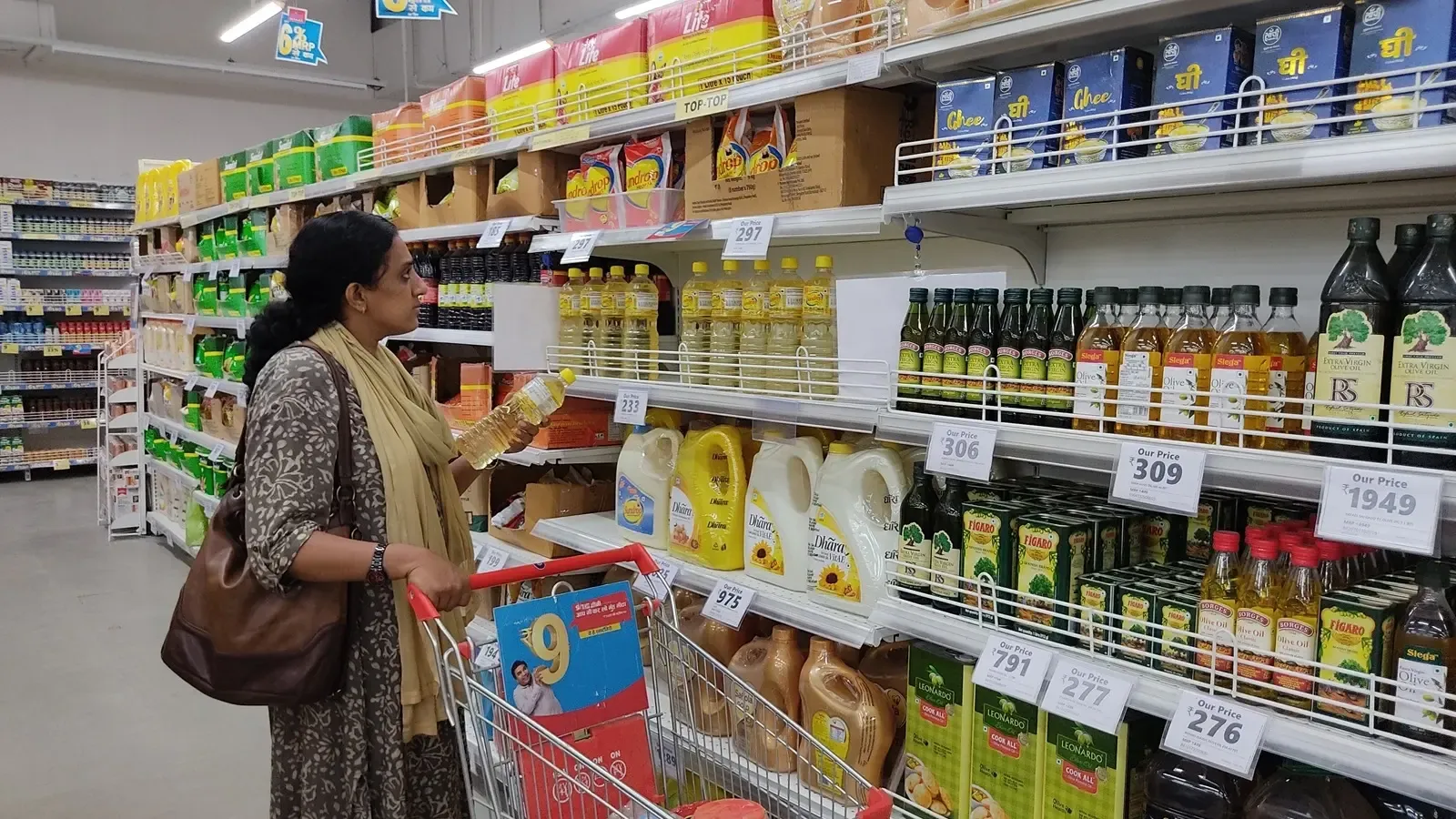
Last month, HUL Managing Director and CEO Priya Nair said the company would continue to take calibrated price hikes depending on the movement in input costs. Image: Shutterstock
Shares of fast-moving consumer goods (FMCG) companies such as Hindustan Unilever (HUL), Dabur India, Godrej Consumer Products, Marico and Britannia Industries, are expected to be on investors' radar on Wednesday, November 11, as companies look at calibrated price increases to counter elevated input costs and protect margins.
HUL has raised the maximum retail prices (MRPs) of several products across its home care portfolio, including popular detergent brands Surf Excel, Rin and Wheel, by up to 11%, amid continued cost pressures and efforts to protect margins.
Meanwhile, Dabur India has indicated that it is considering calibrated price increases across its portfolio amid persistent inflationary pressures.
The developments raise a larger question for the FMCG sector: Will companies increasingly rely on price increases to sustain revenue growth and protect profitability, and could this come at the expense of volume growth in a price-sensitive market?
HUL raises prices across detergent portfolio
Last month, HUL Managing Director and CEO Priya Nair said the company would continue to take calibrated price hikes depending on the movement in input costs, as elevated commodity inflation poses a challenge even as demand remains resilient.
The price revisions announced recently cover multiple pack sizes, with increases ranging from ₹1 to ₹10.
The company has raised the MRP of Surf Excel Quick Wash (1 kg pack) by ₹10 to ₹245 from ₹235, while its 500-gram pack has become costlier by ₹5 to ₹128 from ₹123.
The price of Surf Excel Easy Wash (1 kg pack) has been increased by ₹5 to ₹172 from ₹167, while the 500-gram pack now costs ₹87 against ₹85 earlier.
The MRP of the Surf Excel bar (250 gm) has been raised by ₹3 to ₹45, while the four-bar bundle (200 gm each) has become costlier by ₹10 to ₹155.
Dabur India hints at calibrated price increases
FMCG major Dabur India is looking at calibrated price increases across its portfolio to offset elevated input-cost inflation. The company is also stepping up cost optimisation and looking to improve its product mix to protect margins and sustain growth.
The company is navigating an inflationary environment, with rising crude oil prices amid the West Asia conflict adding to cost pressures across its supply chain, said Dabur India CEO (India Business) Herjit Bhalla during the post-earnings investor call last week.
"We have had to calibrate what we are doing...Our approach has been to look at this as an opportunity, to look across the length and breadth of our portfolio, to be able to see how we can enhance our mix, how we can drive cost optimisation more, how we can take calibrated price increases, and where we need to be competitive," said Bhalla.
This indicates that Dabur is not looking at price increases as the only lever to tackle inflation. Instead, the company is seeking to balance pricing actions with operational efficiencies and a shift towards products and categories that offer better margins.
Why are FMCG companies considering price hikes?
Input-cost inflation remains an important factor influencing the pricing decisions of FMCG companies. Crude oil and its derivatives are used in several consumer product categories, including detergents, personal care products, packaging materials and other household goods.
Consequently, fluctuations in crude oil prices can influence the cost of raw materials such as surfactants, chemicals, polymers and packaging inputs.
Similarly, companies operating in the foods and beverages segment remain exposed to fluctuations in edible oil, coffee, wheat, milk and other agricultural commodity prices.
When raw material costs increase, companies generally have three broad options: absorb the increase and accept pressure on margins, raise product prices or reduce costs through operational efficiencies and changes in product mix.
However, passing on the entire increase to consumers may not always be feasible, particularly in a competitive market where consumers are sensitive to price changes.
This is why companies often resort to calibrated price increases across selected products, categories and pack sizes rather than implementing uniform price revisions across their entire portfolios.
Will price hikes affect volume growth?
One of the biggest concerns for FMCG companies is whether higher product prices could affect consumer demand and volume growth.
In a price-sensitive market such as India, even modest price increases can influence purchasing decisions, particularly in mass-market categories where consumers have several competing brands and alternatives.
Consumers may shift to smaller packs, lower-priced variants or competing brands to manage their household budgets. This could affect volumes even if companies manage to protect their realisations and revenue growth through higher prices.
Companies therefore need to strike a balance between passing on higher costs and retaining consumers.
For instance, a company may report higher revenue growth due to price increases even if the number of units sold remains relatively flat. This makes it important for investors to distinguish between volume-led growth and price-led growth when assessing quarterly performance.
A sustained increase in pricing without a corresponding improvement in volumes could also affect market share and competitive positioning over time.
What does it mean for other FMCG companies?
The pricing actions by HUL and Dabur could put the broader FMCG sector under the spotlight as investors track whether other companies also resort to price increases to protect profitability.
Godrej Consumer Products, Marico, Britannia Industries, Nestle India, ITC and Tata Consumer Products are among the companies to watch.
While the extent of input-cost pressures differs across categories, investors will track how these companies manage raw material inflation, pricing strategies and volume growth.
For instance, home and personal care companies remain exposed to crude-linked derivatives and packaging costs. Food companies, meanwhile, have to navigate fluctuations in agricultural commodities, edible oils, dairy products and other inputs.
Companies with stronger brands, differentiated products and greater pricing power may have more flexibility to pass on higher costs to consumers. However, the ability to implement price increases without losing market share will remain an important factor.
How FMCG stocks have fared so far in CY26
Despite the recent recovery, FMCG stocks have remained under pressure in 2026. According to Google Finance data, the NIFTY FMCG index has declined over 13% year-to-date (YTD), reflecting continued weakness in the sector.
However, the index has gained around 1% over the past five trading sessions and more than 5.7% over the past month. It has also advanced nearly 9% over the past six months, indicating an improvement in recent market performance.
Related News


About The Author
Next Story

