Market News
RBI policy August 2026: Rates unchanged at 5.25%, inflation likely to peak at 5.9% in Q3 FY27; check key takeaways

5 min read | Updated on August 05, 2026, 12:40 IST


SUMMARY
RBI decided to keep the repo rate unchanged at 5.25% while retaining its neutral stance as the central bank estimates higher inflation risk in 2026, due to higher food, fuel and other input prices in the economy.
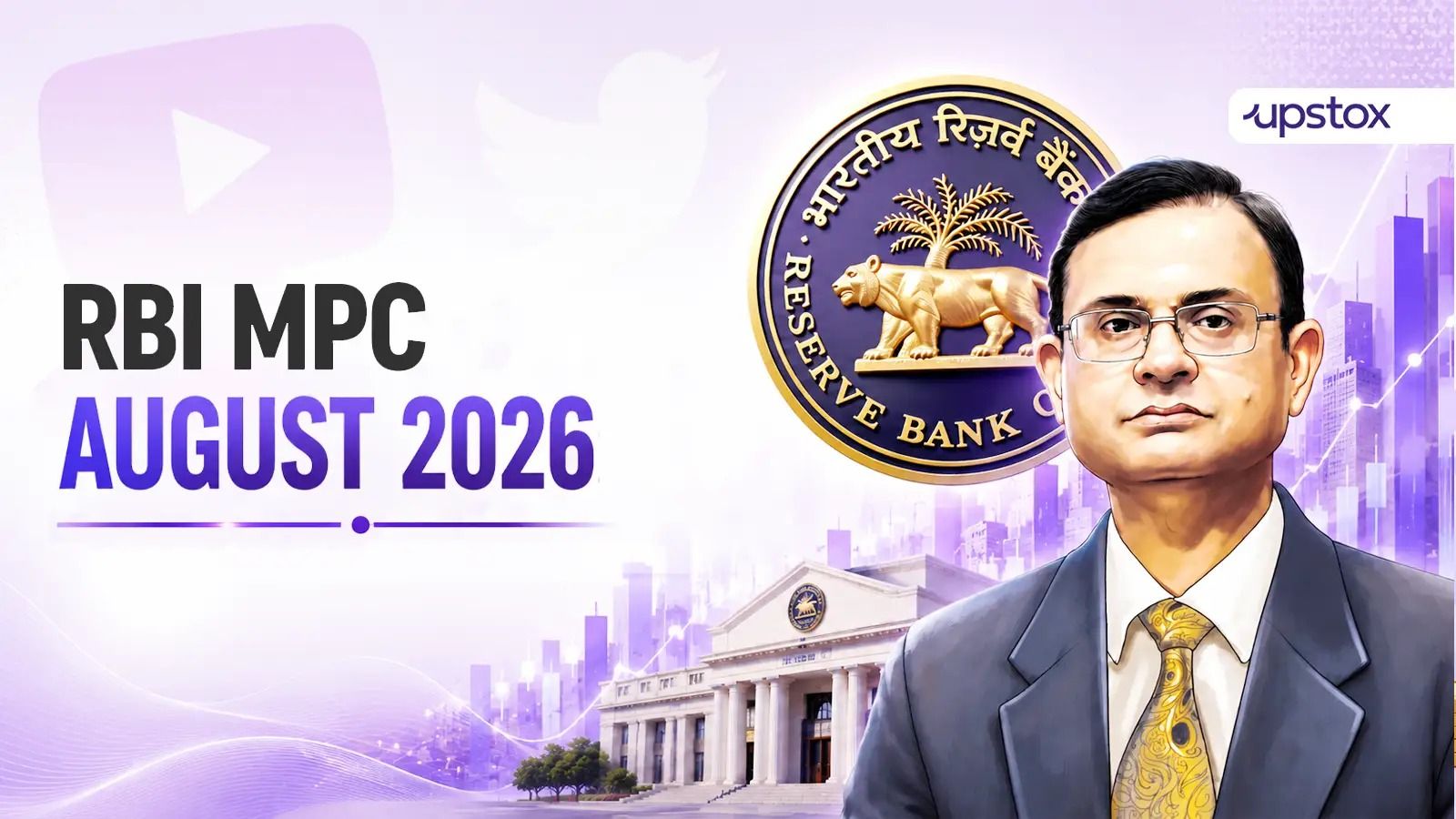
RBI decided to keep the repo rate for the Indian economy unchanged at 5.25% on Wednesday, August 5, 2026.
This time, the central bank predicts that the inflation rate of the Indian economy is expected to range higher in 2026 than its levels in 2025, due to the impact of the West Asia crisis, higher prices in the market, and supply chain disruptions.
RBI started its monetary policy meeting on August 3 and announced the outcome of the same on August 5, 2026.
RBI’s MPC decided to keep the repo rate unchanged for the fourth consecutive time since the February 2026 outcome decision to keep the interest rates on hold. The repo rate is the benchmark interest rate at which banks borrow funds from the central bank.
The last rate cut from the RBI MPC was carried out back in December 2025, during which the central bank decided to reduce the repo rate by 25 basis points to 5.25%, while later in February 2026, the committee switched its stance to Neutral.
Key takeaways from RBI’s MPC outcome
Rates on hold
Reserve Bank of India’s 62nd MPC meeting headed by Governor Sanjay Malhotra and members Dr Nagesh Kumar, Saugata Bhattacharya, Ram Singh, Dr Poonam Gupta and Indranil Bhattacharyya unanimously kept the policy repo rate unchanged at 5.25% along with the decision to continue with the neutral stance.
“After a detailed assessment of the evolving macroeconomic and financial developments and the outlook, the MPC decided unanimously to keep the policy repo rate under the liquidity adjustment facility (LAF) unchanged at 5.25%,” said Governor Sanjay Malhotra in his official address.
August committee’s rate hold comes against the expectations of an upcoming turbulent global economic environment, which will in turn potentially impact domestic economic activity in the country.
With continued uncertainty over the US import tariffs, an unstable global economic environment, and volatile crude oil and currency prices, the central bank continues to monitor the economic data for a trajectory of interest rates in the upcoming period.
Will inflation peak at 5.9% in Q3?
Analysing the current trends as of date, the Reserve Bank of India estimates that the consumer price index (CPI) inflation for the Indian economy will peak at 5.9% in the third quarter (October-December) of the financial year 2026-27 amid the continued pressure from higher food, fuel and other input prices.
In the August policy meeting, the RBI said that CPI inflation edged up above the target as per the earlier estimates, largely due to fuel and food costs in the economy, with fewer signs of generalisation of price pressures so far.
“Headline inflation is expected to rise further in the near term and peak in Q3 FY2026-27, primarily due to food and fuel, before moderating thereafter,” said Governor Sanjay Malhotra during his address.
The central bank also estimates the underlying inflation to align with core inflation towards the end of the financial year.
Will RBI change rates soon?
Reserve Bank of India said that the MPC needs greater clarity on the inflation situation in the domestic economy before the committee decides to make any changes to the interest rates in the future.
“There is a need for greater clarity to emerge, especially regarding inflation, its path and composition before taking any policy action. Any such action would also have to consider the need for recalibration of policy rates in line with the evolving growth-inflation dynamics, especially the normalisation of the underlying inflation from its benign levels seen hitherto,” said Sanjay Malhotra.
Growth prospect
Although the uncertainty remains amid the escalations in West Asia, the supply-side pressures due to the conflict have somewhat eased since June 2026, which resulted in the withdrawal of temporary measures undertaken by the government and normalisation of key input supplies.
“However, the re-escalation of the conflict since the first week of July has amplified volatility in energy prices and renewed uncertainty about supply chains,” said RBI.
Key factors like domestic economic activity exhibiting resilience, healthy performance from Q1 results, momentum in services activities, private consumption boost with the help of buoyant discretionary spending, along with double-digit merchandise exports are expected to be the driving growth factors.
Looking ahead, the RBI predicts that the manufacturing sector may face cost pressures, but the growing diversification of global supply chains should help mitigate the impact of the same.
The services sector is expected to maintain its buoyancy on the back of strong domestic demand and steady employment conditions in the economy.
“Strong capacity utilisation, robust credit flow and the government’s continued thrust on infrastructure are expected to sustain investment activity,” said Sanjay Malhotra.
While renewed tensions in West Asia, risk of disruption in global supply chains, volatility in international financial markets, and weather-related shocks pose downside risks to growth.
Additional announcements
The central bank also proposed a few measures to strengthen the cooperative sector in India in its policy meeting.
RBI will be issuing draft guidelines for resuming licensing of Urban Co-operative Banks (UCB) after receiving feedback on the discussion paper on licensing of UCBs.
And secondly, the central bank will issue draft directions after undertaking a comprehensive review of the arrangement in light of the experience gained and the developments since 2008, when the Credit Monitoring Arrangement for Rural Cooperative Banks.
Related News
About The Author
Next Story