Market News
RBI’s rate-hike pivot: 5 key takeaways as inflation risks take centre stage

6 min read | Updated on October 07, 2026, 11:57 IST


SUMMARY
Reserve Bank of India raised its repo rate by 25 bps to 5.5%, marking the first hike since February 2023 amid elevated inflation concerns in the Indian economy. Here's all investors need to know about the MPC outcome.
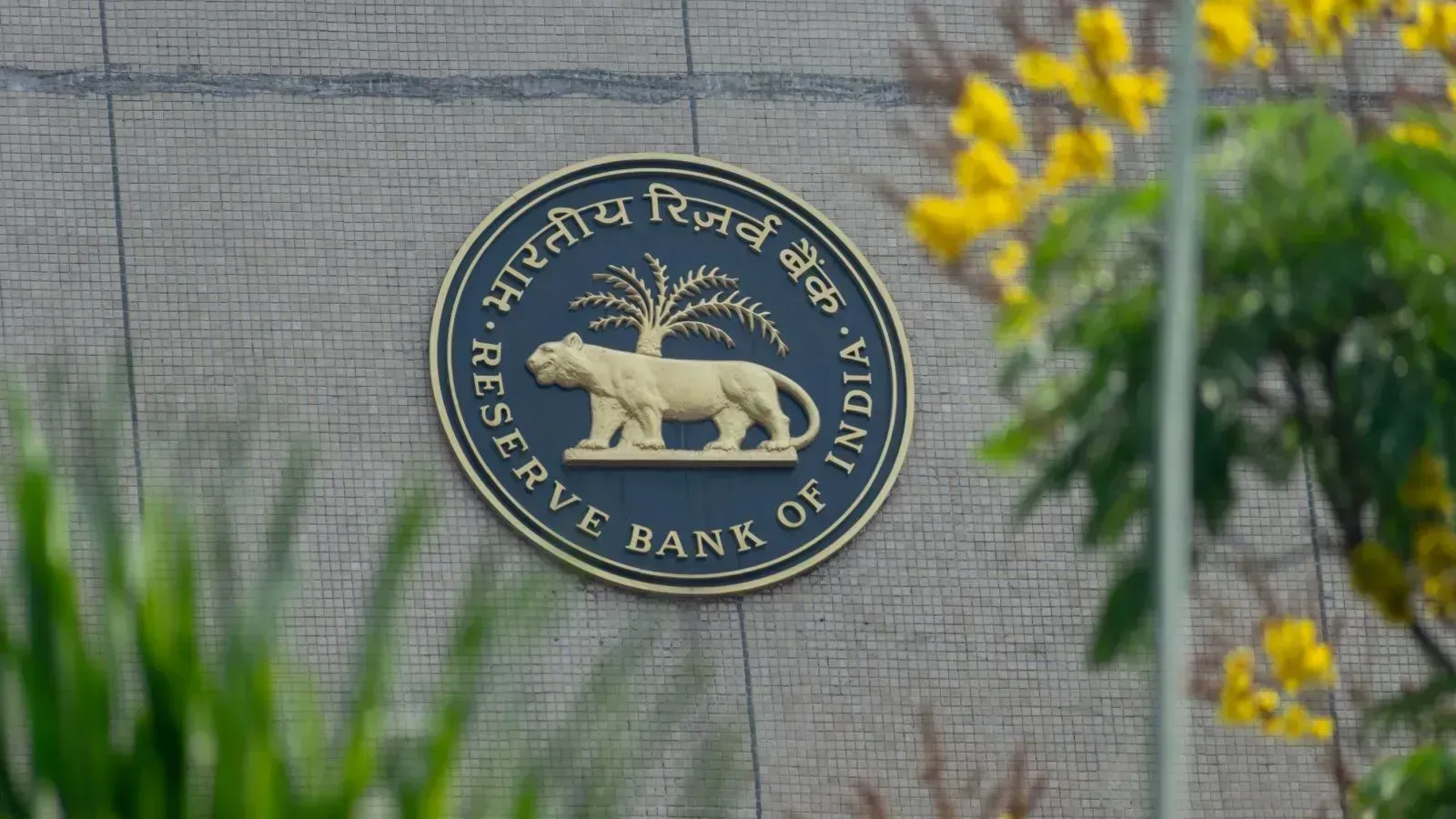
RBI raised the key repo rate by 25 basis points (bps) to 5.5% on Wednesday, October 7.
The MPC committee on October 7 decided to raise the key repo rate by 25 basis points (bps) to 5.5%, in line with market expectations, while changing its stance to ‘calibrated tightening’ as the central bank aims to counter price pressure and increasing inflation in the country amid global headwinds.
RBI started its MPC meeting on Monday, October 5, and announced the outcome for the same on Wednesday, October 7, 2026.
The central bank’s move to increase its key interest rates comes after keeping the benchmark repo rate unchanged for four consecutive times since the February 2026 policy meeting. The repo rate is the interest rate at which banks borrow funds from the RBI.
Key takeaways from RBI MPC outcome
First rate hike since February 2023
The Reserve Bank of India’s monetary policy committee’s decision to raise the key interest rates at the 63rd meeting held on Wednesday comes for the first time since its last rate hike back in February 2023.
On October 7, the MPC members Governor Sanjay Malhotra, Nagesh Kumar, Saugata Bhattacharya, Ram Singh, Dr Poonam Gupta and Indranil Bhattacharyya unanimously decided to increase the policy repo rate under the liquidity adjustment facility (LAF) by 25 bps to 5.50%.
The October committee outcome comes against the backdrop of rate hike expectations amid multi-year US Treasury yields, weakness in the Indian currency, elevated crude oil prices due to the conflict in West Asia and global policy tightening since the US Fed’s rate hike move last month.
“Driven by escalating energy costs and rising food prices, global inflation is projected to increase sharply, prompting monetary policy tightening by major central banks,” said Governor Malhotra during his address.
What does ‘calibrated tightening’ mean?
Along with increasing the repo rates, RBI’s MPC also shifted its stance to “calibrated tightening” in the October policy meeting, from its earlier “neutral” stance due to inflation concerns in the market.
A calibrated tightening means that the central bank has set aside the possibility of an interest rate cut for the Indian economy in the upcoming period, with the RBI Governor highlighting that the monetary policy action can only be a rate hike or a rate hold ahead.
Although a calibrated tightening stance from the central bank means that it will not cut the key interest rates, the RBI is also not obliged to raise its repo rates at every upcoming policy meeting.
The central bank’s updated stance of calibrated tightening is adopted due to concerns of a higher rate of inflation in the economy due to the current headwinds which are driving prices in the domestic market.
6% Inflation in Q3?
After reviewing the current market situation, RBI Governor Sanjay Malhotra said that the central bank expects the consumer price index (CPI) inflation for the Indian economy to hit 6% in the third quarter (Q3) of FY27 due to continued supply-side pressure, El Niño conditions, and higher oil prices in the market.
RBI’s projection of a 6% inflation rate in Q3 comes as an increase from its earlier 5.9% inflation peak expectations from the August 2026 MPC meeting.
RBI’s MPC expects that CPI inflation for Q2 is projected to be at 4.9%, followed by 6% inflation in Q3, and 5.7% in Q4 FY27.
“Inflation for Q1:2027-28 is projected at 5.6%, with risks being evenly balanced,” as per the official statement.
Data showed that the CPI inflation for August 2026 increased to 4.8%, in comparison to 4.5% in July 2026, largely driven by higher food and fuel inflation in the economy. With India being a crude-importing nation, the volatility and the elevated energy prices have a direct impact on inflation across the segments in the Indian economy.
More rate hikes ahead?
Although the central bank has ruled out rate cuts for the upcoming period, RBI’s duration and extent of the current rate hike cycle would be contingent on the actual growth-inflation developments and outlook in the upcoming period.
Governor Malhotra also said that underlying inflation, extent of broadening of price pressures, second-round effects of a supply shock, and the impact on overall demand will determine the interest rate trajectory and whether or not there is a rate hike in cards.
“It only signals that given the current conditions, rate cuts are off the table in the near term and policy action ahead can only be a rate hike or a pause, depending on the evolving conditions and the outlook,” as per the RBI MPC statement.
Growth outlook
On the growth front, the Reserve Bank of India cited that domestic economic activity showed resilience with a real GDP growth of 7.8% in the first quarter of FY27, largely driven by private consumption, strong investment activity, and positive contribution of net exports.
Looking at the current dynamics, Governor Malhotra said that the MPC suggests that economic activity is holding momentum in Q2, with some moderation in comparison to the previous quarter's performance.
“Looking ahead, global economic uncertainty and supply chain disruptions are expected to have some bearing on domestic economic activity. Furthermore, weak southwest monsoon along with strong El Niño conditions may impact the upcoming rabi season and rural demand,” as per the official statement.
Highlighting the growth numbers, RBI expects the real GDP for FY27 to be at 7.1%, marking an upward revision of 40 basis points due to the strength of economic activity despite significant headwinds.
For Q1 FY28 projections, RBI expects the real GDP growth to be at 7.1% with evenly balanced risks in the upcoming financial year.
Related News

About The Author
Next Story