Market News
RBI hikes repo rate by 25 bps to 5.5%, first hike since Feb 2023; shifts stance to ‘Calibrated Tightening’
.jpeg)
4 min read | Updated on October 07, 2026, 11:05 IST


SUMMARY
The RBI's MPC increased repo rate by 25 basis points to 5.5% to counter spiralling inflation which has been trending above its upper band of tolerance level of 4% since June.

his is the first interest rate hike by the MPC since February 2023.
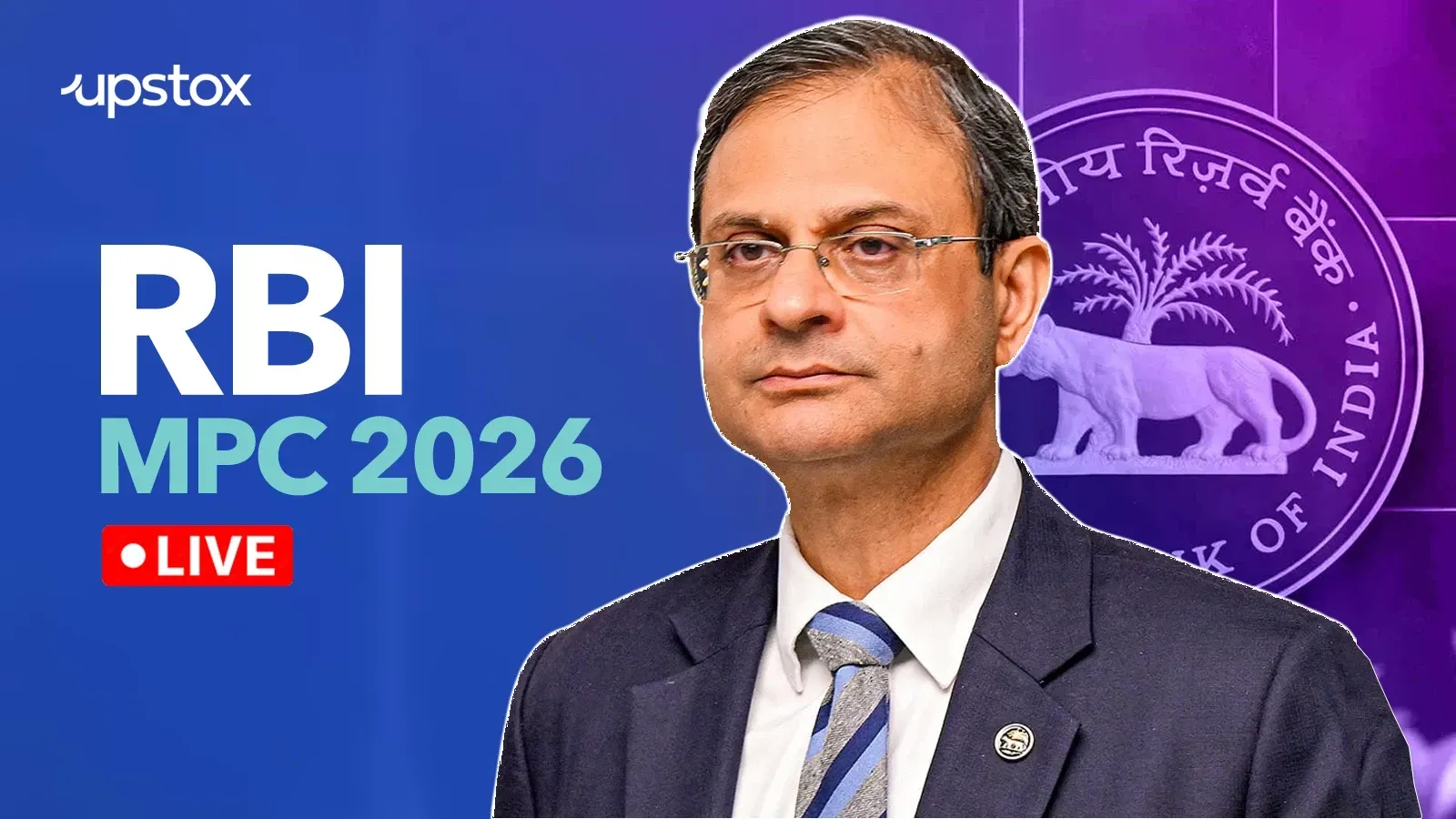
The Reserve Bank of India’s (RBI) six-member Monetary Policy Committee (MPC), headed by Governor Sanjay Malhotra, unanimously decided to raise the repo rate and shift its policy stance to ‘calibrated tightening’ from ‘neutral’ at its latest monetary policy meeting, held from October 5 to October 7.
RBI Governor Malhotra announced the decision on Wednesday.
The RBI's MPC increased the repo rate by 25 basis points to 5.5% to counter spiralling inflation, which has been trending above its upper band of tolerance level of 4% since June.
This is the first interest rate hike by the MPC since February 2023, and the Governor said that the policy action going ahead can only be a rate hike or a pause.
What does calibrated tightening policy stance mean?
A calibrated tightening policy stance means that a central bank has taken interest rate cuts off the table for the foreseeable future while signalling that any future rate hikes will be applied gradually and selectively rather than at every single meeting, analysts said.
Garima Kapoor, Deputy Head of Research and Economist at Elara Capital, said persistent commodity price pressures are likely to keep inflation elevated, with resilient economic growth allowing businesses to pass on higher input costs to consumers.
She added that the rise in global interest rates has also reduced the RBI’s policy flexibility. Kapoor expects the central bank to deliver another 50 basis points of rate hikes in the current cycle.
Key points
"The sudden reescalation of the West Asia conflict in September and the consequent hardening and volatility in global crude prices soured global economic sentiments and heightened financial market volatility. Although global growth remains resilient, it is projected to decelerate in 2026 from the previous year," Governor Malhotra said while announcing the MPC's decision.
"Driven by escalating energy costs and rising food prices, global inflation is projected to increase sharply, prompting monetary policy tightening by major central banks. Lingering trade uncertainty, rising bond yields in advanced economies, and an appreciating dollar are keeping global financial market sentiments nervous and fragile. Further tightening of global financial conditions, uncertainty about fair valuation of AI stocks, and an elusive resolution of the West Asia conflict pose significant downside risks to the global economic outlook," he added.
Governor Malhotra, however, highlighted that the Indian economy has been strong and economic activity momentum remained broad-based.
"Domestic economic activity exhibited resilience amidst global headwinds, as evident from real GDP growth of 7.8% in Q1:2026-27. Growth was driven by resilient private consumption and strong investment activity, while the contribution of net exports also remained positive," he said.
He said that the economy is expected to remain resilient and revised the real gross domestic product (GDP) forecast to 7.1%.
He said that the upward revision by 40 basis points underscores strength in economic activity.
Governor said that price pressures are increasingly becoming visible across a range of commodities, and a weak monsoon along with strong El Niño may impact the upcoming Rabi season.
In this backdrop, RBI marginally raised its inflation projection to 5.1% for FY27 from earlier forecast of 5%.
Governor said that credit growth continues to be robust and broad-based, and the balance of payments is expected to record a healthy surplus this year.
He added that net FDI registered sustained improvement at $13.8 billion in the first four months of this fiscal year compared to $9.6 billion a year ago.
On forex reserves, the Governor said that it continues to be healthy and adequate to provide import cover for 11 months.
“We shall strive for price, as well as financial stability, as both are essential for sustainable growth in the long run,” Malhotra said.
Related News

About The Author
Next Story