Market News
Kalyan Jewellers Q1 FY27: How the jewellery retailer fared and 5 key trends shaping India's jewellery market

5 min read | Updated on August 05, 2026, 10:03 IST


SUMMARY
EBITDA for the quarter stood at ₹632.5 crore, up 25% YoY, while EBIT was ₹517.5 crore, up 26% YoY. Kalyan Jewellers' profit after tax (PAT) jumped 32% YoY to ₹348.7 crore.
Stock list
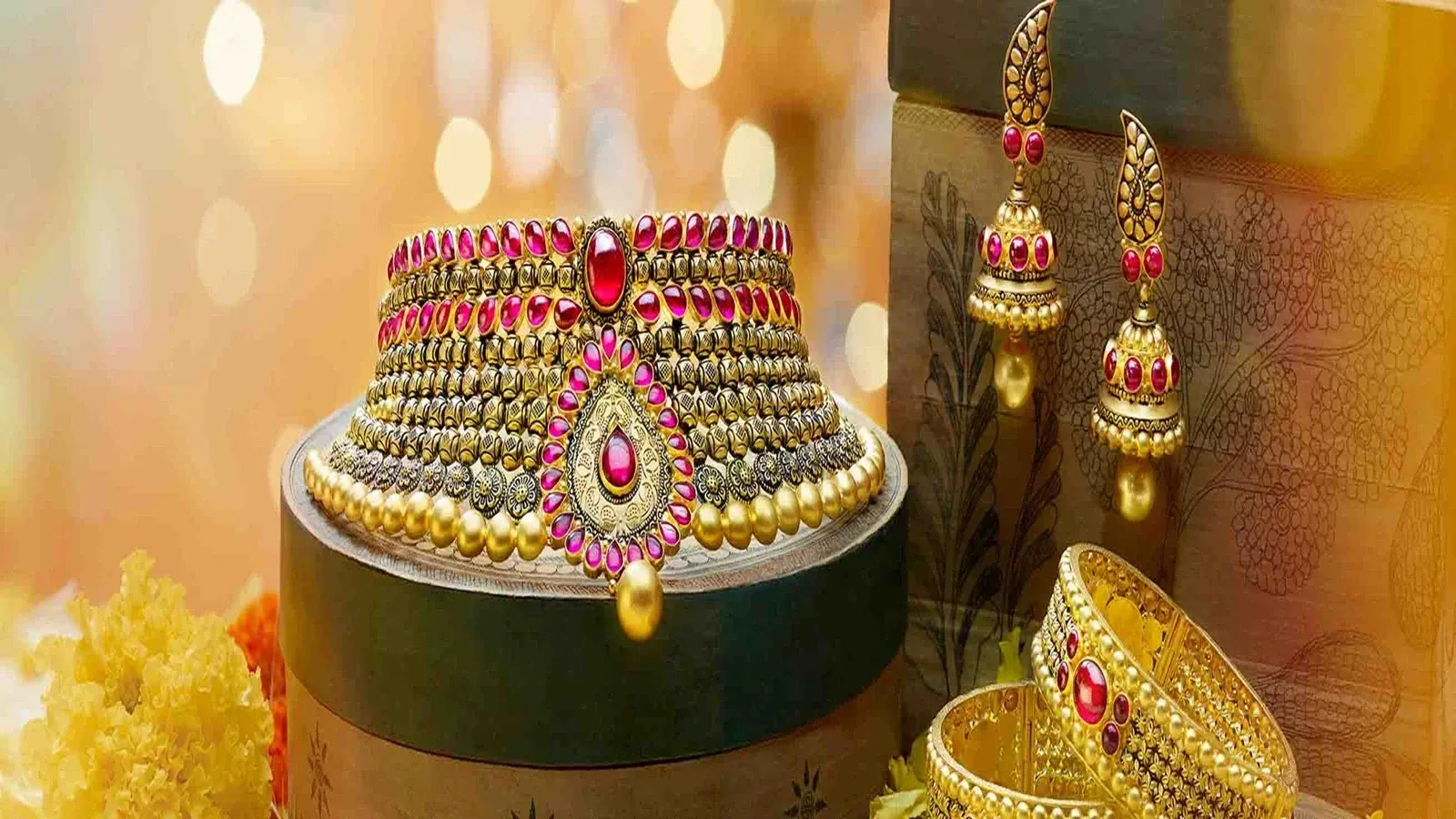
According to the company's investor presentation, Kalyan Jewellers reported a 46% year-on-year (YoY) jump in its consolidated revenue at ₹10,588.9 crore. Image: Company website
Kalyan Jewellers, one of the prominent jewellery firms in India, is expected to hog the limelight on Wednesday, August 5, following the company's June quarter (Q1 FY27) results announcement.
Q1 FY27 earnings
According to the company's investor presentation, Kalyan Jewellers reported a 46% year-on-year (YoY) jump in its consolidated revenue at ₹10,588.9 crore against ₹7,268.5 crore registered in the year-ago period. Its gross profit came in at ₹1,263.8 crore, up 25% YoY.
However, gross profit margin slipped to 11.9% from 13.9% in the corresponding quarter of the previous fiscal year.
In its 'India Performance' segment, Kalyan Jewellers said that the gross margin was impacted by a higher proportion of exchanged gold, promotional offers as part of the exchange campaign, and a one-off gain in platinum and silver sales during the base quarter (Q1 FY26).
EBITDA for the quarter stood at ₹632.5 crore, up 25% YoY, while EBIT was ₹517.5 crore, up 26% YoY.
The company's profit after tax (PAT) jumped 32% YoY to ₹348.7 crore.
Key highlights
As of Q1 FY27, Kalyan Jewellers operated 354 Kalyan showrooms in India, including 234 franchise-owned, company-operated (FOCO) stores. Its digital-first brand Candere had 129 showrooms, of which 73 were FOCO outlets.
Internationally, the company had 38 Kalyan showrooms in the Middle East, two in the US, and one FOCO showroom in the UK.
Over the last twelve months, Kalyan Jewellers reported revenue of ₹39,063.3 crore and profit after tax (PAT) of ₹1,435 crore, underscoring its strong scale and profitability.
Indian Jewellery Market: Key trends
Organised jewellery retail continues to gain market share
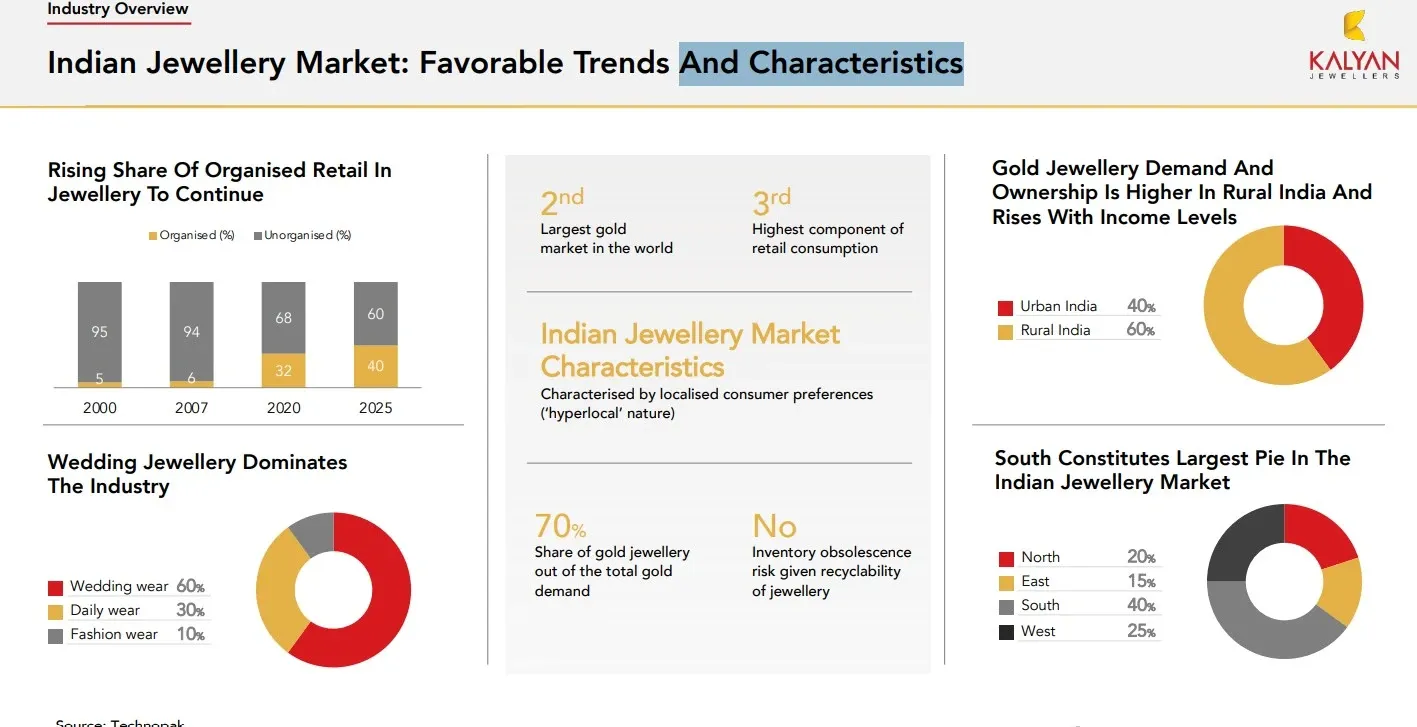
India's jewellery market is steadily shifting towards organised retailers. The organised segment's market share has risen from just 5% in 2000 to an estimated 40% in 2025, while the unorganised segment's share has declined to 60%. This trend is being driven by greater consumer trust, transparency and the expansion of branded jewellery chains.
India remains a key global jewellery market
India is the world's second-largest gold market, and jewellery is the third-largest component of the country's retail consumption. The market is characterised by hyperlocal consumer preferences, with buying patterns varying across regions and communities.
Gold jewellery demand is stronger in rural India
Rural India accounts for nearly 60% of gold jewellery demand, compared with 40% from urban markets. Demand also tends to rise with income levels, making gold jewellery a key store of wealth and an aspirational purchase, particularly in rural areas.
Wedding jewellery dominates demand
Wedding jewellery remains the largest demand driver, accounting for around 60% of the market. Daily-wear jewellery contributes about 30%, while fashion jewellery makes up the remaining 10%, highlighting the importance of India's wedding and festive seasons for jewellers.
South India leads the jewellery market
South India accounts for the largest share of the country's jewellery market at around 40%, followed by the West (25%), North (20%) and East (15%). The region's strong affinity for gold and deeply rooted cultural traditions continue to drive demand.
Here is what CITI said
CITI has maintained its bullish stance on the stock. The investment firm noted that the company’s revenue (excluding bullion) grew 38% year-on-year, marginally below its estimate by around 1%.
However, EBITDA and PAT (excluding the ₹410 million customs duty benefit) rose 16% and 20% YoY, respectively, missing its estimates by 17% and 20%.
According to CITI, the earnings miss was primarily due to a higher share of old gold exchange transactions, which accounted for 46% of sales in Q1 FY27, compared with 30% in Q1 FY26 and 31% in Q4 FY26.
The investment firm also cited promotional offers under the old gold exchange campaign and a higher contribution from franchise revenue (57% in Q1 FY27 versus 43% a year ago) as factors weighing on margins.
- The ₹410 million inventory gain arising from the customs duty benefit was reinvested through promotional offers under the old gold exchange programme.
- The company has signed an agreement to sell the first tranche of non-core real estate assets worth ₹1 billion. Additionally, the release of ₹2 billion worth of real estate collateral is expected during FY27.
While CITI believes the company’s balance sheet deleveraging remains on track, it cautioned that the sharp margin miss in Q1 FY27 could weigh on the stock in the near term.
How the stock is performing
Shares of the company fell as much as 3.2% to ₹572.10 apiece on the NSE during early trade on Wednesday.
Despite the decline, the stock has delivered strong returns over a longer period. It has gained 19% so far in 2026 (YTD), 53% over the past six months, and 51% in the last one month, according to available data.
However, the stock has slipped 9% over the past five trading sessions, with the recent weakness likely driven by profit-booking following its sharp rally.
Related News


About The Author
Next Story