
Upstox Originals
Urban India might head into Diwali with a smaller wallet. Why?

7 min read | Updated on October 26, 2026, 18:36 IST

SUMMARY
Diwali is three weeks away and, for once, urban India is planning to spend less, not more. The average household has set aside about ₹20,000 for the season, and the total is set to fall 6% to ₹1.97 lakh crore. Shoppers are still turning up; they are just buying cheaper things, fewer phones, and paying with savings and EMIs. Here's why, and what it means for the companies counting on them.
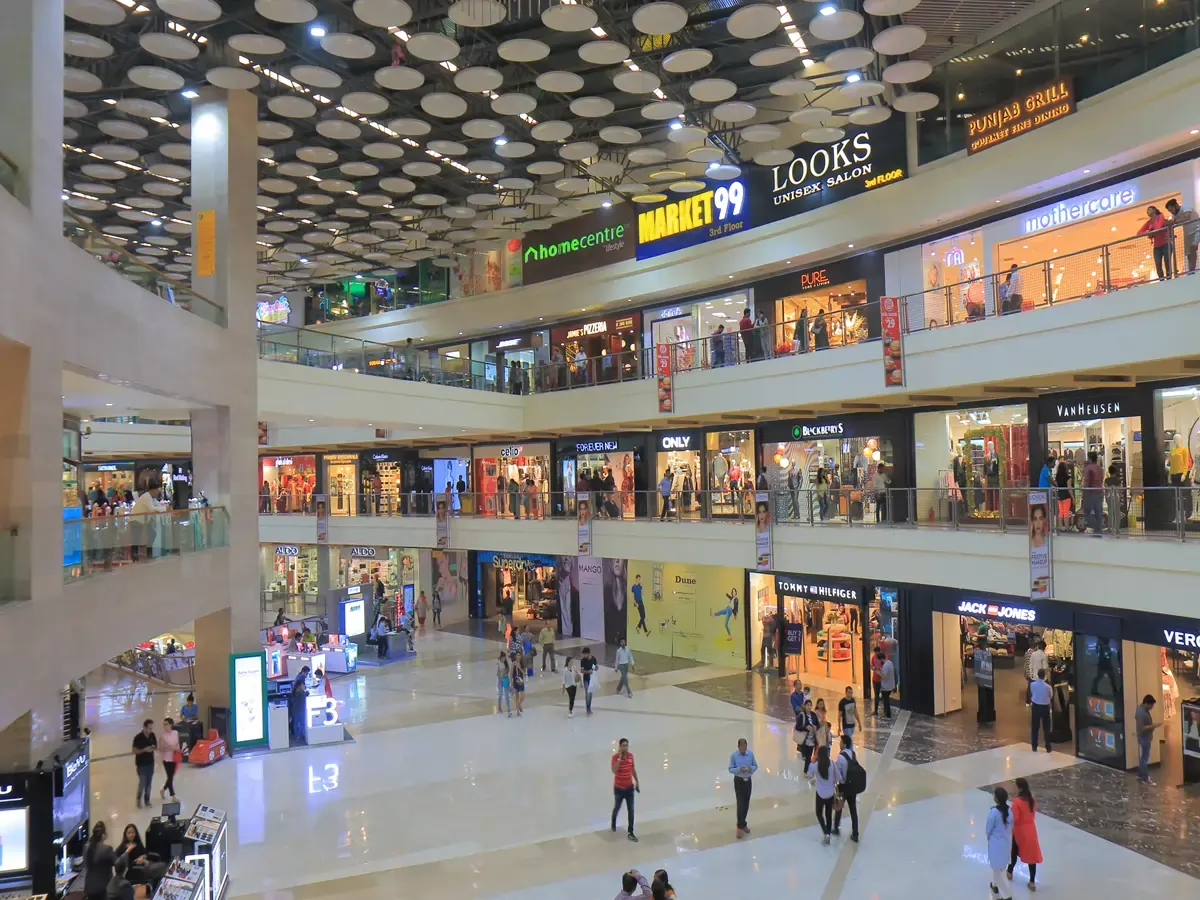
Total urban festive spending in 2026 is expected at ₹1.97 lakh crore, down 6% from last year. |Image: Shutterstock
The lights are up, the sale alerts have started and the festive playlists are on. The only thing that might not show up this year? The budget.
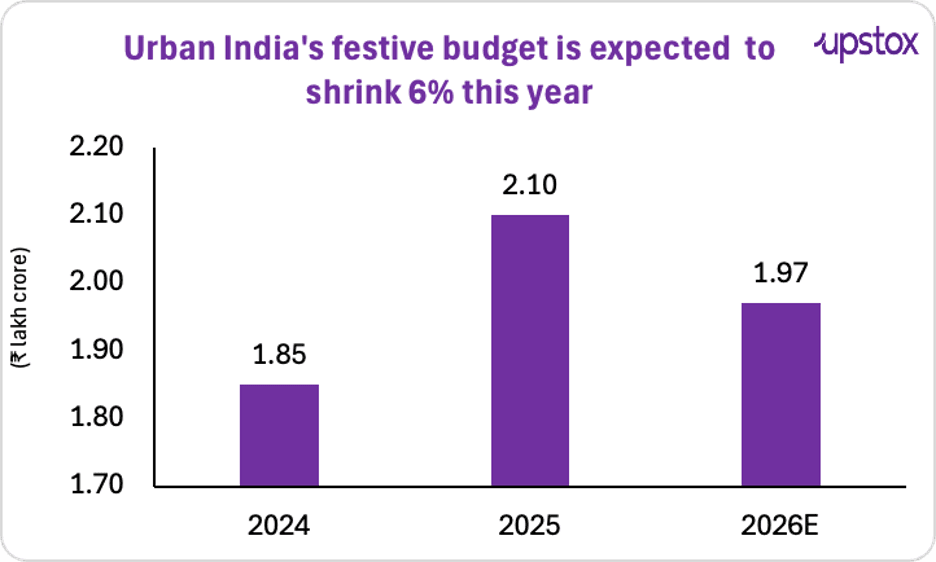
Urban Indian households plan to spend about ₹20,000 each this festive season, and that would be less than last year. LocalCircles’ Mood of the Consumer survey, which drew more than 67,000 responses from urban households across 307 districts, puts expected total urban festive spending at ₹1.97 lakh crore. That’s 6% below the ₹2.10 lakh crore of 2025.
Oh well, a 6% dip doesn’t sound dramatic, does it? But two things make it sharper than it looks.
First, last year had a head start. The GST rate cuts of 22 September 2025 landed right at the start of the shopping season, which probably helped. This time there’s no such tax-led boost on the cards. Is 2026 still above the ₹1.85 lakh crore of 2024? Sure, it would be. But it points to a calmer festive season than the one we just had.
Second, and this is the bit that stands out, nearly a third of households, 31%, say they don’t plan any discretionary festive purchase at all. The 57% who do are planning carefully.
Source: LocalCircles
So the mood going in looks cheerful on the surface and careful underneath. Households still want to celebrate, but many seem to be checking the price tag a little more closely this time.
What do the numbers show?
Survey intent is one thing; the tills are another. Three early readings from the first weeks of the season point the same way: people are shopping, but with smaller baskets, cheaper items and borrowed money. Each is a sign that urban spending is taking a hit even where headline sales look healthy.
Online sales are growing on volume, not value. Datum Intelligence expects festive e-commerce sales to grow 25–29% this year, but the growth is coming from more orders, not bigger ones. Redseer's early-October data shows average order values 7–8% lower than a year ago, with items priced under ₹500 making up about half of orders on value-focused platforms. More parcels, less money in each.
Big-ticket electronics are under pressure. Counterpoint Research expects festive smartphone volumes to fall 12% from last year even as sales value rises 5%, because memory-chip costs have pushed up prices; shelf prices of phones already on sale in India are up 21% in 2026. Prices of smartphones, laptops and air-conditioners in this year's online sales are also higher than last year's.
Credit and savings are doing more of the work. On Amazon, the share of purchases made on no-cost EMIs has risen to about 50% from 30% a year earlier, an Amazon India executive told The Times of India. And 83% of households planning festive purchases expect to dip into savings to pay for them.
Why could this festive season be softer, you ask?
Here are a few reasons:
Inflation is back above 5%
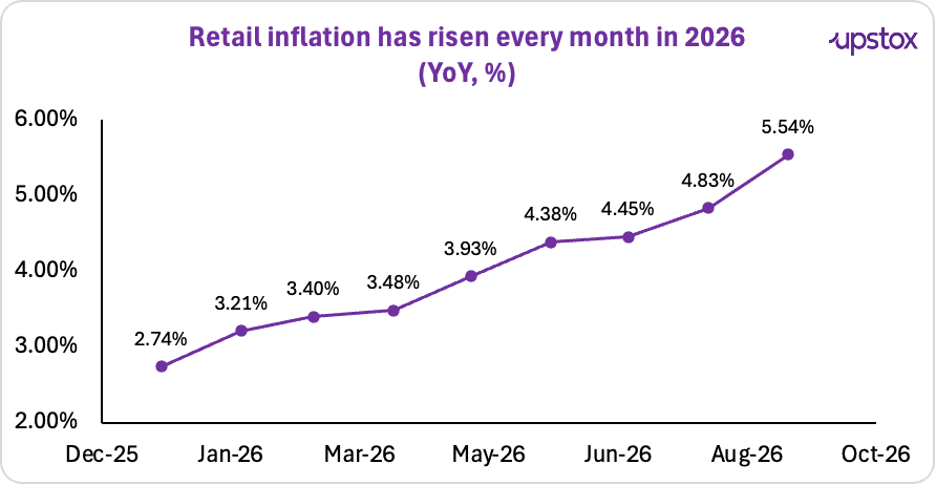
Retail inflation rose to 5.54% in September, the eleventh month in a row that it has climbed, PTI reported, with food inflation at 7.74%. The RBI now expects inflation to peak around 6% in the October–December quarter, exactly when the festive bills come due, and 95% of urban households in the RBI's September consumer confidence survey said prices had gone up over the past year.
Source: MoSPI, CPI (base 2024=100) press release for September 2026; September figure is provisional
Everyday bills are eating the festive budget
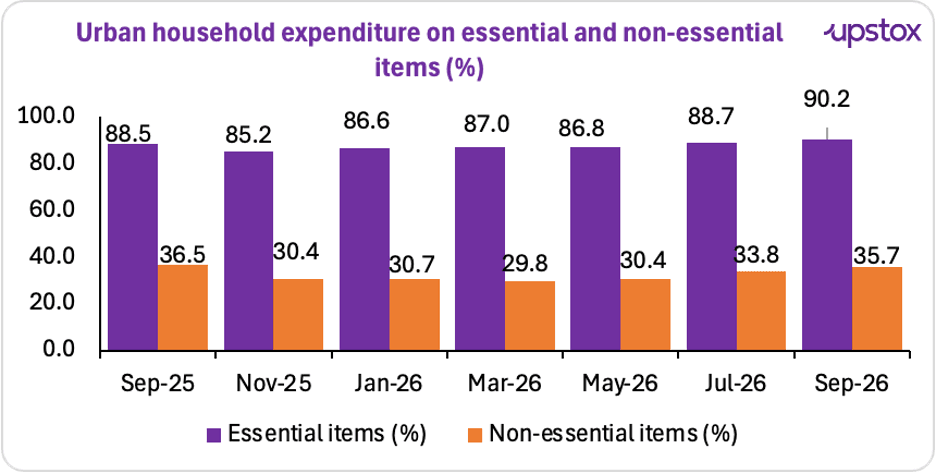
The RBI's September consumer confidence survey shows where the money is going: 90.1% of urban households say their spending on essentials has risen over the past year, the highest share in seven survey rounds, while only about a third say they are spending more on non-essentials. More than half now say the general economic situation has worsened.
Source: RBI, Urban Consumer Confidence Survey, September 2025 to September 2026 rounds
Gold and silver have priced themselves out of the gift list
Rising gold and silver prices could be one reason urban households are holding back on festive spending. In Mumbai, gold rose from around ₹93,000 per 10 grams in April 2025 to roughly ₹1.5 lakh by October 2026. Silver climbed from about ₹95,000 per kg to over ₹2 lakh in the same period. With jewellery costing significantly more than it did a year ago, households may be postponing purchases, opting for lighter designs or exchanging old jewellery instead of spending more.
Household balance sheets are stretched
When a larger share of income goes towards EMIs, bills and debt repayment, there is less left for shopping. The RBI’s June 2026 Financial Stability Report puts household debt at 45.5% of GDP, while net household financial savings stood at 7% of disposable income in FY25.
Households seem to be getting cautious. Worldpanel by Numerator found that average quarterly household expenses crossed ₹56,000, up a third in three years. Asked what they would do with extra income, 54% said they would save it and 18% would repay debt. Just 7% would buy something premium. In other words, households are prioritising financial security over splurging.
What could this mean for companies and investors?
A festive season that rewards value and volume, and punishes anyone selling a big-ticket item without a payment plan. The September-quarter updates already show the split.
| Company | Category | Q2FY27 growth (YoY) | What sits underneath |
|---|---|---|---|
| Titan | Jewellery | c.21% | Buyers up mid-single digits; ticket size up double digits |
| Kalyan Jewellers | Jewellery (India) | c.27% | Same-store sales growth c.20% |
| Trent | Apparel (standalone revenue) | 23% | Up from 18.5% in Q1FY27; 1,000th Zudio store opened |
| Avenue Supermarts (DMart) | Grocery and general merchandise (standalone revenue) | 18.4% | Like-for-like growth 9.5% vs 6.8% a year ago |
Source: Company business updates and results for Q2FY27, filed between 3 and 10 October 2026
Value wins volume.
The shoppers who are trading down are walking into DMart and Zudio: DMart's like-for-like sales grew 9.5% in the September quarter against 6.8% a year earlier, and Trent's standalone revenue grew 23% as Zudio crossed 1,000 stores. A cautious consumer is good news for the retailers built for caution.
Price-led growth is fragile.
Titan's jewellery growth of about 21% came with buyer growth in the mid-single digits, and Kalyan's India revenue grew about 27% on same-store growth of about 20%. That is gold inflation flattering revenue. If prices cool or buyers balk, the thin volume growth underneath will show through quickly.
Big-ticket discretionary is the exposed end.
A 12% drop in festive smartphone volumes, shrinking online order values and a rate hike landing mid-season all point the same way for electronics and durables brands: this season's growth will come from financing partners and premium mixes, not from more units. One caveat even for the winners: volume bought with discounts costs margin. DMart grew standalone sales 18% but its consolidated EBITDA margin slipped to 7.1% from 7.3%, so the trade-down is helping its top line more than its profits.
What should we watch next?
Four dates and data points. The October CPI print on 12 November will show whether inflation peaks near 6% as the RBI expects. The RBI's next policy meeting on 4 December will show whether one hike becomes two, and its November consumer-confidence round will update the non-essential spending line.
Redseer's and Datum's final festive tallies will say whether order values kept shrinking and smartphone volumes fell as forecast. And in the company numbers, watch buyer growth rather than revenue at the jewellers, and like-for-like growth at the grocers.
The money is still coming out this Diwali. It is just being counted more carefully before it leaves the wallet.
About The Author
Next Story

