
Upstox Originals
Asia-Pacific at the climate brink: Will it sink or soar?
.png)
6 min read | Updated on June 05, 2025, 15:28 IST


SUMMARY
Did you know that across the Asia-Pacific region, climate crises annually chip away as much as ~4.8% of GDP. According to ESCAP, the region is powering ahead economically, but climate change is catching up fast. Eleven of these nations rank among the world’s most exposed, facing threats that span agriculture, energy, health, and more. As risks intensify, can resilience be built in time?
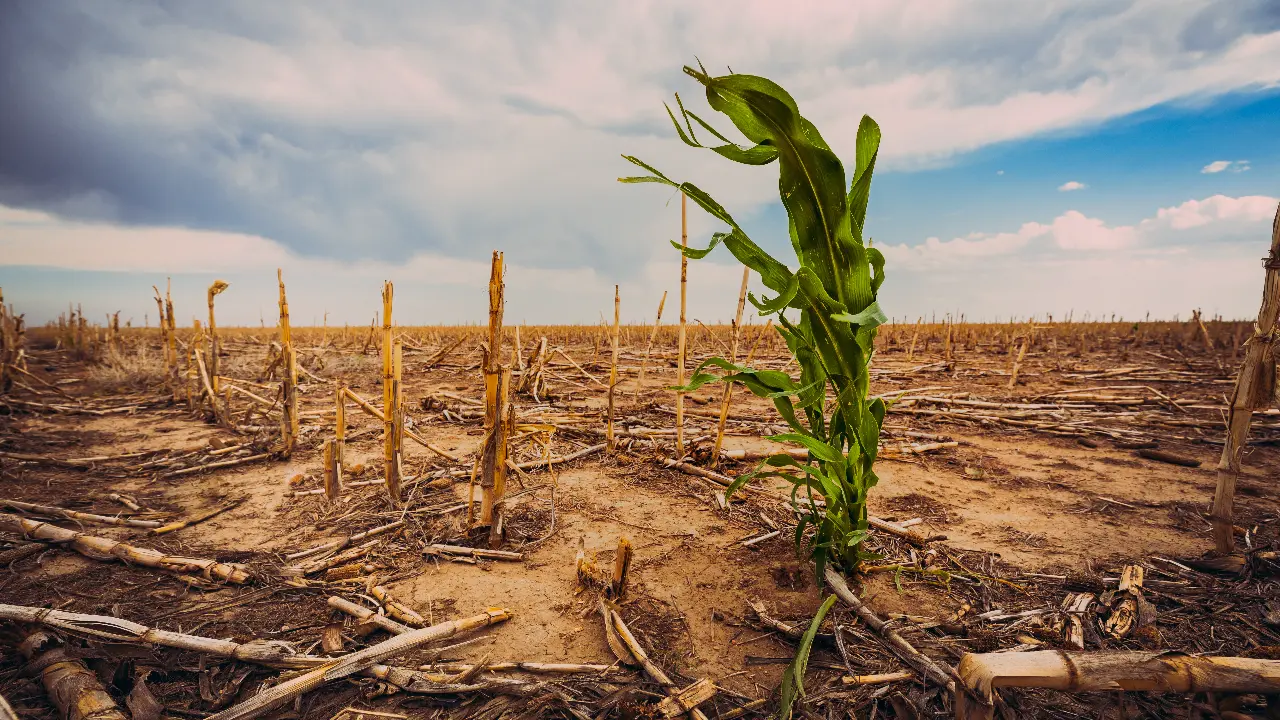
Across the Asia-Pacific region climate crises annually chip away as much as ~4.8% of GDP
What happens when the world's fastest-growing region also becomes its most climate-vulnerable?
The Asia-Pacific (APAC) region - home to over 60% of the global population and contributing nearly 60% to global economic growth- stands at a critical crossroads. From bustling cities to rice fields, its economies are powering ahead, but climate change is quietly undercutting their progress.
Did you know? A new ESCAP analysis of 30 Asia-Pacific countries reveals that, on average, climate disasters eat up 4.8% of GDP annually across the region.
What is ESCAP? The Economic and Social Commission for Asia and the Pacific (ESCAP) is an intergovernmental platform that supports inclusive, resilient and sustainable development in the APAC region.
As per the analysis, there are 11 countries, including Afghanistan, Cambodia, Iran, Kazakhstan, Lao PDR, Mongolia, Myanmar, Nepal, Tajikistan, Uzbekistan, and Vietnam, that are especially exposed to climate risks. But it's not just these 11 — other Asia-Pacific countries face growing climate risks too, each vulnerable in their own way.
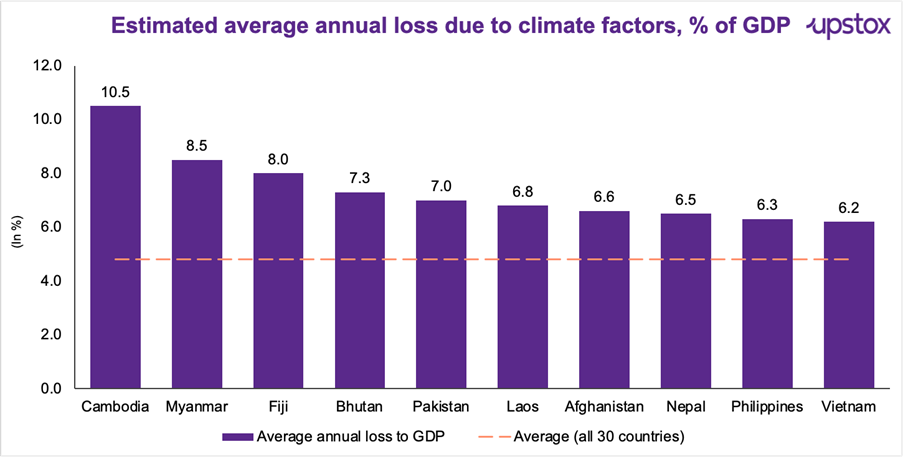
Source: ESCAP analysis - 2025; *Top 10 countries.
The snapshot highlights that among the 10 APAC countries, in Cambodia, Average Annual Losses (AAL) soars to nearly 11%. That’s more than double the average of 4.8% across 30 countries.
AAL (Average Annual Losses) reflects estimated yearly economic damage from disasters, calculated using risk models that factor in how often, how intense, and how exposed and vulnerable a country is.
Sector by sector: Where climate hurts the most in the 30 APAC countries
To bring the numbers to life, we spotlight the hardest-hit countries in each sector — revealing how climate chaos strikes differently across Asia-Pacific’s 30 economies:
A. Economic impacts of climate change
Agriculture: Though agriculture contributes modestly to GDP (14.2% average in 30 top APAC countries), it remains the most climate-sensitive sector, especially for employment. For instance, in Myanmar, 70% of the rural population depends on farming and fishing, with cyclone frequency doubling since 2000.
In China, extreme rainfall has cut rice yields by 8% over two decades. Even in less-exposed regions like India, where agriculture accounts for ~17% of GDP, the risks are mounting.
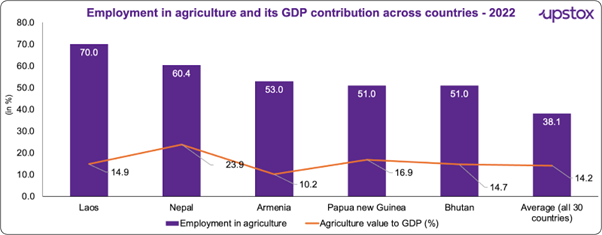
Source: World Bank
####Energy sector Water scarcity could cripple electricity generation. For instance, in India, 90% of electricity comes from water-intensive thermal and hydropower plants. Between 2011–2016, thermal power generation grew 40%, pushing freshwater consumption up by 43%. As per the International Institute for Sustainable Development, Water shortages between 2013–2016 caused $1.4 billion in lost revenue across India’s top 20 thermal utilities.
Tourism
Climate disasters like Thailand’s 2011 floods caused $47 billion in damages and $50 billion in recovery costs. As per a report released by IPCC in 2019, In Japan, skiing will be seriously affected under warming scenarios above 2°C as snowmaking becomes less viable. China, heavily investing in its skiing industry, recorded 20 million skier visits across 876 resorts in 2022 and $78 billion in revenue during the 2023/24 winter season.
B. Economic risks from climate transition policies
Decarbonisation path and transition plans: Not all economic fallout comes from climate disasters — some comes from the policies that prevent them. As APAC countries push to decarbonise, stranded assets have emerged as a hidden risk. Trillions worth of fossil fuel infrastructure, like coal plants, could become worthless as green policies and technologies take over.
First flagged by economist Joseph Schumpeter in 1943, this “asset stranding” hits hardest in fossil-heavy economies, draining public budgets and turning once-valuable investments into sunk costs.
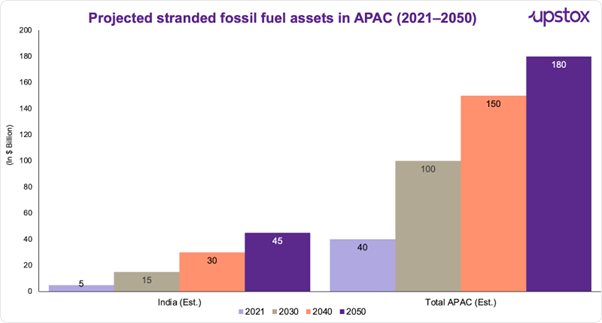
Source: ESCAP analysis *Estimates based on chart visual interpolation, actual values may vary slightly
Stranded fossil fuel assets in APAC - including India - are projected to soar from $40 billion in 2021 to $180 billion by 2050. India alone may see a 9x jump, from $5 billion to $45 billion, signaling growing financial risk.
Who’s ready to respond?
Climate change is no longer a distant threat — it's a real-time stress test. And the question isn't just about who’s most vulnerable, but who’s truly ready to respond among the 11 most exposed nations?
Tax-to-AAL ratio
Strong tax bases = strong climate defenses. Kazakhstan, Mongolia, and Uzbekistan pack a punch with tax revenues 4.5x higher than their Average Annual Losses (AAL) from disasters, way above the Asia-Pacific developing average. This means they can fund climate recovery without breaking a sweat.
But in countries like Nepal (2.9x AAL) and Iran (1.1x AAL), tax income barely covers disaster risks — and much of it is swallowed by salaries and debt. Most exposed nations fall short, signaling a desperate need to boost domestic revenue to survive climate shocks.
Banking sector strength
How stable are their banks? The Z-score - a blend of profitability, leverage, and risk - measures how likely a country’s banking system is to collapse. The higher the score, the stronger the shield against economic and climate shocks.
Top performers: Afghanistan, Cambodia, Laos, Mongolia, and Nepal stand tall with capital-to-asset ratios above 10% and steady returns.
Weak links: Iran, Kazakhstan, Myanmar, Tajikistan, Uzbekistan, and Vietnam falter with fragile banks and volatile returns—raising red flags for both financial stability and climate resilience. The remedy? Urgent capital infusion and tighter oversight.
Sovereign credit ratings
Rising debt payments limit funds for climate programs. In some vulnerable countries, interest costs exceed health and education spending, blocking climate investments. The Sovrate, from the World Bank, measures a government’s creditworthiness and access to long-term foreign currency debt—key for financing climate action.
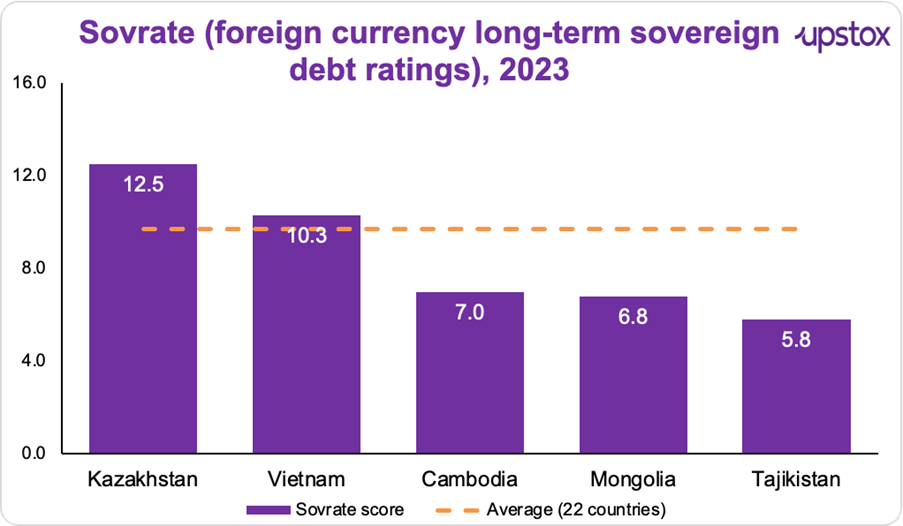
Source: World Bank; *Among the 30 sample countries, data for Afghanistan, Bhutan, the Islamic Republic of Iran, the Lao People’s Democratic Republic, Myanmar, Nepal, Turkmenistan and Uzbekistan are not available.
Sovrate scores gauge a country’s credit muscle and market access - no max limit, but higher means stronger. Around 10 is average, 20+ means top-tier access. Across 22 countries, the regional average sits at a modest ~9.7.
ND-GAIN Index
ND-GAIN Index scores countries out of 100 on how ready they are to tackle climate risks and bounce back stronger. It evaluates vulnerability across six sectors: food, water, health, ecosystem services, human habitat and infrastructure.
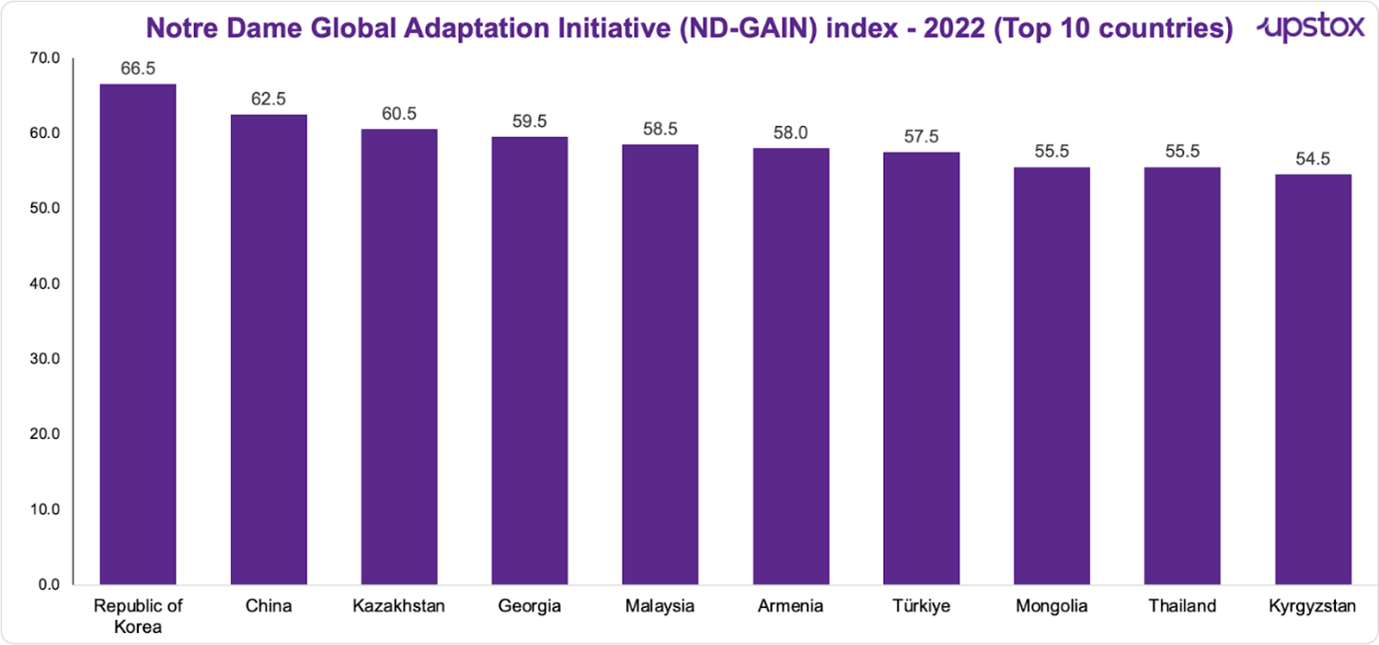
Source: University of Notre Dame
The chart highlights the top 10 APAC countries with the highest readiness to tackle climate change. Among the 11 most exposed countries, Kazakhstan ranks at the top, scoring 60.5—indicating a low level of readiness to deal with climate challenges. But.. beyond these top 10 countries, where does India stand? Right in the middle, with a score of 48.5!
In summary
Asia-Pacific’s rapid rise is clashing head-on with climate risks that can’t be ignored. The question is—can these countries build strong defenses fast enough? Fragile finances and infrastructure mean the stakes are sky-high. Bold action and smart investments are no longer optional, but urgent. The region’s future hinges on how quickly it can adapt and bounce back.
About The Author
Next Story



