
Upstox Originals
Could AI make your next phone a lot more expensive?

9 min read | Updated on October 29, 2026, 15:42 IST

SUMMARY
AI data centres are guzzling up the world’s memory chips, raising concerns that phone, laptop and car makers could soon face tighter supplies. SK hynix has warned that the supply crunch could worsen in 2027 and persist beyond 2030. But how much of that cost will reach consumers, and whether budget phones will take the biggest hit, remains to be seen.
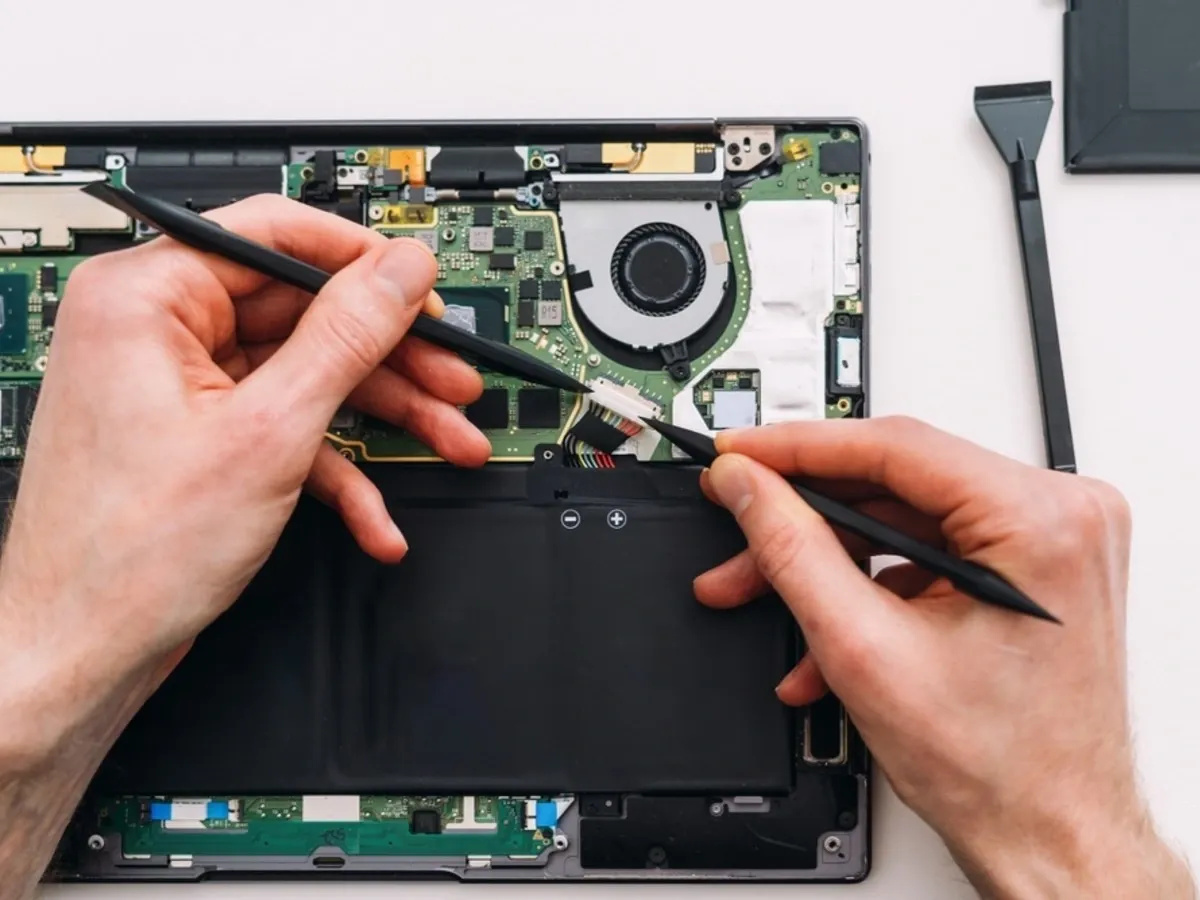
International Data Corporation (IDC) expects memory supply to grow only about 16–17% in 2026. | Image: Shutterstock
Planning to buy a new phone or laptop? You may want to pay attention to what's happening in the AI industry. The companies building AI data centres are snapping up memory chips, putting pressure on supplies for everyone else: the student saving up for a ₹12,000 phone, the family replacing an old laptop, even the carmaker building your next SUV.
The fight is over memory chips. Think of them as a device's desk and filing cabinet. One kind (DRAM) holds whatever your phone or computer is working on right now; the other (NAND, or flash storage) keeps your photos, apps and files. AI data centres need both in enormous quantities, along with an extra-fast, more expensive version built for AI chips, called high-bandwidth memory (HBM). For simplicity, we'll refer to these as everyday memory and AI memory.
The trouble is that supply isn't keeping up. Shortages began in the second half of 2025, and International Data Corporation (IDC) expects memory supply to grow only about 16–17% in 2026, well below the usual pace, while AI demand is racing ahead.
Now, why should you care? Higher memory costs can push up phone prices, particularly in the budget segment, delay laptop upgrades and add to carmakers' expenses. The pressure could intensify in 2027: SK hynix's CEO has warned that it could be the worst year on record for memory supply, while Samsung expects conditions to tighten in 2027 and remain challenging through 2028. Micron has also flagged supply constraints. These are serious warnings, but they are not guarantees.
Those warnings carry weight because these three are, for all practical purposes, the whole market. Together they earned 87.6% of the world's DRAM revenue in April–June 2026, according to TrendForce. When they run short, there is nobody else to buy from. So this is no passing hiccup. And you can already see it in the price of the phone in your pocket.
Who is already paying the price?
Buyers with the least bargaining power get hit first, and India's budget-phone buyers are the clearest example.
The shelf prices of phones already on sale in India have risen 21% in 2026, Counterpoint Research data shows, the steepest increase of any market it tracks and well above the 15% global average. This is the same phone costing more than it did in January, not a newer model at a higher price. Buyers responded by walking away: shipments fell 10% in the June quarter, and for phones under ₹15,000 they dropped 45%.
The industry expects fewer phones but bigger bills. The India Cellular & Electronics Association sees smartphone volumes falling 5–7% in FY2027, even as the market's value rises 8–10% on the back of higher prices.
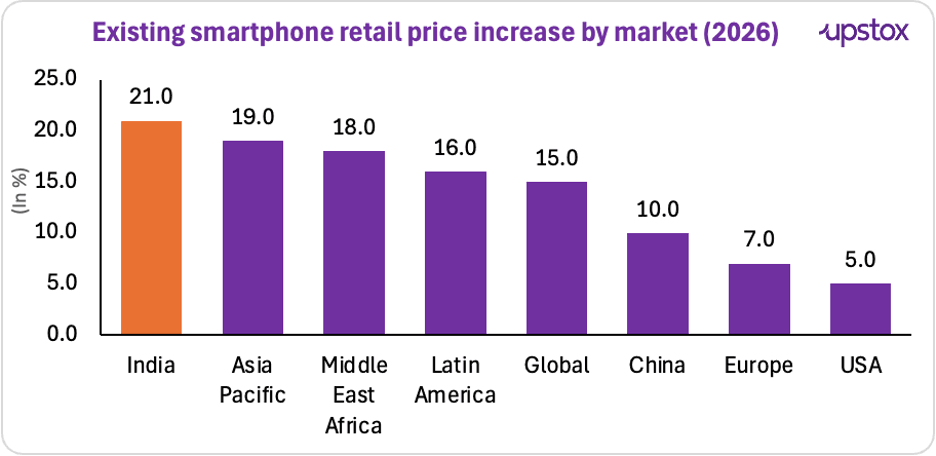
Source: Counterpoint Research
Laptops are next. Memory and storage now make up as much as 23% of what it costs to build a laptop, by TrendForce's estimate. It expects laptop shipments to slip slightly in 2027, and fall more sharply if brands pass the higher chip costs on to buyers. Even cars aren't spared. The memory chips used in vehicles cost about 70% more in January 2026 than a year earlier, according to S&P Global Mobility, and General Motors expects memory to add $1.5–2 billion to its costs. Car production itself isn't expected to be cut, but someone has to absorb that bill.
So who is making money from the shortage?
The memory makers. SK hynix's quarterly revenue more than tripled in a year, and its operating margin, the share of sales left over after running costs, rose from 41% to 76%. Most of that jump came in the last two quarters, as AI orders crowded out everyone else.
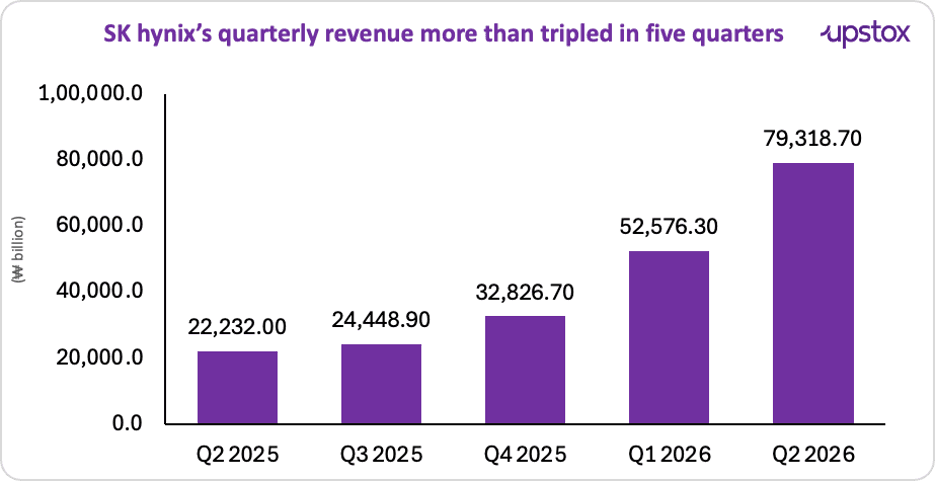
Source: SK hynix quarterly earnings releases
And it is not just SK hynix.
Samsung's preliminary third-quarter operating profit of ₩107.4 trillion was the first time a Korean company has earned more than ₩100 trillion in a quarter, and its 55% operating margin was a record. Its memory business, not its phones or televisions, delivered almost all of it.
US rival Micron tells the same story. Its revenue in the latest quarter was nearly five times what it was a year earlier, and its gross margin, the share of each dollar of sales left after making the product, almost doubled to 87%.
Micron's breakdown by customer shows how widely the pain is spread. Sales to AI-heavy data centres grew more than elevenfold, but margins rose almost as sharply on chips sold to phone, PC and car makers. In other words, everyone is paying up, not just AI companies.
| Micron business unit | Revenue FQ4-25 ($ mn) | Revenue FQ4-26 ($ mn) | Gross margin FQ4-25 | Gross margin FQ4-26 |
|---|---|---|---|---|
| Core Data Center | 1,577 | 18,002 | 41% | 90% |
| Cloud Memory | 4,543 | 16,283 | 59% | 83% |
| Mobile and Client | 3,760 | 13,114 | 36% | 90% |
| Automotive and Embedded | 1,434 | 6,824 | 31% | 84% |
| Total | 11,315 | 54,229 | 44.7% | 86.8% |
Source: Micron Technology
Why could next year be even worse?
Big buyers have already booked most of the supply
AI companies are signing multi-year deals to lock in memory. That gives the chipmakers certainty, but leaves less on the table for everyone else.
More than 75% of Micron's output for FY2027 is already spoken for, and its long-term purchase commitments have risen to $32 billion from $22 billion in June.
Samsung has signed long-term deals with its five largest data-centre customers, and expects such contracts to cover 60–70% of its memory capacity over time.
SK hynix has signed similar deals, typically lasting five years, with around 10 companies.
AI memory is eating into factory space
AI chips need their own super-fast memory, and making it uses up more factory capacity than ordinary memory does. Every production line switched to AI memory is one less making memory for phones, PCs and regular servers.
TrendForce expects AI memory to take up nearly a third of the big three's memory-making capacity by 2027, up from under a fifth in 2025.
With demand for everyday memory still expected to outgrow supply in 2027, the rest of the market is left fighting over a shrinking slice.
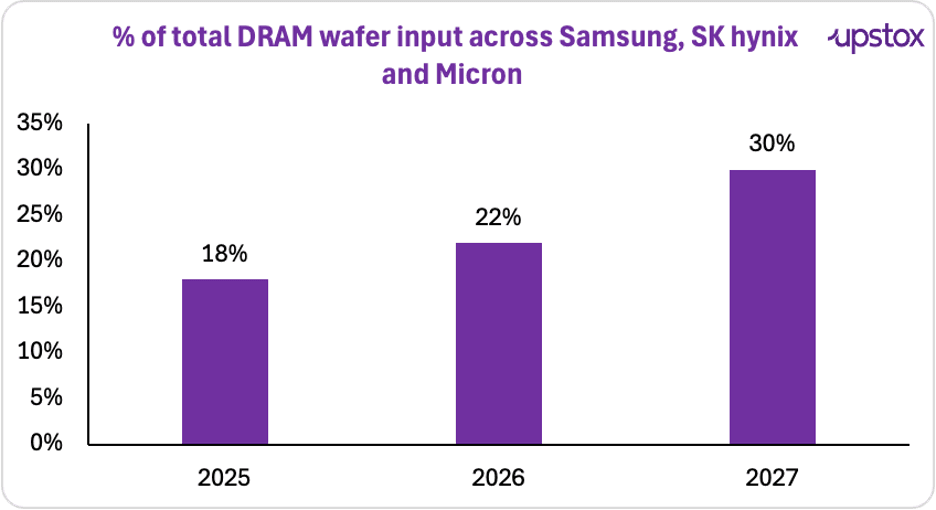
Source: TrendForce (HBM = AI memory; DRAM = everyday memory)
Why can't they just build more factories?
They are, and they're spending billions on it. But a chip plant isn't a warehouse. Building it, fitting it with equipment and getting production up to speed takes years. In Samsung's estimate, the journey from construction to first output takes more than three years.
Here's when the new capacity arrives:
-
SK hynix: A new plant in South Korea (M15X) will add advanced memory, while the first production space at its giant Yongin complex opens in February 2027. Samsung: Its next big plant at Pyeongtaek (P5) is expected to start up in 2028.
-
Micron: Its first new plant in Idaho should begin producing in mid-2027, with a second Idaho plant and a Hiroshima, Japan, expansion following in late 2028, and more storage-chip capacity in Singapore in the second half of 2028.
Even then, output builds up slowly. TrendForce expects most of the meaningful new capacity only in 2028, and even then supply is expected to grow more slowly than demand.
Have we seen this before?
In 2021, a pandemic-era shortage of all kinds of chips cut car production by more than 10 million vehicles, by S&P Global's count, and left game consoles and even some car models out of stock for months. Then the memory cycle turned: by the October–December quarter of 2022, SK hynix was reporting an operating loss of ₩1.7 trillion, its first in a decade, as customers who had over-ordered stopped buying.
How is this different this time?
Three things are different. In 2021 everyone was short of everything; today one kind of chip, memory, is short, and one kind of buyer, the AI data centre, is soaking it up. In 2021 the chipmakers suffered alongside their customers; today Samsung, SK hynix and Micron are posting record margins. And prices are moving far faster: memory prices rose more than 400% between August 2025 and March 2026, Mint reported, and in August were still 4.7x their level a year earlier.
Can anything prevent this?
There are a few ways to soften the blow. Chipmakers can invest in expanding production, although building new factories takes years, not months. Phone makers can redesign devices to use less memory, secure supplies through long-term contracts or absorb some of the higher costs instead of passing them on to buyers. And if AI companies find ways to run their models using less memory, that could ease some of the pressure. None of these is a quick fix, though. Until supply catches up with demand, the squeeze could continue.
What should investors watch?
For investors, the real test is not the next price hike. It is whether buyers keep honouring their contracts when the market softens. Signs of strain would show up as slower orders, unsold stock piling up at phone and PC makers, cooling day-to-day memory prices, and any talk of renegotiating long-term deals. If those stay quiet through 2028, AI really has changed the memory business. If they start to show, the boom-and-bust cycle is back, just at a higher level than ever.
About The Author
Next Story

