
Personal Finance News
Her husband bought penny stocks. After his death, she sold them at a ₹1.02 crore loss, but the taxman called it bogus. How she got relief

5 min read | Updated on October 06, 2026, 19:34 IST


SUMMARY
This ITAT ruling is relevant for families who inherit past shares, even for those investors whose penny stock trades have been questioned.

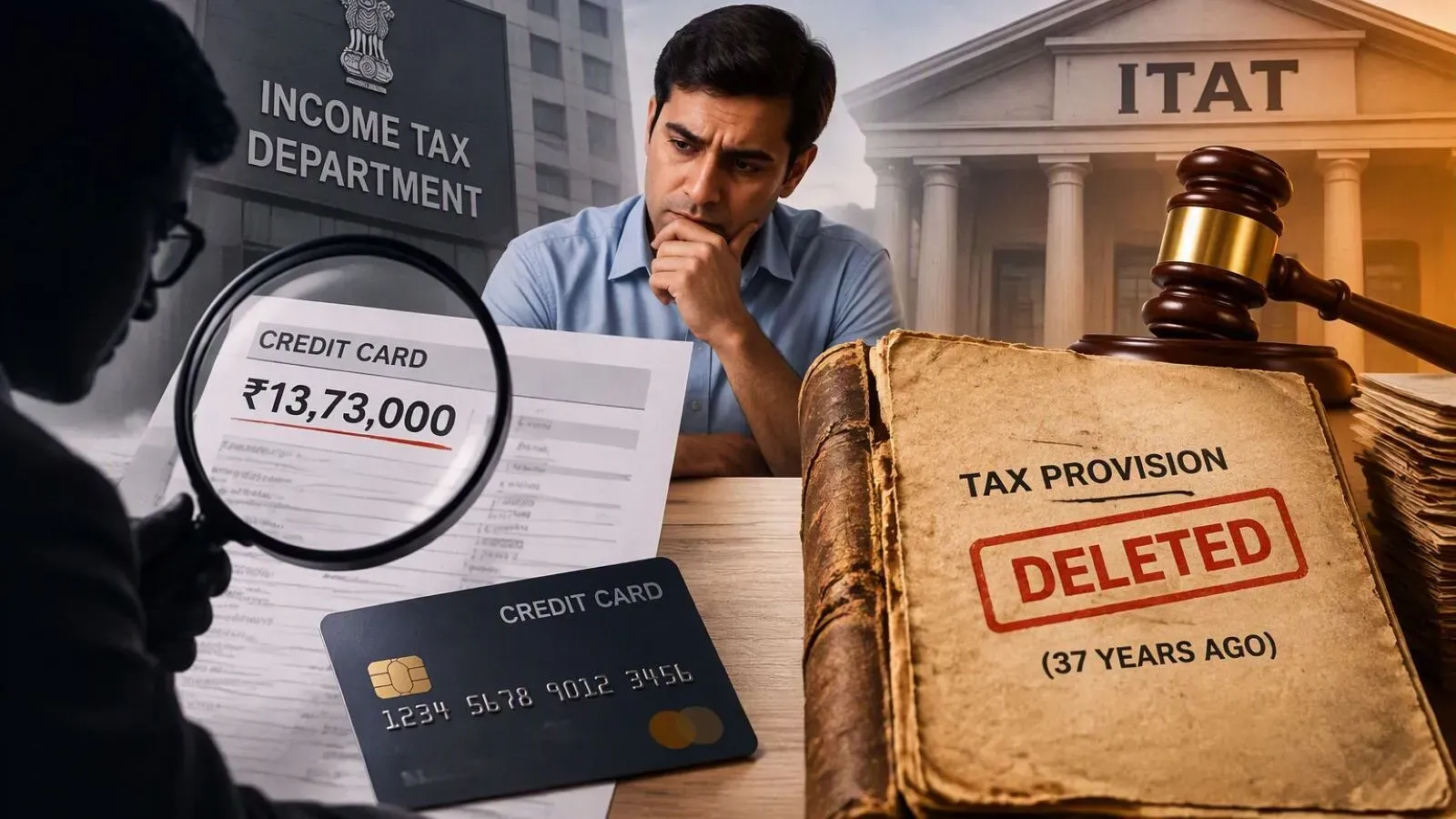
As per the ruling, a heir stepping into a deceased's shoes should be treated as the previous owner, not as a manipulator. | Representational image/AI Generated
When D.K. Jain bought shares of SVC Resources Limited during 2011-12 and 2012-13, they were an ordinary investment bought on the stock exchange. He died on March 18, 2014. His wife, Usha Jain, inherited the holding, sold part of it at a loss, and filed the returns as his legal heir. However, the tax department then did something unusual. It declared the late husband's return as "non-est" (does not exist), treated the share sale as hers and called the whole transaction bogus penny stock while taxing her on the proceeds.
As per the Delhi ITAT's order dated August 25, 2026, D.K. Jain had purchased and held the shares of SVC Resources through the stock exchange and through a stock broker Religare Securities. After his death in 2024, Usha Jain, as legal heir, filed the returns for assessment years 2014-15 and 2015-16 on his behalf, declaring the shares and the loss on their sale. She also filed her own return.
The sale of penny stock triggered the reassessment. The case was reopened under section 147 on the ground that the assessee had sold penny stock during the year for ₹24,33,546 and claimed a huge loss.
During the proceedings, the assessing officer treated the return filed on behalf of the deceased husband as "non-est" and treated the transaction as belonging to the widow. The taxman then added the sale proceeds of ₹24,33,546 as unexplained income under section 68, relying on an investigation report. A second addition of ₹3,88,367 also followed this, taking the total addition to ₹28,21,913.
The numbers that did not add up
The transaction done by Usha Jain was a loss transaction and not a gain. The purchase cost of inherited shares was ₹1,26,73,405.99 but she had realised only ₹24,33,546.37 on selling 13,37,000 shares, resulting in a long-term capital loss of approx. ₹1.02 crore.
Usha Jain had inherited a total of 13,94,000 shares at a cost of ₹1,51,13,916.32 as on March 31, 2014. Yet the officer added the gross sale proceeds without allowing the purchase cost at all, effectively treating a losing trade as profit.
During the hearing at ITAT, Usha Jain's counsel pointed out that the alleged modus operandi for generating bogus long-term capital gains was wholly inapplicable in this case, because she had not earned any gain, she had incurred a loss.
She had also furnished contract notes from registered stock brokers, demat statements, bank statements and supporting documents that were not faulted by the tax officer.
The tribunal found the taxman's approach flawed. "It is fair to treat the above transactions as the transaction of the assessee," it said of the clubbing, "but, in our view, the AO should have analyzed and investigated the whole transaction instead of treating the disputed transaction alone merely relying on the investigation report".
On the dubious penny stock transaction allegation, the bench held that the officer "had not proved that the assessee had involved or brought on record any materials linking the assessee in any of the dubious transactions relating to entry, price rigging or exit providers".
The tribunal relied on the Bombay High Court in Pr. CIT v. Ziauddin A Siddique, where shares bought and sold through the exchange and registered brokers, with payment through banking channels and STT paid, and no allegation of price rigging, were held not to be bogus.
The Delhi High Court in Pr. CIT v. Smt Krishna Devi had taken a similar view.
"Therefore, the above transaction cannot be treated as penny stock in isolation," the ITAT held.
However, the tribunal was careful to give relief only where it was due. Having treated the transaction as the widow's, it observed that the officer should have allowed her to carry forward the cost of acquisition of the late D.K. Jain as the cost of the earlier owner.
Since the loss had been claimed in the return filed on behalf of the deceased and not in her own return, the bench declined to allow it, saying, "we do not recommend allowing the above unabsorbed long term capital loss in the hands of the assessee"
"In short, we direct the AO to delete the additions made and sustained by the Ld CIT(A) of both the additions made u/s 68 and the relevant profit added in the given case," the tribunal held.
Takeaways from the case
This ITAT ruling is relevant for families who inherit past shares, even for those investors whose penny stock trades have been questioned.
The ITAT order highlights two key takeaways:
-
A sale that produced a loss cannot be recast as concealed income without examining the full transaction
-
A heir stepping into a deceased's shoes should be treated as the previous owner, not as a manipulator
Thus, for legal heirs, an inherited holding sold at a loss is still a loss, and documentation of the original purchase can protect them. However, the capital loss, if any, must be claimed in the right return form.
Related News


About The Author
Next Story

