
Personal Finance News
He bought a flat jointly with his wife and took two loans to fund it, but the taxman treated his ₹43.80 lakh share as unexplained money. ITAT gave relief
4 min read | Updated on September 27, 2026, 14:22 IST


SUMMARY
The ITAT ruling is significant for any homebuyer who borrows from friends, relatives or firms rather than banks. There are some broader lessons for joint homebuyers from this case as explained below:
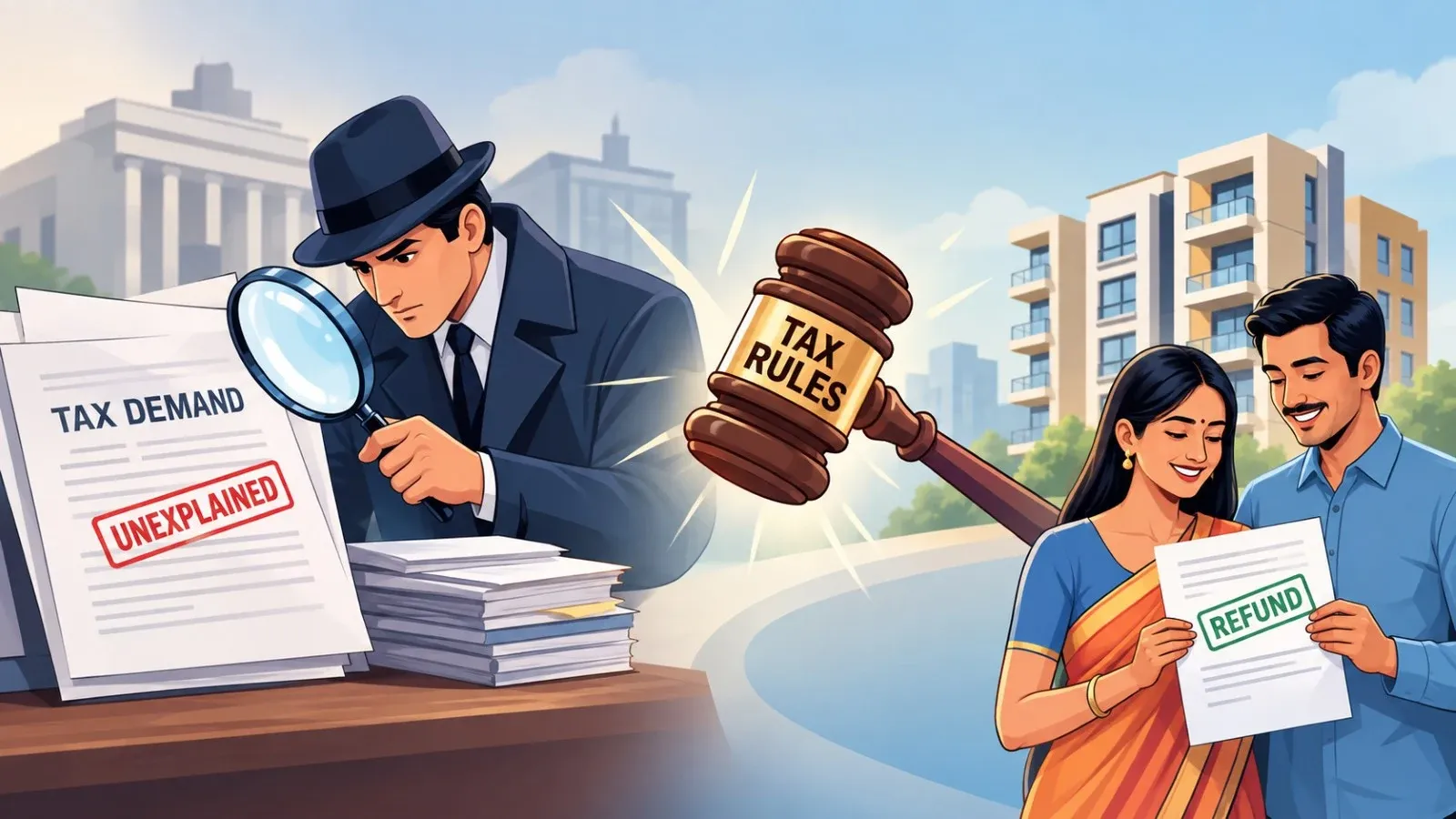
The assessee escaped extra tax only because he had proper documentation. | Representational image
Rajender Raghuvanshi bought a flat jointly with his wife in 2018. He also took two unsecured loans to fund the purchase. The tax department termed the unsecured loans as unexplained money and treated the amount as unexplained income for taxation. .
Case history
According to the ITAT order, Raghuvanshi, a resident of Shahbad Daulat Pur in Delhi, filed his income tax return for AY 2019-20 on October 30 2019. He declared a total income of ₹10,7,810. In August 2018, he had purchased an immovable property worth ₹87,61,500 jointly with his wife, where his 50% share amounted to ₹43,80,750
The purchase, however, caught the tax department's attention on the ground that the property purchase did not match the declared income.
Later, it emerged that the purchase was funded through unsecured loans of ₹30 lakh from Prem Goel and ₹ 7 lakh from M/s Padamshree Industries.
The assessing officer, and after him the CIT(A), treated both loans as non-genuine and added the entire ₹43,80,750 paid by Raghuvanshi as unexplained investment.
Before the lower authorities, the taxpayer contended that the reopening itself was improper as the purchase was already visible to the department through Form 26QB and the TDS on it.
Before the tribunal, Raghuvanshi's counsel argued that the property was disclosed in his return and that the TDS on the purchase duly reflected in his Form 26AS. For the loans, he submitted that the onus to prove the identity and creditworthiness of the lenders and the genuineness of the transactions had been fully discharged by the assessee.
The documents furnished before the lower authorities for both loans were:
-
Confirmations of both the parties
-
Their PAN details
-
Their bank statements and income tax returns
His counsel said that the loans had been repaid through banking channels.
The department's representative relied on the lower orders, submitting that the onus to establish the lenders' creditworthiness had not been fully discharged.
What the ITAT said
The tribunal sided with the taxpayer, and its reasoning is the heart of the order.
"Once primary onus to establish the identity of the lenders, their PAN/ITR details and bank statements to establish the creditworthiness and genuineness of transactions had been discharged by the assessee, the AO should have conducted further enquiries in case he was not satisfied, instead of simply rejecting the assessee's submissions," the tribunal said.
After considering all facts, the ITAT deleted the addition of ₹43,80,750. "After careful consideration of the entire factual matrix, we hereby delete the addition of Rs. 43,80,750/- u/s 68 of the Act," the tribunal said.
Lessons for joint homebuyers
The ITAT ruling is significant for any homebuyer who borrows from friends, relatives or firms rather than banks. There are some broader lessons for joint homebuyers from this case as explained below:
While buying property in the name of both spouses is perfectly lawful, each spouse's share must be traceable to legitimate funds.
Loan-funded purchases need the lender's paper trail from day one. Confirmations, PAN, bank statements and repayment records can convert a loan from "unexplained" to accepted in the eyes of taxman, or ITAT.
If you think disclosure alone would help avoid the taxman's attention, this case shows otherwise. Here, the property was disclosed and the TDS was in the taxman's own records, yet the assessment was reopened more than three years after the return was filed. The assessee escaped extra tax only because he had proper documentation.
Related News

About The Author
Next Story

