
Personal Finance News
13 financial changes in October 2026: RBI MPC, SBI ATM rules, FD rules, LPG KYC, UPI MDR, small savings, ITR deadline & more

7 min read | Updated on October 01, 2026, 15:53 IST


SUMMARY
13 financial changes are coming in October 2026, from RBI MPC and SBI ATM rules to FD rates, LPG KYC, UPI MDR, small savings and ITR deadlines.
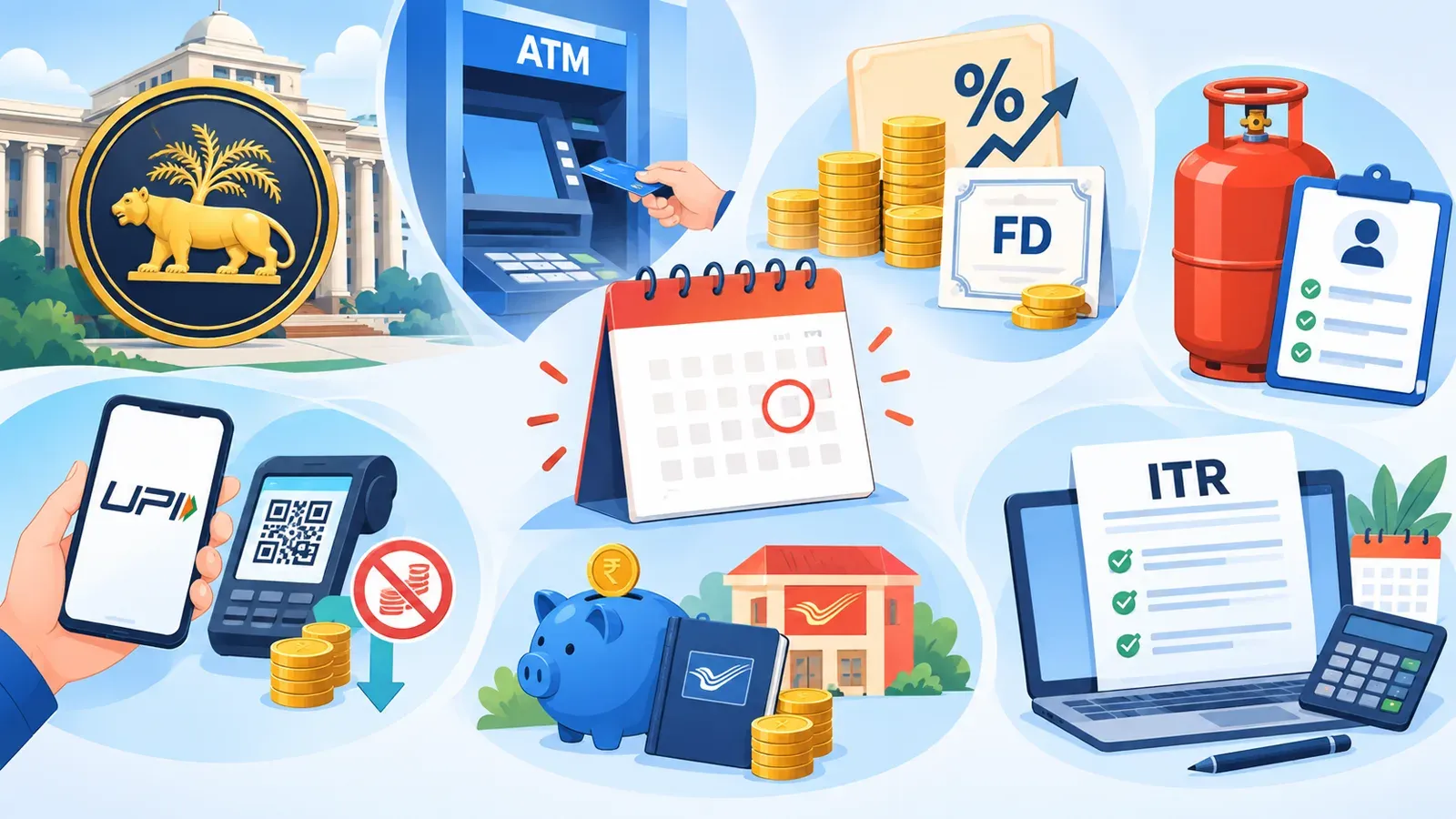
Here's a look at the key money changes in October 2026 and what they mean for consumers.
October 2026 is set to bring several changes that could affect savers, taxpayers, bank customers and households. From revised rules for bank deposits and SBI ATM transactions to the quarterly review of small-savings interest rates, mandatory Aadhaar authentication for subsidised LPG and a new TDS process for property bought from NRIs, there are several dates to keep in mind.
The Reserve Bank of India's October Monetary Policy Committee (MPC) meeting will also be closely watched, while UPI merchant payments and the October 31 income-tax return deadline are other important developments.
Here's a look at the key changes and what they mean for consumers.
1. RBI MPC meeting in October: Repo rate decision on October 7
The RBI's Monetary Policy Committee is scheduled to meet from October 5 to October 7, 2026. The policy decision at the end of the meeting will determine whether the central bank changes the repo rate or keeps it unchanged.
2. Small-savings interest rates to be reviewed for October-December
For the July-September quarter, the government kept all small-savings rates unchanged.
3. RBI's new FD rules from October 1
For ordinary retail FD holders, this does not mean that every bank will automatically change its FD rate on October 1. Retail deposit rates will continue to depend on individual banks and their funding requirements.
4. SBI ATM rules change from October 1
SBI is changing the free ATM transaction limit for certain Salary Package Account customers. From October 1, salary account holders using an SBI debit card at other banks' ATMs/ADWMs will get five free transactions a month instead of 10.
After the free limit, the charge will be ₹23 plus GST for a financial transaction and ₹11 plus GST for a non-financial transaction, according to the reported SBI changes.
5. SBI BSBD account holders to face charges after four cash withdrawals
SBI's Basic Savings Bank Deposit (BSBD) account holders will see a change in cash-withdrawal charges from October 1, 2026. The first four cash withdrawals in a month will continue to be free, but every cash withdrawal after that will attract a charge of ₹15 plus GST. The revised rules will also count Aadhaar-enabled Payment System (AePS) cash withdrawals within the four free transactions. Digital transactions, however, will continue to remain free.
6. UPI MDR
The government has clarified that person-to-person UPI transactions will remain free regardless of the amount. Merchant payments up to ₹2,000 and transactions covered under the zero-MDR framework will also remain free.
7. Aadhaar authentication becomes mandatory for subsidised LPG
From October 1, 2026, domestic LPG consumers will need to complete Biometric Aadhaar Authentication (BAA) to book subsidised domestic LPG refills at the regulated retail selling price.
The government said that customers can complete the authentication during LPG delivery, at the distributor's showroom or through the mobile applications of oil marketing companies.
8. Buying property from an NRI: PAN can replace separate TAN requirement
From October 1, 2026, resident individuals and HUFs buying immovable property from a non-resident seller will get a simpler TDS compliance process. A separate TAN will not be required for deducting TDS in such cases; the buyer can use the PAN for the prescribed TDS-related process.
However, the change does not remove the requirement to deduct TDS when applicable. Buyers still need to comply with the applicable tax, deposit and reporting requirements.
The change is aimed at simplifying compliance for individuals purchasing property from NRI sellers.
9. October 31 ITR deadline for taxpayers subject to tax audit
October 31, 2026, is an important income-tax deadline for taxpayers whose accounts are required to be audited under the applicable tax provisions.
This later deadline does not apply to every taxpayer with business or professional income. Whether October 31 applies depends on the taxpayer's circumstances and whether the tax-audit provisions apply.
10. Cars may become more expensive
The festive season is bringing some price changes in the auto sector, with carmakers pointing to higher input and operating costs. Maruti Suzuki, Tata Motors and Hyundai have already announced price increases on selected models.
11. ACs, TVs and appliances may see price hikes
The latest increases are being attributed to higher costs of copper, aluminium, steel and crude-based materials, along with rising freight expenses and currency-related pressures. This is reportedly the third round of price hikes for the industry in 2026.
12. Changes in NPS, NPS Lite charges
13. NPS, NPS Lite charges revised from October 1
October does not bring one single financial rule change. Instead, several separate developments are taking place around the same time. Savers should watch the small-savings rate announcement and RBI MPC decision, bank customers should check their individual ATM rules, LPG consumers should verify Aadhaar authentication, and taxpayers should confirm their applicable ITR deadline.
For buyers, potential price increases in cars and consumer appliances could also make the festive shopping season more expensive.
Related News





About The Author
Next Story

