
Personal Finance News
New UPI rules: What it means for credit cards, cashback and everyday payments

5 min read | Updated on September 16, 2026, 16:03 IST


SUMMARY
For years, one of the biggest attractions of UPI has been that you could scan a QR code, enter an amount and pay without worrying about a transaction fee. So news of a charge above ₹2,000 naturally raises a question: Will I now have to pay more when I use UPI?
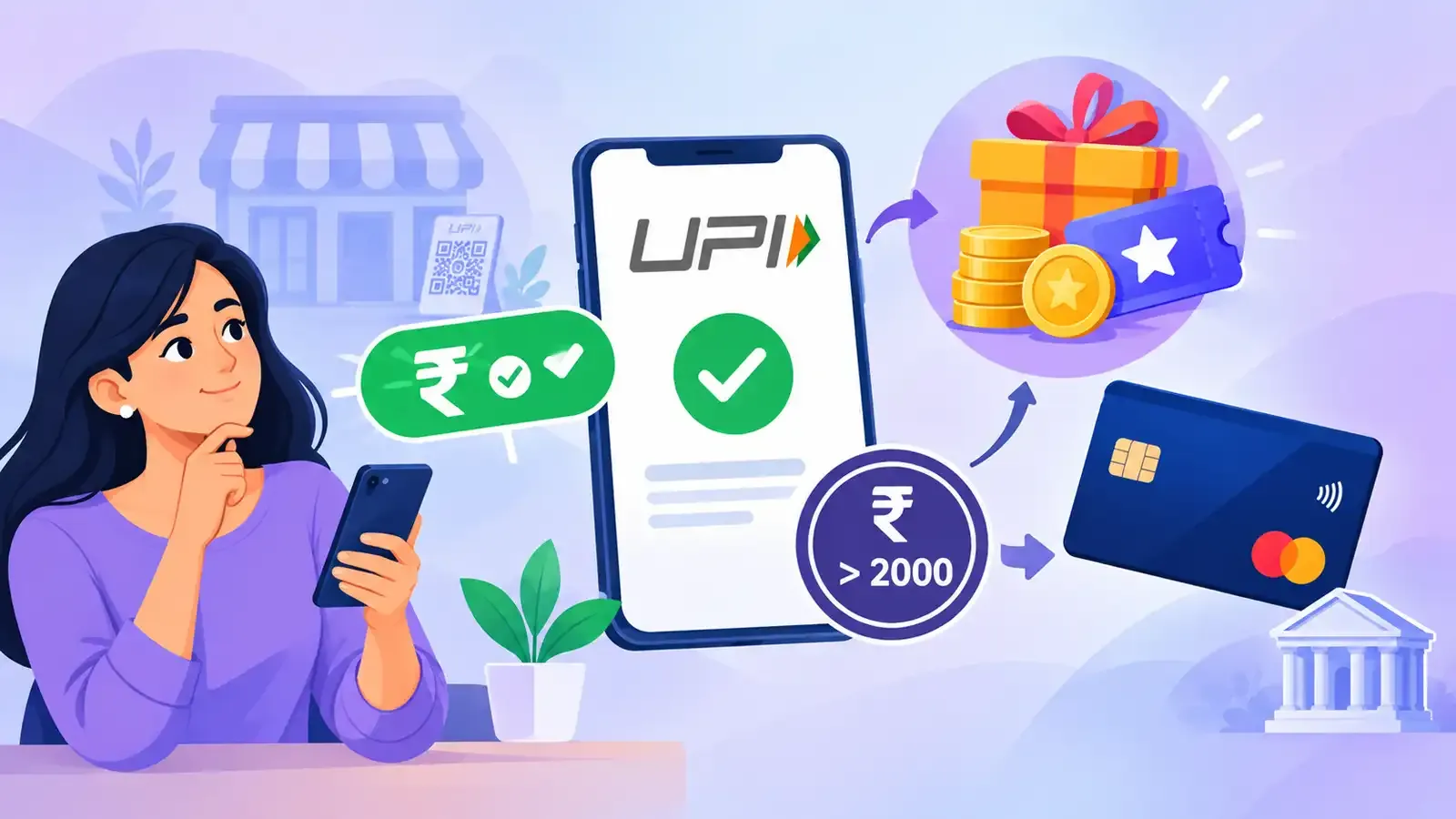
For everyday UPI users, the message is fairly simple. So, crossing ₹2,000 does not make UPI chargeable.
If you have been hearing that UPI will now be charged for payments above ₹2,000, you are not alone in wondering what exactly has changed.
For years, one of the biggest attractions of UPI has been that you could scan a QR code, enter an amount and pay without worrying about a transaction fee. So news of a charge above ₹2,000 naturally raises a question: Will I now have to pay more when I use UPI?
The government's latest clarification says No.The Finance Ministry has made it clear that UPI will continue to remain free for person-to-person payments, irrespective of the amount. The new framework is about the Merchant Discount Rate, or MDR, on certain merchant transactions.
And importantly, MDR is not a charge that customers are supposed to pay.
The ₹2,000 confusion
Let's start with the part that matters most to someone using UPI every day. If you are sending money to another person, nothing changes.
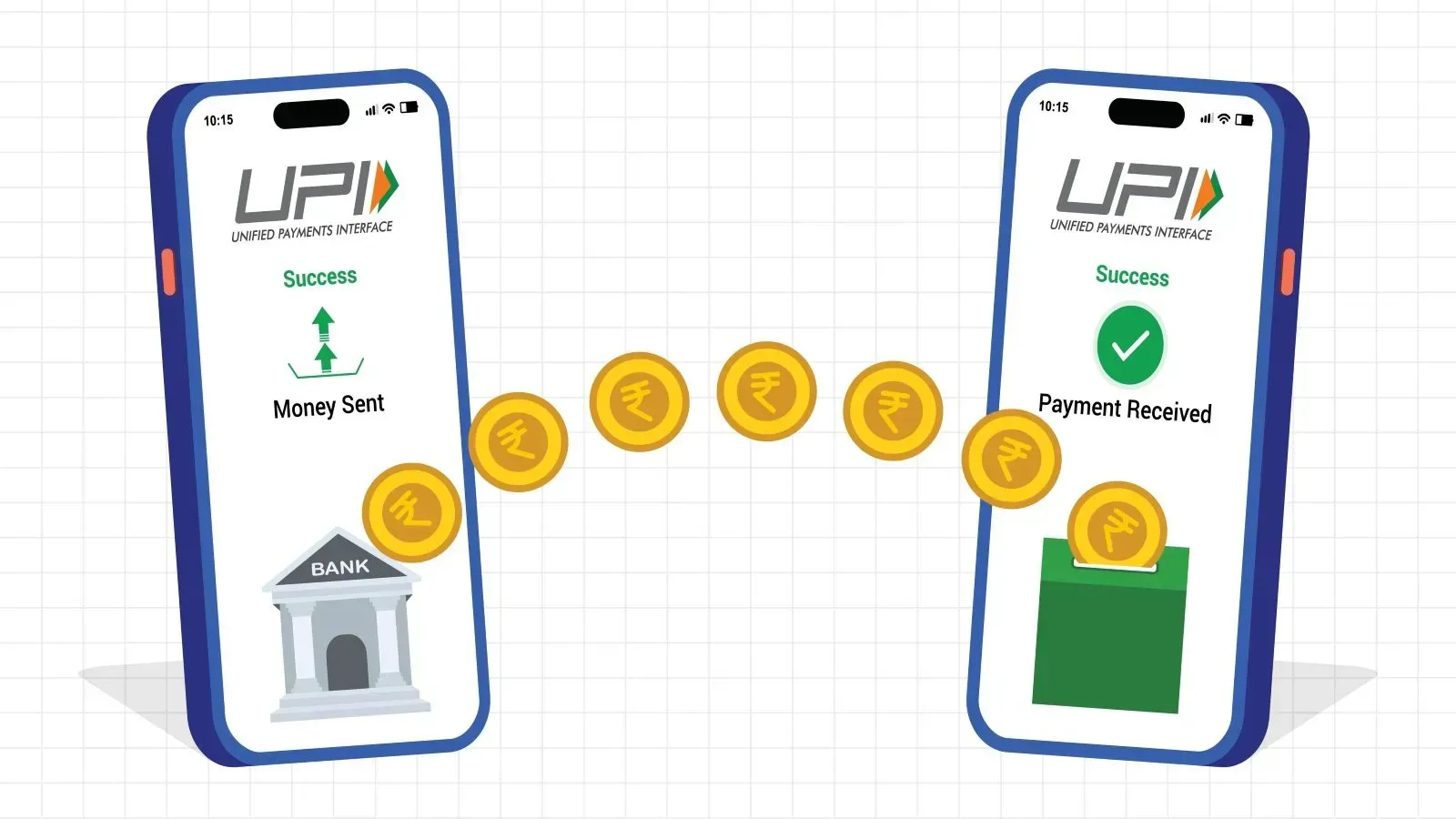
You can transfer ₹1,000, ₹5,000 or ₹50,000 through UPI and there will be no transaction fee on the transfer. The government says P2P payments, which account for about 70% of UPI's total transaction value, will remain outside the MDR framework.
Merchant payments are treated differently.
UPI payments to merchants up to ₹2,000 will continue to remain free. The government says around 96% of all merchant transactions will remain unaffected because they either fall below the ₹2,000 threshold or qualify for the zero-MDR framework for small merchants.
The new MDR comes into play for specified person-to-merchant transactions above ₹2,000.
The rate is set at 0.4%, with a cap of ₹300 for transactions of ₹75,000 and above.
So, what does that actually mean when you are standing at a shop and paying through UPI?
Say you are making a ₹3,000 payment. At 0.4%, the MDR works out to ₹12.
On a ₹50,000 payment, it would be ₹200.
For a ₹1 lakh transaction, the calculation would ordinarily come to ₹400, but the ₹300 cap would apply.
The important bit is that these are not amounts that the government says should be added to your bill.
For merchant payments, UPI transactions up to ₹2,000 will also remain free.
The government estimates that around 96% of merchant UPI transactions will remain unaffected. Small merchants receiving up to ₹1 lakh a month through UPI QR codes under the P2PM category will also continue to get zero MDR.
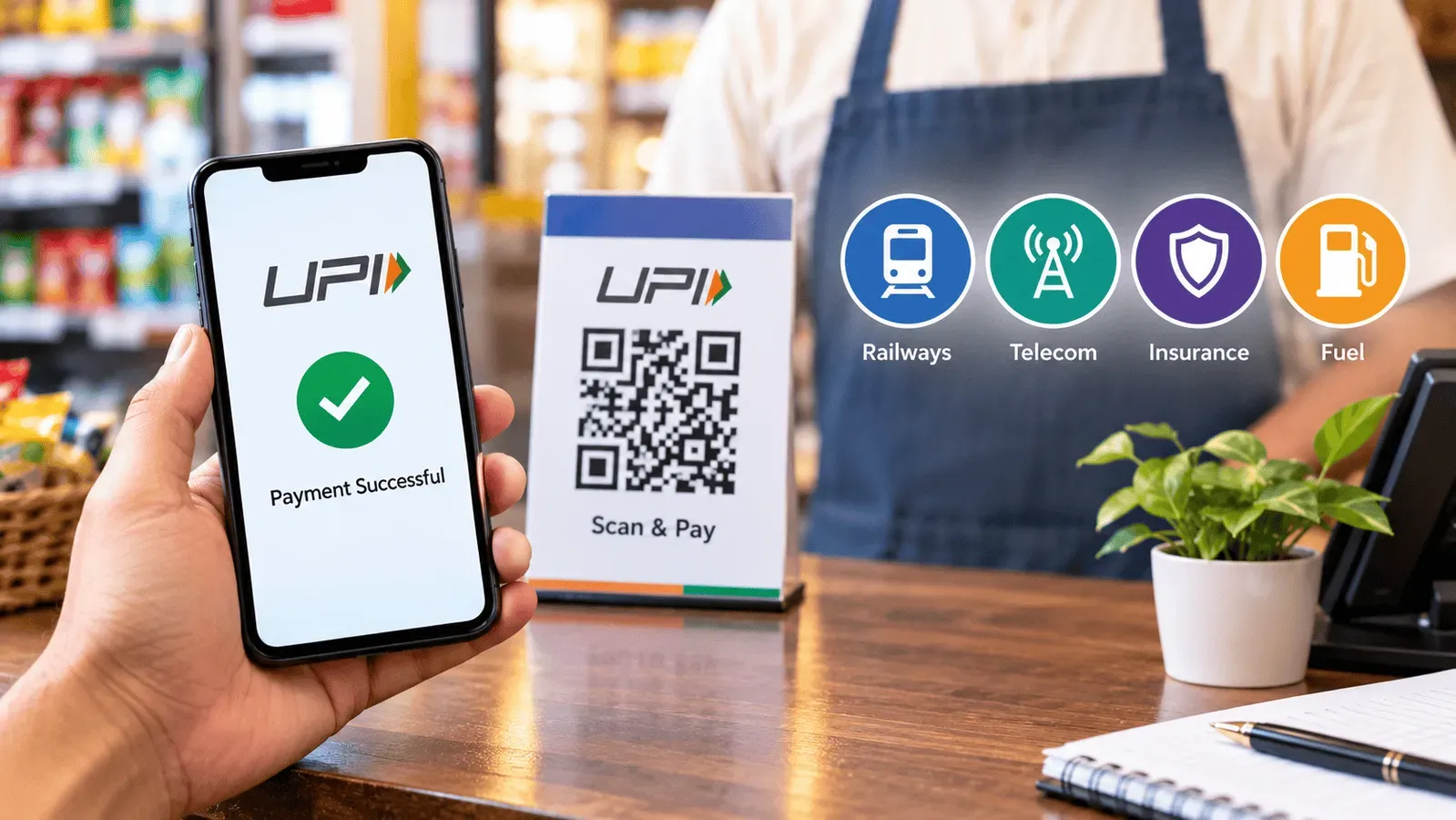
There are separate rates for some categories. For essential sectors such as railways, telecom, insurance, fuel and agricultural inputs, transactions above ₹2,000 will attract a flat MDR of ₹5. Payments related to mutual funds, securities and stockbrokers will attract an MDR of 0.02%, capped at ₹300.
What about credit cards linked to UPI?
This is where credit-card users need to look a little more closely.
The new MDR framework applies to direct bank-account-to-merchant UPI payments. Credit-linked payments, including RuPay Credit Cards on UPI, follow separate card rules.
So, the new 0.4% MDR should not be read as a 0.4% charge that will automatically be added to every credit-card UPI payment above ₹2,000.
What happens to cashback and reward points?
According to Piyush Jhunjhunwala, Founder and CEO, Stockify, UPI payments being free does not automatically mean that every transaction will earn cashback or reward points.
"Cashback and rewards are generally promotional benefits offered by payment applications, banks or merchants, and their availability can vary by transaction. One platform may offer cashback on a particular purchase, while another may offer coupons, scratch cards or reward points instead. Users may also have to meet conditions such as minimum spending amounts, eligible merchants or validity periods," said Piyush Jhunjhunwala.
This means the new MDR framework does not itself guarantee or remove a particular cashback or rewards benefit. Credit-card and UPI users should check the specific terms of their rewards programme before making a payment primarily for the expected benefit.
Will credit-card UPI transactions be treated differently?
Mukesh Pandey, Founder & MD, Rupyaapaisa.com, explains that the key distinction is the source of funds.
"The modified UPI MDR framework does not introduce an additional consumer charge or restrict UPI transactions above ₹2,000. The new MDR applies to specified person-to-merchant UPI transactions, while UPI transactions using a credit-linked UPI account are excluded from this framework," said Mukesh Pandey.
"For consumers using an eligible RuPay credit card through UPI, there is therefore no change in the economics of credit-linked UPI transactions because these transactions involve an extension of credit by the issuer and remain subject to existing credit regulations," added Mukesh Pandey.
In other words, the ₹2,000 threshold primarily concerns merchant UPI transactions funded directly from bank accounts, rather than credit-linked UPI transactions.
What should RuPay credit-card users expect?
As Pandey points out, "merchants and payment intermediaries need to classify transactions according to their funding source and payment structure when applying MDR. For a consumer using an eligible RuPay credit card through UPI, the new 0.4% MDR should not automatically translate into an additional charge simply because the transaction exceeds ₹2,000."
However, the rewards, cashback and other benefits attached to a credit card remain subject to the card issuer's individual terms and reward programme. Those benefits should therefore be checked separately from the UPI MDR rules.
Related News

About The Author
Next Story

