
Personal Finance News
Why India’s gold remains idle: Experts weigh in on low adoption of gold monetisation scheme

3 min read | Updated on May 19, 2026, 07:26 IST


SUMMARY
The gold monetisation scheme offers around 2-2.5% annual interest in rupee terms. Experts say this is structurally modest compared to what people expect from gold over long periods.

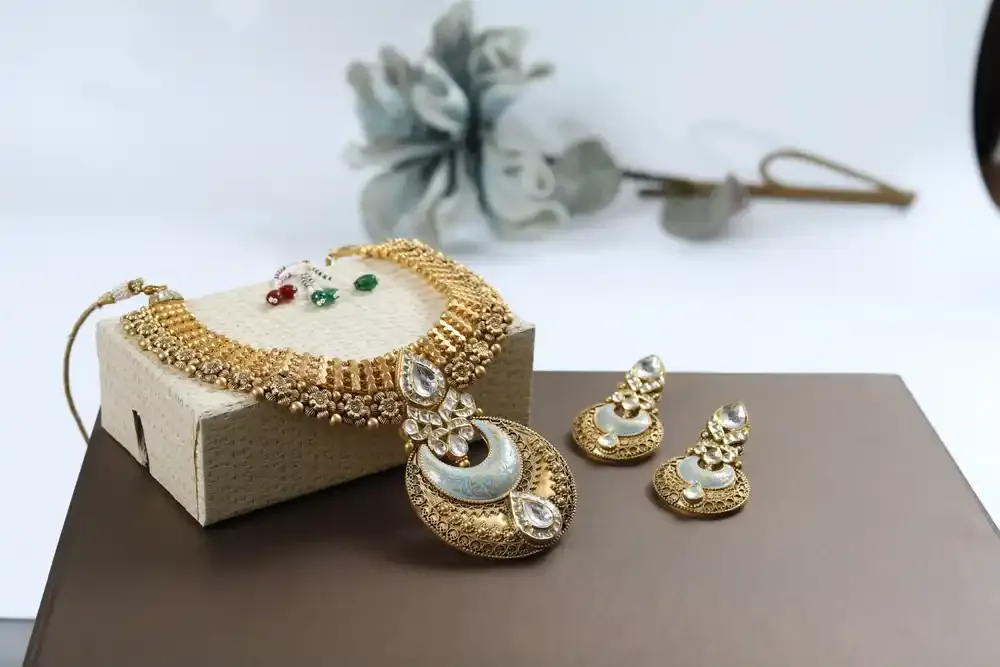
The scheme offers around 2-2.5% annual interest in rupee terms. Experts say this is structurally modest compared to what people expect from gold over long periods. | Image: Shutterstock.
And this is where a long-running policy question comes in: India already has a system designed to “activate” this gold. Yet, it remains one of the least-used financial schemes in the country.
Residents can deposit jewellery, coins, or bars (after removing stones and impurities) with authorised collection centres. The gold is tested for purity, converted into standard gold, and credited into a deposit account in grams.
-
Minimum deposit: 10 grams
-
No upper limit
-
Interest paid: roughly 2.25%-2.5% per annum
-
At maturity: gold or rupee value can be withdrawn
On paper, it turns idle gold into an income-generating asset while reducing India’s dependence on imported gold.
So why does it remain “idle”?
According to Suvankar Sen, CEO and MD of Senco Gold Ltd, the core challenge is perception.
He explains that households do not treat gold as a financial instrument sitting unused. Instead, it is viewed as:
-
Security in emergencies
-
Family inheritance
-
A symbol of continuity across generations
In his words, gold is “an emotional and cultural asset rather than a purely financial one.”
Experts also highlight a practical fear: what actually happens once gold enters the system.
Many pieces of jewellery are not just metal; they are tied to weddings, gifts, or inherited memories. The idea of melting them, even temporarily, becomes a psychological barrier.
He also notes a behavioural pattern: instead of formal monetisation, people are far more comfortable exchanging old jewellery for new designs. That way, the emotional continuity is preserved.
Another major factor is financial comparison.
The scheme offers around 2-2.5% annual interest in rupee terms. Experts say this is structurally modest compared to what people expect from gold over long periods.
Many households assume gold prices themselves will continue to rise, which makes locking it into a fixed-interest structure feel unnecessary.
CFP Shweta Shastri adds another layer that is often overlooked: behaviour in times of financial need.
She explains that Indian households already have an alternative system in place, gold loans.
Instead of depositing gold permanently under a scheme, families prefer to:
-
Pledge jewellery
-
Take quick loans
-
Repay and retrieve the same gold later
This preserves both ownership and flexibility, which the monetisation scheme does not fully offer.
In her view, this liquidity preference is one of the strongest reasons GMS adoption remains low, even among financially aware households.
With gold prices rising again, the total value of household gold in India continues to increase. But most of it remains outside the financial system.
The Gold Monetisation Scheme was designed to change that equation by bringing idle gold into circulation and reducing import dependence.
Related News



About The Author
Next Story

