
Market News
Stock market crash: Why did NIFTY, SENSEX tumble 1%? Check key factors here

4 min read | Updated on June 08, 2026, 11:46 IST


SUMMARY
The NIFTY50 and BSE SENSEX indices tumbled more than 1% during the trading session on Monday, June 8, as the investor sentiment was weighed down by several factors, including global market cues and oil prices.
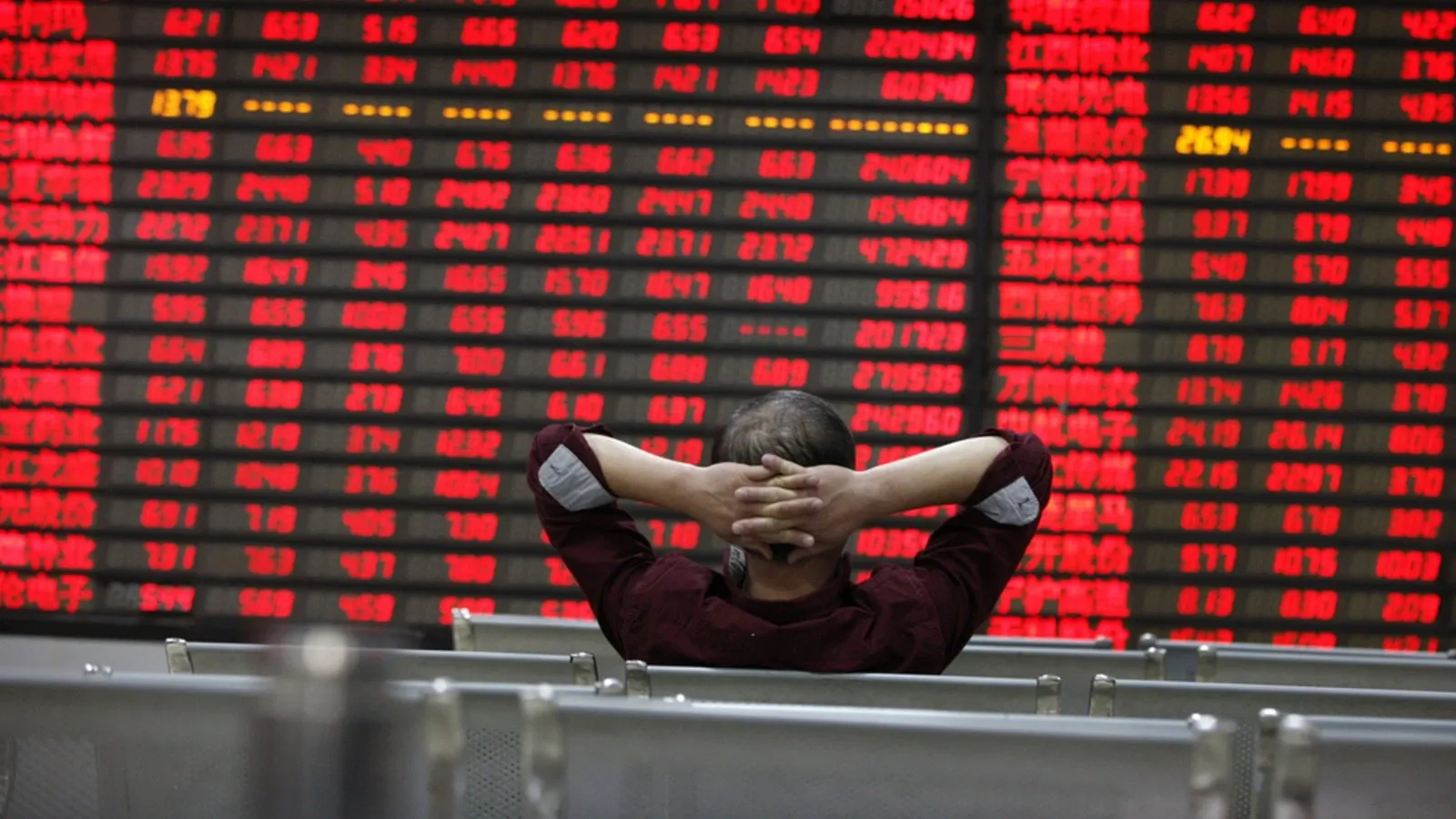
Both NIFTY50 and BSE SENSEX index tumbled more than 1% during the trading session on Monday, June 8. | Photo: Shutterstock
After opening lower, the NIFTY50 index crashed 1.26% or 296 points to a low of 23,070 points during the early market hours on June 8, compared to 23,366.70 points at the previous market close, as per the exchange data.
The BSE SENSEX tumbled 1.24% or around 924 points in the early market hours to drop to an intraday low of 73,318.94 points on Monday, compared to 23,366.70 points at the previous trading close.
Stock market investors are now expected to focus on the weak global cues as the latest series of attacks in West Asia has increased the risk of further escalations between the countries in conflict.
Why did NIFTY50, SENSEX fall today?
The NIFTY50 and SENSEX indices dropped to their respective intraday lows during the early market hours on Monday, June 8, due to the sudden uptick in crude oil prices, continued foreign investor outflows, and selling pressure momentum from the Asian equities.
Across emerging markets like India, domestic investors continue to add support, while foreign investors maintain their streak of diverting funds into other safer bets, in turn increasing the market volatility and outflows.
After dropping to its low, the trading was suspended for a brief window in an effort to contain profit booking and outflows as the sharp drop in technology stocks weighed down investor sentiment among Asian equities.
KOSPI index opened 1.6% lower on Monday, only to extend its losses, as on top of profit booking, the market witnessed heightened uncertainty sentiment over the recent exchange of strikes between Iran and Israel.
At 1:57 pm (KST), KOSPI was down 6.22% or over 500 points at 7,649 points on Monday, compared to 8,160 points at the previous market close, according to MarketWatch data. Index heavyweights like Samsung and SK Hynix were added to the losses as investors booked profits amid a deflating AI bubble.
The Indian currency was trading weaker against the US dollar on Monday as the greenback was witnessing high demand from global market investors amid the current geopolitical sentiment.
Forex traders shift their bets from other emerging currencies into the safe-haven US dollar in situations of heightened risk sentiment in the market. The Bloomberg US dollar spot index (DYX) data showed that the greenback was trading above 100 as of 1:17 am (ET) in the United States on Monday, June 8.
NSDL data showed that in the first week of June 2026, foreign investors had sold a total of ₹37,744 crore worth of assets across classes as they maintained their outlook of international markets amid the geopolitical dynamics.
On Friday, sold ₹8,776 crore worth of capital market assets, according to NSE data.
Investing.com data showed that Brent crude prices were trading 4.55% higher at $97.35 per bbl on Monday, compared to $93.09 per bbl at the previous market close.
On Monday, Israel attacked the central and western regions of Iran with around 10 ballistic missiles after Iran launched missiles into Israel in response to the country attacking Lebanon since last week.
The benchmark index NIFTY50 has lost 11.34% so far this year-to-date (YTD) and over 5% in the last three months, according to NSE data. The index has lost 4% in the last one month and 0.8% in the last five days.
Related News


About The Author
Next Story

