Market News
Shipping Corp, Great Eastern Shipping, Cochin Shipyard: Maritime stocks in focus as govt plans 100 new vessels

4 min read | Updated on August 26, 2026, 11:59 IST


SUMMARY
The stocks are likely to be in focus as the government plans to add 100 more new vessels to its merchant fleet over the next five years to cut $75 billion in freight bills, Shipping Minister Sarbananda Sonowal said on Tuesday.
Stock list
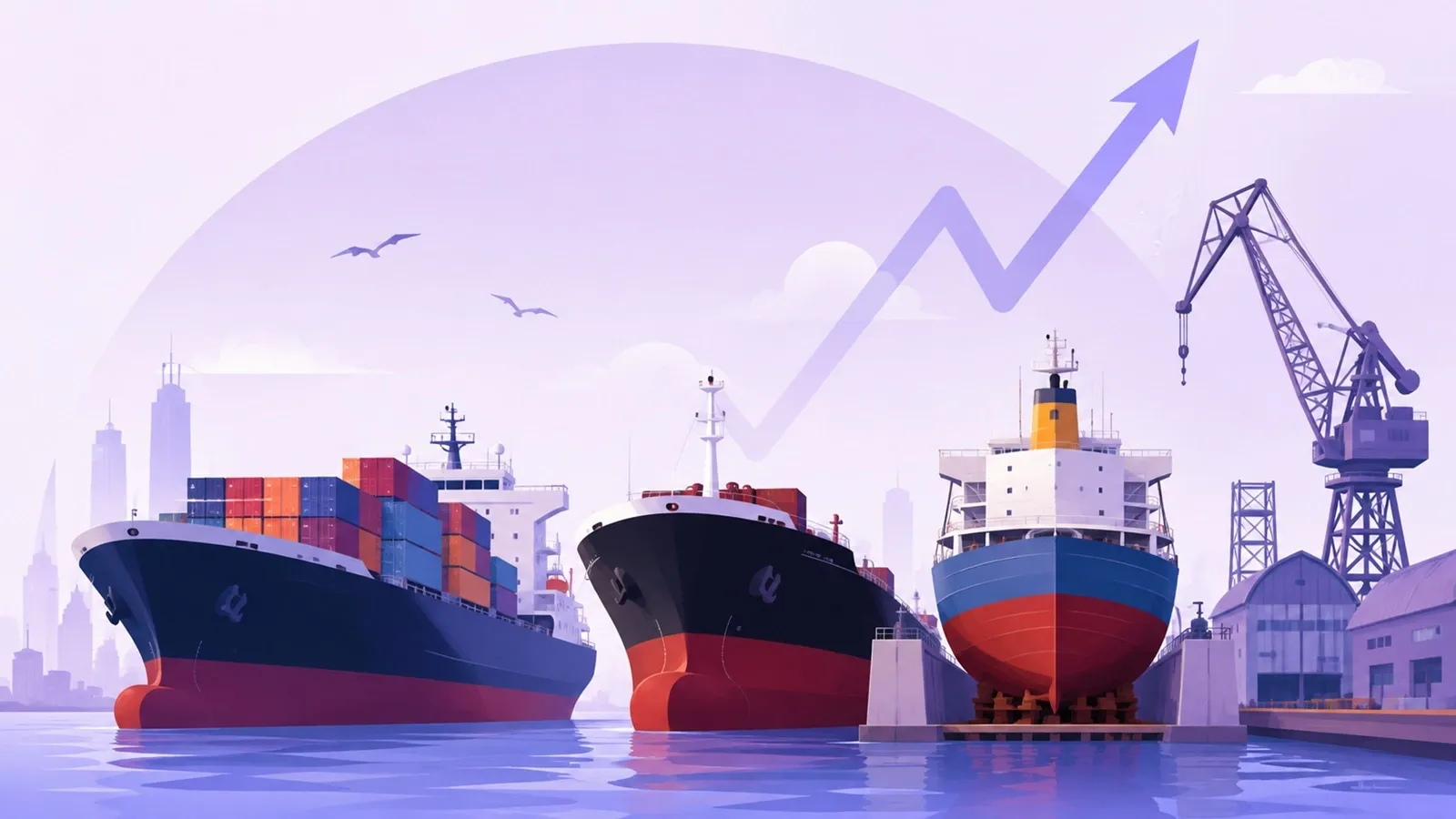
Currently, India has a merchant fleet of 1,600 seagoing ships.
Shares of maritime companies (shipping and shipbuilding theme) such as Shipping Corporation of India (SCI), The Great Eastern Shipping Company (GE Shipping), Cochin Shipyard, Mazagon Dock Shipbuilders, and Garden Reach Shipbuilders & Engineers Ltd (GRSE) are expected to be in the spotlight on Wednesday, August 26.
The stocks are likely to be in focus as the government plans to add 100 more new vessels to its merchant fleet over the next five years to cut $75 billion in freight bills, Shipping Minister Sarbananda Sonowal said on Tuesday.
The plan, discussed at the National Shipping Board’s (NSB) first ‘Sagar Samvad’ event on Tuesday, is part of a broader five-pillar roadmap aimed at making Indian-flagged shipping more competitive and helping the country emerge as one of the world’s top five ship-owning nations by 2047.
Details to know
"Vessels” means ships used for transporting goods or people by sea.
In this context, merchant vessels specifically means commercial ships that carry cargo.
When the government says it plans to add 100 new vessels to India's merchant fleet, it essentially means 100 more commercial ships will be added to the fleet of Indian-owned/Indian-flagged ships.
Currently, India has a merchant fleet of 1,600 seagoing ships.
What Sonowal said
Addressing a press conference after the Sagar Samvad event, Sonowal said the NSB, established in 1958 and older than the ministry it advises, is tasked with ensuring that India's shipping policy is formulated only after listening to the voices of those who sail, own, and fund the industry.
Sonowal also acknowledged the success of the Container Manufacturing Assistance Scheme worth ₹10,000 crore, with global shipping major Maersk now ordering containers built on Indian soil.
The minister said India's maritime sector has the potential to become a major engine of employment for the young workforce and position India as the world's leading supplier of skilled seafarers.
"We are expanding quality training capacity, with steps taken to strengthen industry-led skilling, create wider employment pathways, address gender disparity and equip our workforce with skills for emerging segments such as cruise shipping and advanced shipbuilding," he said.
A skilled and future-ready maritime workforce will be central to achieving the Maritime India Vision 2030 and building India's shipbuilding capabilities under Maritime Amrit Kaal Vision 2047, he added.
During the 'Sagar Samvad' event, panellists said flying the Indian flag remains 16% to 20% costlier than operating under a foreign one, a gap they attributed to India's tax on ship imports and maintenance services, tax deducted at seafarers' wages, tax on freight and higher domestic capital costs, expenses foreign competitors do not carry.
Yet under the sector's Right of First Refusal mechanism, Indian owners are still expected to match foreign freight rates to win cargo, the panel said.
Speaking at the event, Union Minister Mansukh Mandaviya emphasised that India must leverage the expanding global demand for skilled maritime professionals to create high-quality employment opportunities for its growing youth population.
Stocks in focus
According to available information and media reports, the following stocks are expected to be in focus.
Shipping Corporation of India (SCI)
SCI could be among the key beneficiaries of the government’s push to add 100 Indian-flagged vessels, given its position as the country’s largest shipping company. It owns and operates around one-third of Indian tonnage and has a diversified fleet spanning tankers, bulk carriers, container vessels and LPG carriers.
Great Eastern Shipping Company
Great Eastern Shipping could benefit from any increase in Indian-owned tonnage and efforts to reduce the country’s dependence on foreign shipping operators. As of March 31, 2026, its fleet stood at 40 vessels, comprising tankers and dry-bulk carriers.
Cochin Shipyard
Cochin Shipyard stands to benefit if the government’s merchant-fleet expansion translates into more domestic shipbuilding orders. The company can build tankers, product carriers, bulk carriers and passenger vessels, and recently signed a contract to build six LNG-fuelled container vessels for CMA CGM.
Mazagon Dock Shipbuilders
Mazagon Dock could also remain on the radar as the government pushes to expand India’s domestic shipbuilding ecosystem. While the company is predominantly defence-focused, greater emphasis on building commercial vessels domestically could open an additional opportunity for listed shipyards.
Garden Reach Shipbuilders & Engineers (GRSE)
GRSE is another shipbuilding play that could see sentiment improve on a broader push to expand India's maritime and shipbuilding capacity. However, like Mazagon Dock, its exposure to this particular merchant-vessel opportunity is less direct than that of Cochin Shipyard.
Related News


About The Author
Next Story