
Market News
IndiGo shares drop over 2% as jet fuel cost weighs down Q1 earnings; what analysts predict on FY27 outlook

5 min read | Updated on July 24, 2026, 10:05 IST


SUMMARY
IndiGo shares dropped over 2% on July 24 as investors focused on a muted Q1FY27 show and crude oil rebounding to above $100 per barrel amid the West Asia conflict. Here's what analysts predict for the airline stock.
Stock list
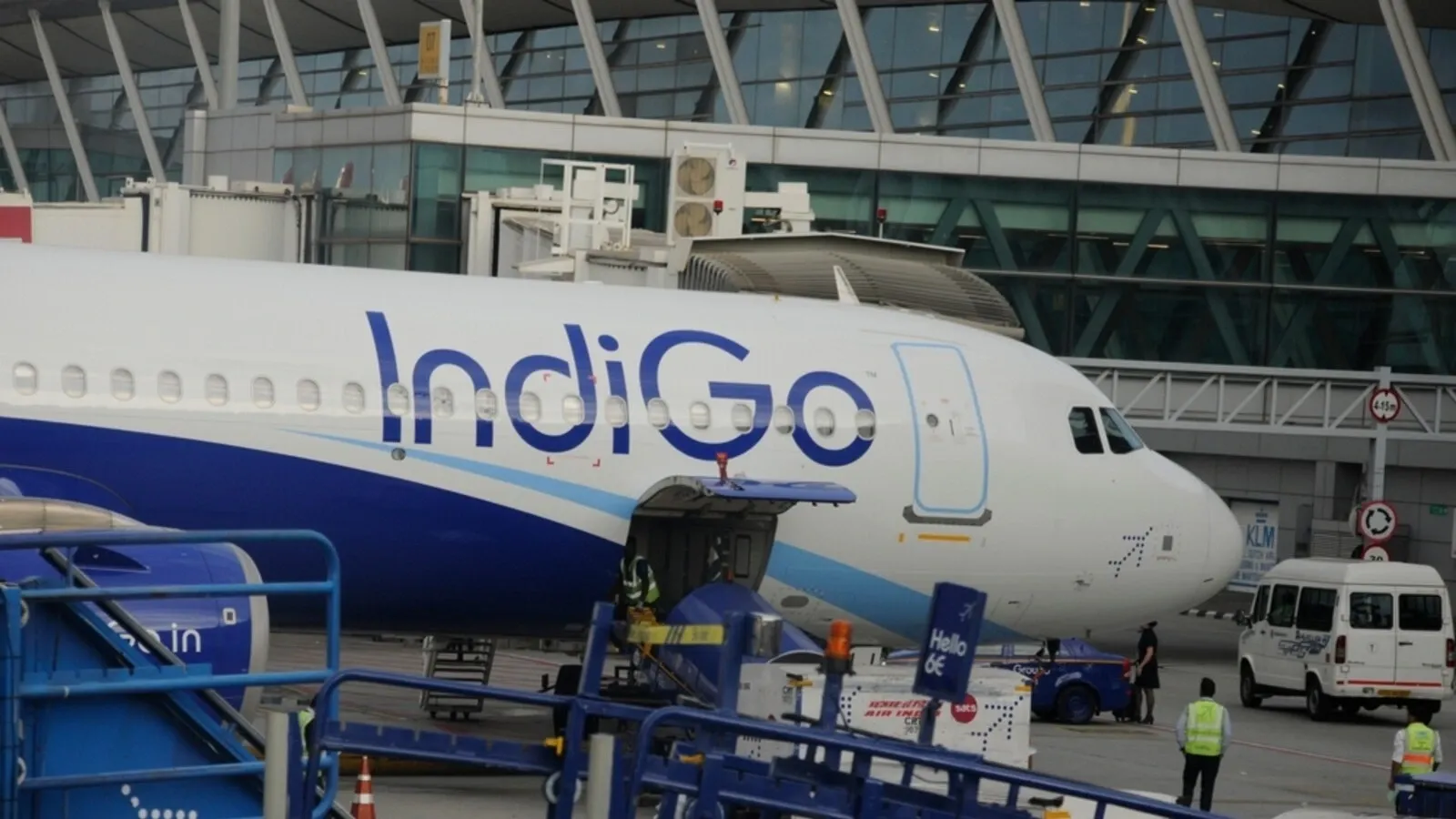
IndiGo share price dropped 2.55% to an early market low of ₹4,895 apiece on Friday, July 24. | Image: Shutterstock
InterGlobe Aviation or IndiGo shares declined more than 2% during the early market hours on Friday, July 24, as investors focused on the airline company’s muted performance in Q1 earnings and the global crude rebounding to above $100 per barrel amid escalations in West Asia.
Shares of IndiGo dropped 2.55% to an early market low of ₹4,895 apiece on Friday’s market, compared to ₹5,023.50 apiece at the previous stock market close, according to NSE data.
At 9:30 am, InterGlobe Aviation shares were trading 2.10% lower at ₹4,918 on July 24, 2026. IndiGo, India’s largest airline operator by market share, posted its April to June quarter earnings report for FY2027 after the market operating hours on Thursday, July 23.
Experts predict that although the near-term earnings potential will likely remain subdued, the airline company can potentially gain from the fuel cost moderation at the end of the second half of the current fiscal year if IndiGo continues to maintain higher pricing.
How did IndiGo perform in Q1 earnings?
IndiGo’s parent company, InterGlobe Aviation, announced its April to June quarter results for the financial year 2026-27, after market hours on Thursday, July 23. India’s largest airline operator posted a ₹237 crore net loss due to the massive surge in jet fuel prices in the period.
In comparison, IndiGo recorded a net profit of ₹2,176.3 crore in the same June quarter period a year ago.
Although revenue from core operations advanced 20% to ₹24,584 crore in the first quarter, from ₹20,496 crore in the same quarter of the previous year, the jet fuel cost and other expenses in the period weighed down the margins and earnings.
InterGlobe Aviation’s management attributed the Q1 performance to a combination of fuel price escalation, adverse foreign exchange movement and the West Asia conflict.
According to the consolidated statements, IndiGo’s fuel expenses jumped by 86% to ₹10,832.9 crore in the June quarter, from ₹5,832.6 crore in the same quarter of the previous fiscal year.
The fuel costs were also squeezing margins thin as the airline’s EBITAR (earnings before interest, tax, depreciation, amortisation, and rent costs) margin declined to 16.5% in the first quarter, compared with 28% a year earlier.
Latest data from IATA's Jet Fuel Monitor showed that aviation turbine fuel (ATF) prices surged 17.6% to a weekly average price of $149.40 per barrel in the week ended July 17, compared to $127.06 per barrel in the previous week. An airline spends a major portion of its expenses on fuel costs, and any positive changes in global energy prices increase the input cost in a particular period.
What do analysts predict for FY27?
After reviewing IndiGo’s Q1 earnings, global market experts said that the company’s financial performance missed overall market estimates as the fuel and non-fuel costs surged beyond expectations in the June quarter.
Analysts from leading US-based investment firm JP Morgan said that it appears to be as if the volatility in market prices can potentially continue for the rest of the year, while the level of deviation in the Q1 earnings should normally not be a source of worry.
“We are increasing FY27 EPS by 47%, assuming the company would maintain higher pricing for the remainder of the year while still giving it the benefit of fuel cost moderation in 2HFY27 (assume Brent at $75/bbl),” said JP Morgan analysts.
In line with the outlook, Citibank analysts said that IndiGo’s profit level and better yields were offset by the higher fuel prices in the market as the energy rates continue to remain volatile.
Experts from another leading investment firm, Jefferies, said that IndiGo’s near-term earnings potential is estimated to remain subdued despite healthy yields, while others in the aviation sector may face a tougher challenge amid the conflict.
“Despite healthy yields, near-term earnings will remain subdued, with a tougher backdrop for peers as renewed West Asia tensions add volatility,” they said.
How have IndiGo shares performed?
IndiGo shares delivered more than 183% returns on their investment in the last five years, and over 83% gains in the last three years, according to NSE data. However, the airline stock has lost over 16% in the past one-year period.
So far in the calendar year 2026, IndiGo shares have lost 4.2% and were down 6% in the last one-month period. The company’s stock was trading 6.7% lower in the last five trading sessions on the stock exchange.
The company’s market capitalisation (m-cap) was at over ₹1.89 lakh crore as of the stock market session on Friday, July 24, 2026.
Related News


About The Author
Next Story

