Market News
IndiGo, SpiceJet shares jump over 5% as crude oil prices slip to pre US-Iran war levels

3 min read | Updated on June 25, 2026, 16:54 IST


SUMMARY
Last seen, the Brent crude oil futures were trading 1.06% lower at $73.09 per bbl on Thursday
Stock list
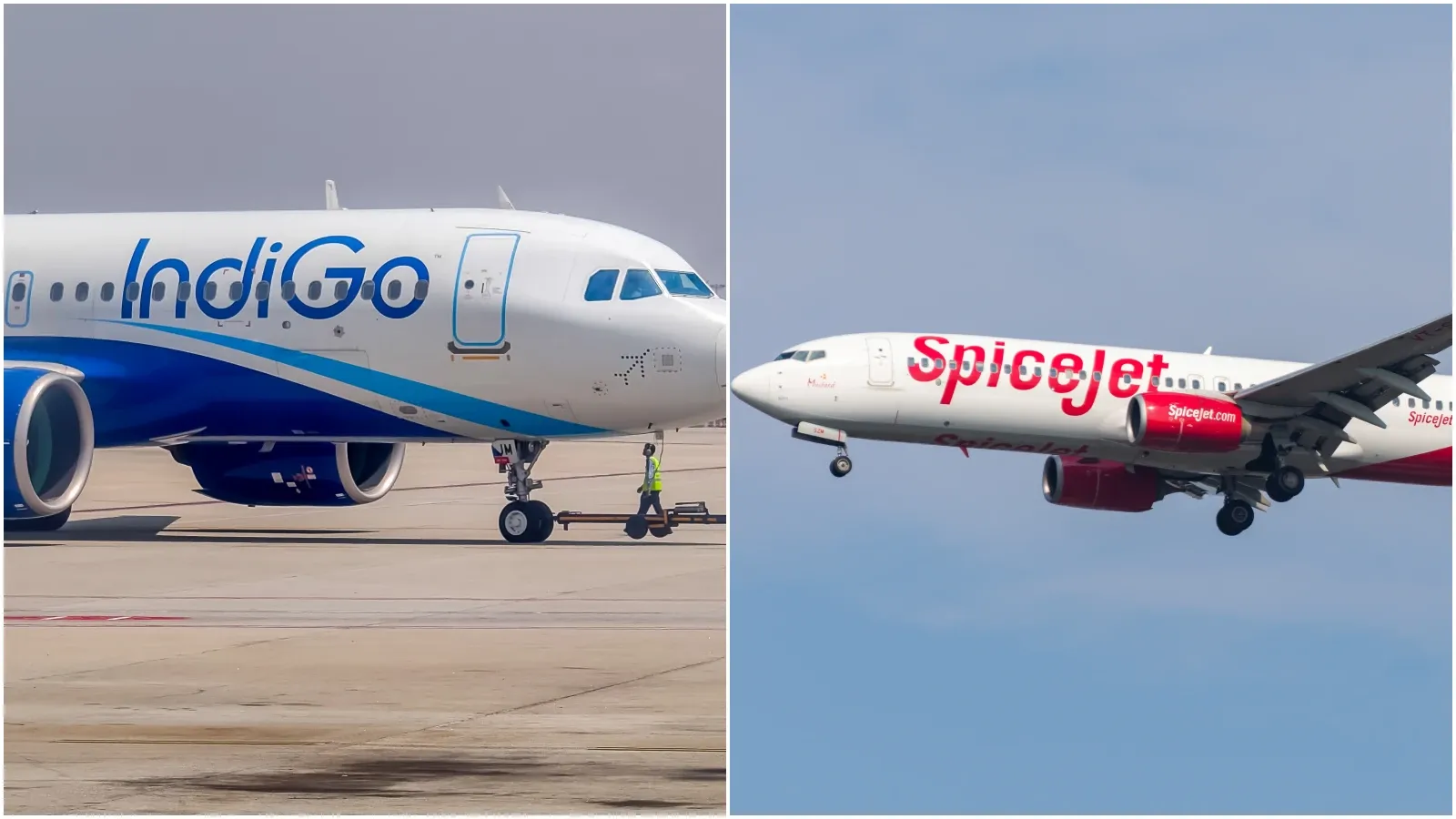
Opening at ₹5,265 apiece, shares of IndiGo climbed 5% to an intraday high of ₹5,454 apiece on Thursday. Image: Shutterstock
Airline stocks like IndiGo operator InterGlobe Aviation and SpiceJet rallied over 5% on Thursday, June 25, as crude oil prices slipped to pre-war levels.
Crude oil prices in the global market have lost more than 8% in one week, dropping to near $72 per barrel (bbl) pre-war levels during the early market session on Thursday as investors focused on the optimism of the near-term end to the US-Iran conflict and reports of an increase in maritime trade via the Strait of Hormuz.
Data collected from Investing.com showed that the global benchmark, Brent crude oil prices, have declined 8.5% to their current levels over the last five trading sessions. The energy prices have dropped 24% in one month and 28% in the last three months.
Investors are now focused on the 60-day timeline for the United States and Iran to come up with a final peace agreement, as negotiations remain underway between the countries.
At 4:55 PM (IST), the Brent crude oil futures were trading 1.06% lower at $73.09 per bbl on Thursday’s market, compared to $73.41 per bbl at the previous market close, according to Investing.com data.
Although oil prices have dropped to their pre-war levels, investors remain cautious as they closely monitor the energy prices, as the rates are highly sensitive and linked to the developments in the West Asia negotiations.
“Brent crude slipping to around $73 per barrel marks a sharp reset in the global commodity narrative driven by geopolitical de-escalation rather than demand weakness. The resumption of vessel traffic through the Strait of Hormuz, following the US-Iran ceasefire agreement, is unwinding a supply disruption that had compressed Persian Gulf oil exports by nearly 85% at its peak,” said Rajeev Sharan, Head of Research, Brickwork Ratings Head of Research.
“For India, as the world's third-largest crude importer, this is clearly positive as every $10 per barrel decline in oil prices reduces India's annual import bill by approximately $12 to 15 billion, easing pressure on the current account and giving the Reserve Bank of India greater room to keep borrowing costs supportive of growth,” Sharan added.
Last month, the government had capped ATF prices for domestic airlines and approved a ₹10,000 crore jet fuel stabilisation fund to ease airline cost pressures. The decision came after a nearly 2.5-fold increase in international ATF prices, which rose from ₹60.5 per litre in March 2026 to ₹142 per litre in May 2026.
IndiGo and SpiceJet shares price trends on Thursday
Opening at ₹5,265 apiece, shares of IndiGo climbed 5% to an intraday high of ₹5,464.90 apiece on Thursday. It eventually closed at ₹5,450 per share on the National Stock Exchange, rising 4.66%.
SpiceJet shares, after opening at ₹12.39 apiece on BSE, have jumped 5.5% to today's high of ₹12.95. At close, the scrip ended 2.69% higher at ₹12.66 per share.
Since the beginning of the year, IndiGo's shares have climbed nearly 7%, and its market capitalisation stands at ₹2.11 lakh crore.
Meanwhile, SpiceJet, with a market capitalisation of ₹1,922.89 crore, has tanked 58% so far since the beginning of 2026.
Related News



About The Author
Next Story