Market News
AI infrastructure demand lifts Indian optic fibre makers; Sterlite Tech, HFCL, Vindhya Telelink and others in focus

5 min read | Updated on May 25, 2026, 15:06 IST


SUMMARY
Shares of Indian fibre optic cable makers like Sterlite Technologies, HFCL, and Vindhya Telelinks are trading 5%-10% higher on Monday's trading session after Sterlite Technologies secured a multi-billion dollar contract from a global hyperscaler. The shares have rallied up to 350% on a YTD basis after AI infrastructure demand boosted optical cable makers' prospects.
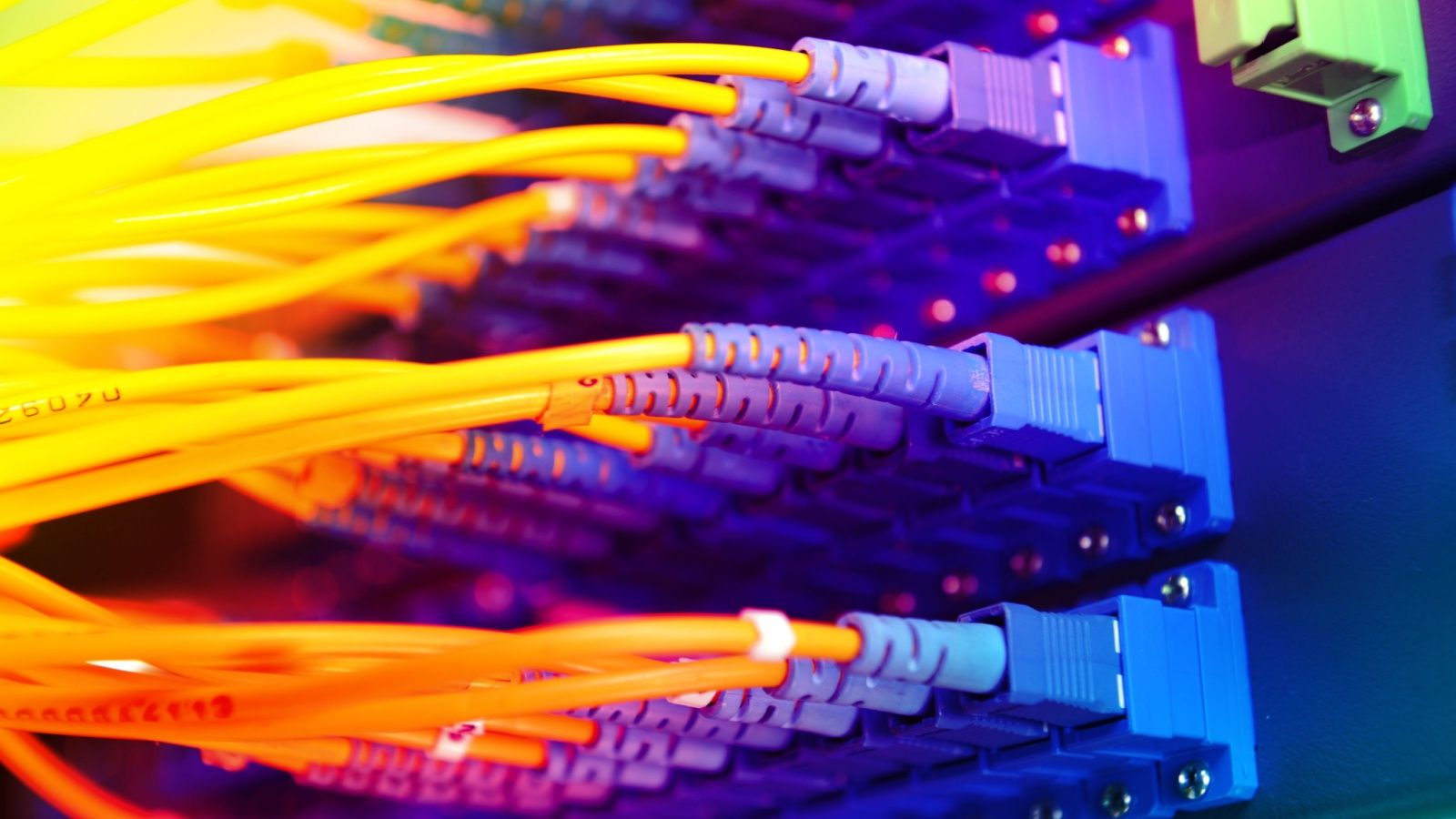
AI data centre requires 10x to 36x more optic fiber network than cloud based data centre. Image: Shutterstock.
The optical fibre sector is back in focus after Sterlite Technologies secured a ₹10,000 crore order from a global hyperscaler. The magnitude of order has once again turned the eyes of investors towards the optical fibre players, as demand remains upbeat in the AI-led boom. Consequently, shares of optical fibre companies like Sterlite Technologies, HFCL, Vindhya Telelinks and others came into focus as they become the proxy play for investors to ride on the AI infrastructure demand. Here is a deep dive into what changed in the optical fibre space that led to a euphoric rise in optical fibre companies.
The optical fibre boom: Pre AI vs post AI era
What led to the explosion of demand?
A single AI data centre rack requires 10x to 36x more fibre than traditional cloud-based data centres. Management commentary at HFCL’s post-earnings conference call suggests that the demand for optical fibre is driven by hyperscaler data centres, AI workloads and cloud infrastructure expansion, which has led to incremental demand of 100 to 150 million fkm globally.
As the demand for AI computation increased, the demand for AI infrastructure also increased exponentially. The hyperscaler companies like Alphabet, Amazon, Meta, and Microsoft will be $726 billion to serve the rising demand through AI infrastructure. As the AI’s computational demand jumped, the demand for ultra-density fibre optics (3,456-fibre to 6,912-fibre) increased exponentially. Telecom fibre optic networks required 24-fibre to 96-fibre counts optic networks, which were not enough to run GPUs. The ultra-density fibre optics can pack thousands of glass strands in a 2-inch node, which would help in reducing the latency bottleneck for AI companies.
Who serves the global demand?
At the global level, the market is highly dominated by top companies from the US, Europe, and China. The majority of US hyperscalers' demand is served by Corning Inc, which holds proprietary technology for high-density rollable ribbon fibre. Prysmian Group, which holds a dominant market share for submarine deep-sea mega routes, dominates the European and Latin American markets.
Yangtze Optical Fibre and Cable, which holds the largest market share by volume globally, is restricted by anti-dumping duties in the US and Europe. Sumitomo Electric and Furukawa Electric are the pioneers of ultra-high-density ribbon cable technology and command market share in the Asia-Pacific region, and serve the demand from premium data centres.
Indian breakthrough
Companies like Sterlite Technologies and HFCL are getting themselves placed in the big league by securing $1 billion contracts. It is not just a milestone for Sterlite Technologies, but also a breakthrough for Indian optical fibre cable manufacturers. To serve this rising demand, Indian companies have led massive capacity expansion.
Result of the AI-boom led demand?
Consequent to robust demand and the resultant capacity expansions, the share price of optical fibre companies in India has delivered robust returns in 2026 alone. Here’s the data
| Company name | YTD returns |
|---|---|
| Sterlite Technologies | 351% |
| HFCL Ltd | 134% |
| Finolex cables | 38% |
| Vindhya Telelinks | 24% |
| Birla Cables | 23.4% |
(Note: YTD returns are based on CMP on 25th May 2026)
About The Author
Next Story