Market News
Indian Hotels, ITC Hotels: Hotel sector sees occupancy-led recovery in Q1; industry revenue expected to grow 7-9% in FY27

7 min read | Updated on August 14, 2026, 17:20 IST


SUMMARY
The Indian hotel sector saw an occupancy-led recovery in Q1 FY27, with the industry's same-store revenue per available room (RevPAR) growing by approximately 11%-13% YoY. Here is what market experts said.
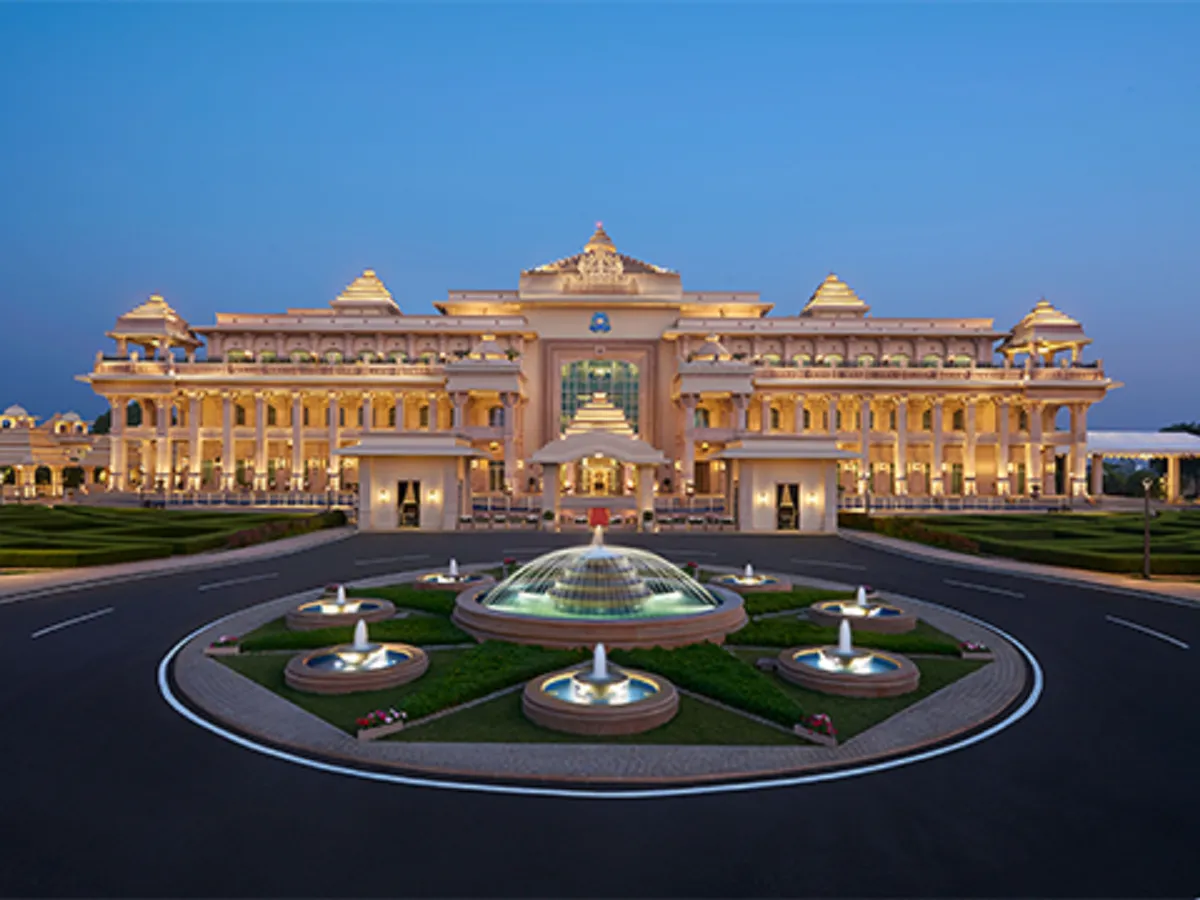
Listed hotel sector operators broadly reported positive RevPAR and revenue growth in Q1 FY27, although performance varied across portfolios and markets, the expert said. | Image: ITC Hotels website
Shares of hotel sector firms such as Indian Hotels Co, ITC Hotels, Leela Palaces Hotels, Lemon Tree Hotels, Chalet Hotels and more have been on investors' radar, as the sector saw an occupancy-led recovery in the April-June quarter of the 2026-27 financial year (Q1 FY27), according to market experts, with domestic demand offsetting softer foreign arrivals and corporate travel.
Furthermore, inbound international tourists also saw a steady recovery. Street expectations for the sector remain constructive, with industry revenue growth estimated in the 7-9% range for FY27, experts said.
What factors drove performance in the hotel sector in Q1 FY27?
The "revenge travel" phenomenon that started post-COVID has matured into a structural shift in consumer behaviour, and Gen Z, anyway, prioritises ‘experiences’ in sectors where travel and tourism rates are high, said Ambareesh Baliga, independent equity analyst.
In addition to leisure travel, spiritual tourism seems to have also taken off well, which is expected to be non-cyclical. Alongside, the industry has seen a strong recovery in Meetings, Incentives, Conferences, and Exhibitions (MICE) and Corporate travel, the expert said.
While the demand surged, the supply still seemed to be a constraint, leading to higher average room rates (ARRs) without sacrificing occupancy levels, Baliga stated.
He added that although domestic travel was the major contributor, inbound international tourists saw a steady recovery, with some major hotel groups seeing a margin expansion as traffic shifted to their own digital platforms, reducing commissions being paid out.
According to Harshal Dasani, the Business Head of INVAsset PMS, the hotel sector saw an occupancy-led recovery during the June quarter of FY27, with industry same-store revenue per available room (RevPAR) growing by approximately 11%-13% year-on-year (YoY), and May and June improving as travel disruptions eased.
While domestic demand did much of the heavy lifting, offsetting softer foreign arrivals, corporate travel and MICE supported utilisation, Dasani said.
Listed operators broadly reported positive RevPAR and revenue growth, although performance varied across portfolios and markets.
“The important change versus earlier cycles is that growth is not dependent only on higher room rates,” Dasani stated, adding that better occupancy, domestic travel and portfolio expansion have been contributing more meaningfully to earnings, making the demand base broader and more balanced.
How is the demand outlook shaping up for the Indian hotel sector?
The demand outlook remains constructive, but the mix has changed, Dasani said, adding that disruptions in West Asia have affected foreign arrivals, airline capacity and airfares, and some corporates have become more cautious regarding travel spending as energy and operating costs rise.
However, domestic leisure has provided an important offset, and some outbound holiday and destination-wedding demand can shift towards Indian destinations, the expert stated, adding that the current Q2 trends remain supportive YoY.
“The bigger trigger for the second half would be an improvement in foreign inbound travel because it supports premium hotels, corporate travel and MICE demand,” he stated, adding that while domestic demand provides the cushion, international recovery will determine the strength of pricing.
However, Baliga stated that domestic travel has become the dominant engine of the industry in the last few years, so, even if international transit is disrupted or foreign tourist arrivals decrease, the huge domestic leisure and business travel compensates for the loss.
“Thus, geopolitical uncertainties haven’t had much effect, contrary to general perception,” he added.
What sectoral headwinds should investors be cautious about in the upcoming quarters?
The principal risk is prolonged geopolitical disruption rather than a collapse in domestic demand, Dasani said, adding that extended tensions in West Asia could keep international arrivals subdued, constrain aviation capacity and put pressure on corporate and MICE spending.
Dasani added that cost inflation also deserves monitoring if fuel and operating expenses remain elevated, stating that supply is another variable, even though demand growth currently appears capable of absorbing planned room additions in many markets.
Operating cost inflation, especially Energy, Food & beverages, and employee costs, seemed to be the only red flags. Furthermore, Environmental, Social, and Governance (ESG) compliance costs too have seen an increase, Baliga said.
“The risk-reward becomes less favourable if new capacity accelerates while RevPAR growth decelerates,” Dasani stated.
Dasani added that the next phase therefore depends increasingly on occupancy, pricing discipline and execution rather than room-rate increases alone. Valuations also leave less room for operational disappointment.
However, in the case ARR growth slows down after a stupendous move in the last few years, the margins could come under pressure, Baliga said, adding that along with this, if the additional keys come into the market, it could lead to a negative impact on ARR growth.
What are the street expectations for the hotel sector in the upcoming quarter of FY27?
According to Dasani, expectations for the hotel sector remain constructive, with industry revenue growth currently estimated in the 7-9% range for FY27.
While premium hotel occupancy is expected to remain around the low-to-mid 70s, average room rates could stay firm, the expert said.
The trends for the second quarter of FY27 (Q2 FY27) began positively YoY. However, the second half could see a larger contribution from pricing if international travel improves during the peak season.
Additionally, Q3 and Q4 would probably benefit from weddings, MICE, corporate events, and leisure travel.
“The key test is whether operators can sustain RevPAR growth as capacity additions increase. From here, execution and pricing discipline matter more than simply participating in the sector upcycle,” Dasani added.
Here is how listed hotel sector firms performed in Q1 FY27
| Company names (in INR) | RevPAR | Profit | Revenue | EBITDA |
|---|---|---|---|---|
| Indian Hotels Co | 8,400 (+14% YoY) | 358 crore (+21% YoY) | 2,419 crore (+15% YoY) | 753 crore (+18% YoY) |
| ITC Hotels | 8,380 (+8% YoY) | 180 crore (+35% YoY) | 936 crore (+15% YoY) | 292 crore (+19% YoY) |
| EIH | Oberio: 16,090 (+8.2% YoY) Trident: 10,490 (+13.8% YoY) | 117 crore (+139% YoY) | 657 crore (+14% YoY) | 208 crore (+6% YoY) |
| Chalet Hotels | 8,582 (+6.5% YoY) | 86 crore (-58% YoY) | 521 crore (-43% YoY) | 243 crore (-34% YoY) |
| Leela Palaces Hotels | 13,982 (+17% YoY) | 49 crore (+460% YoY) | 352 crore (+28% YoY) | 152 crore (+41% YoY) |
| Brigade Hotel | 5,479 (+9% YoY) | 17 crore (+142% YoY) | 127 crore (+2% YoY) | 46 crore (+9% YoY) |
| Lemon Tree Hotels | 4,814 (+6% YoY) | 46 crore (+21% YoY) | 345 crore (+9% YoY) | 163 crore (+14% YoY) |
Related News
About The Author
Next Story