
Business News
UK recognises India's carbon credit scheme for CBAM relief; exporters to benefit
.png)
3 min read | Updated on September 08, 2026, 08:55 IST


SUMMARY
The recognition means UK importers may be able to claim carbon-price relief for the effective carbon cost already paid on Indian goods under the Carbon Credit Trading Scheme.
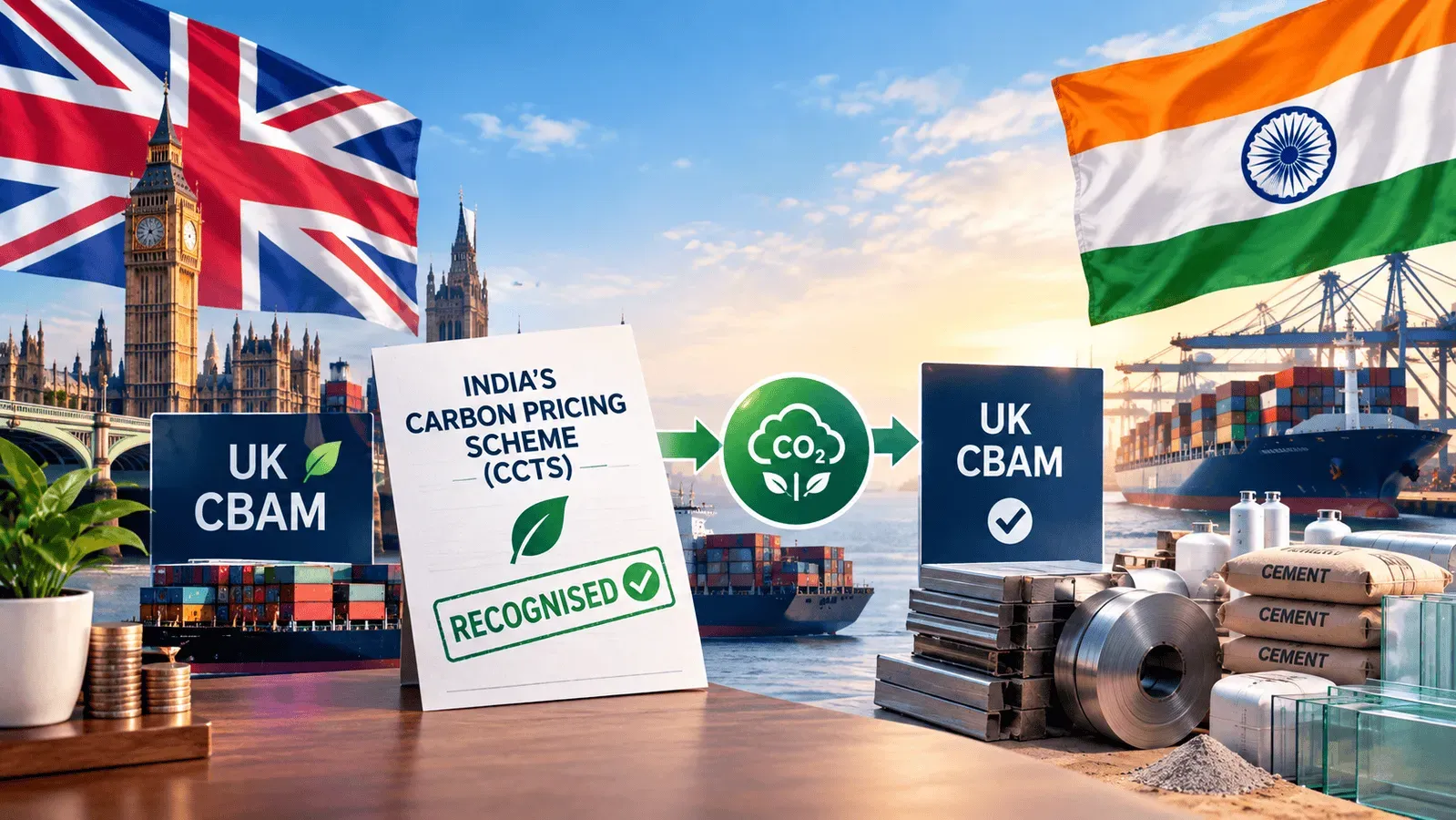
India had raised concerns over the impact of the UK's CBAM on exports of iron and steel, aluminium, fertilisers, hydrogen, ceramics, glass and cement.
The United Kingdom has reportedly recognised India's carbon pricing scheme as a qualifying mechanism under its Carbon Border Adjustment Mechanism (CBAM).
The move will allow Indian exporters to seek relief on the carbon charge payable on eligible goods shipped to Britain.
In a communication to the Bureau of Energy Efficiency under the Ministry of Power, the UK's HM Treasury confirmed that India's Carbon Credit Trading Scheme (CCTS) has been included in Britain's published indicative list of overseas carbon pricing schemes that meet the qualifying criteria under the Carbon Border Adjustment Mechanism (Calculation of CBAM Rate and Determination of Carbon Price Relief) Regulations 2026, PTI reported, citing an official.
The recognition is expected to reduce the effective CBAM liability on eligible Indian goods, including carbon-intensive products, by allowing UK importers to claim relief corresponding to the effective carbon price already borne by the goods under India's CCTS.
"This will reduce the effective CBAM liability on Indian goods, directly benefiting Indian exporters to the UK," the official said.
The move comes after sustained technical-level engagement between India and the UK on the design and implementation of the CCTS.
India had been concerned about the impact of the UK's CBAM on its exports, particularly products such as iron and steel, aluminium, fertiliser, hydrogen, ceramics, glass and cement.
The UK government decided in December 2023 to introduce its CBAM from 2027 to ensure that imported carbon-intensive products face a carbon cost comparable to that borne by British manufacturers under the country's Emissions Trading Scheme.
The UK CBAM came into force from January 1, 2027, covering imports in sectors including aluminium, cement, fertiliser, hydrogen, iron and steel.
Under the mechanism, importers of specified carbon-intensive goods have to pay a charge in the UK based on the carbon emissions associated with those products.
The amount of relief available to Indian exporters will, however, depend on the effective carbon price to which the goods have been subject under the CCTS.
UK CBAM-liable persons will also have to meet prescribed evidence and verification requirements.
India's CCTS has been notified with the objective of reducing, removing or avoiding greenhouse gas emissions by pricing such emissions through the trading of Carbon Credit Certificates.
The recognition of the Indian scheme is in line with the UK CBAM's principle of avoiding double taxation on goods that have already faced an eligible carbon price in their country of origin, the official said.
India and the UK will continue cooperation on carbon market design and implementation through the UK-India Energy Memorandum of Understanding and the Partnership for Market Implementation.
The two countries will also continue discussions on carbon pricing, including the interaction between the CCTS and UK CBAM rules.
Related News

About The Author
Next Story

