
Business News
India-UK FTA takes effect: Here's what could get cheaper for Indian consumers
.png)
3 min read | Updated on July 15, 2026, 10:44 IST


SUMMARY
One of the biggest changes is in the automobile sector, where India has agreed for the first time under a free trade agreement to cut import duties on fully built British cars and trucks from 110% to 10% in phases.
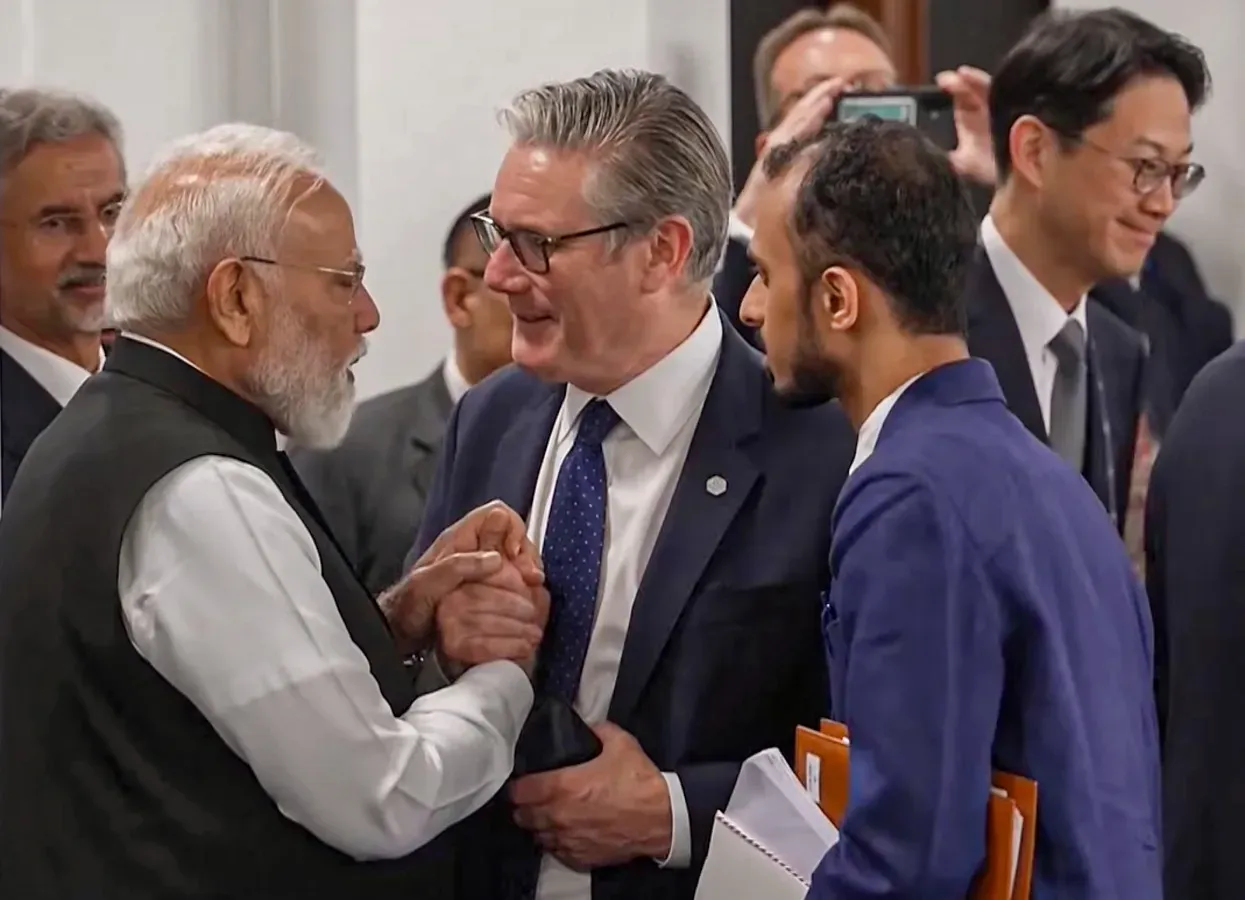
Prime Minister Narendra Modi interacts with Britain's Prime Minister Keir Starmer during a working session at the G7 Summit, in Evian-les-Bains, France. (@NarendraModi/YT via PTI Photo)
Premium British cars, Scotch whisky, chocolates, cosmetics and a range of other imported products are set to become cheaper for Indian consumers over the coming years as the India-UK free trade agreement (FTA) came into force on Wednesday, July 15.
The immediate impact for Indian consumers will largely be seen in imported consumer goods.
The agreement provides for lower duties on products such as salmon, lamb, machinery, electronics, chocolates, soft drinks, cosmetics, perfumes, shaving creams and nail polish. This could translate into lower retail prices depending on importers, distributors and market competition.
Tariff cuts for British cars
One of the biggest changes is in the automobile sector, where India has, for the first time under an FTA, agreed to sharply reduce tariffs on fully-built cars and trucks from the UK.
Import duties on British-made passenger vehicles will decline from the current 110% to 10% in a phased manner.
Conventional petrol and diesel vehicles will receive concessions from the start. However, electric, hybrid and hydrogen-powered cars will become eligible only from the sixth year, giving domestic EV manufacturers a five-year protection window.
India will allow imports of up to 3.78 lakh conventional-engine passenger vehicles from the UK at concessional duties over the first 15 years of the pact.
Scotch whisky and premium spirits to become cheaper
Premium alcoholic beverages are also expected to become more affordable over time.
India's 150% import duty on Scotch whisky will fall to 75% initially and further to 40% by the tenth year. Tariffs on a range of premium spirits, including gin, vodka, rum, bourbon, brandy, tequila, sake and liqueurs, will also be reduced in phases, subject to minimum import price conditions.
Sensitive products kept out of tariff concessions
However, the benefits will not extend across all imported products.
India has excluded several sensitive items from tariff concessions, including fresh apples, walnuts, whey products, blue-veined cheese, gold bars and smartphones, meaning duties on these products will remain unchanged.
While consumers stand to benefit from lower import duties, trade experts say price reductions may not be immediate or uniform as they will depend on factors such as exchange rates, freight costs, distributor margins and retail pricing strategies.
The pact is also expected to indirectly benefit Indian consumers by boosting exports from labour-intensive sectors such as garments, textiles, footwear, carpets, processed food, seafood, fruits, vegetables and spices, supporting employment and incomes in export-oriented industries.
According to economic think tank Global Trade Research Initiative (GTRI), however, tariff reductions alone will not guarantee higher exports.
The think tank said India must improve product standards, certification, logistics, regulatory compliance and buyer linkages to fully utilise the opportunities created under the agreement.
"The agreement opens the door; India must now convert access into exports," GTRI Founder Ajay Srivastava said, adding that sectors such as garments, textiles, leather, footwear, processed foods, seafood and selected manufactured goods are best placed to benefit.
The India-UK agreement is the sixth free trade pact implemented by the Narendra Modi government after agreements with Mauritius, the UAE, Australia, the European Free Trade Association (EFTA) and Oman.
Bilateral trade between India and the UK stood at $25.12 billion in 2025-26, while the agreement is projected to increase two-way trade by about 38% by 2040.
Related News


About The Author
Next Story

