
Business News
India-UK trade deal to come into force on July 15; duty-free access for 99% of Indian exports
.png)
4 min read | Updated on June 18, 2026, 09:58 IST


SUMMARY
India and the United Kingdom's Comprehensive Economic and Trade Agreement (CETA) will come into force on July 15, 2026.
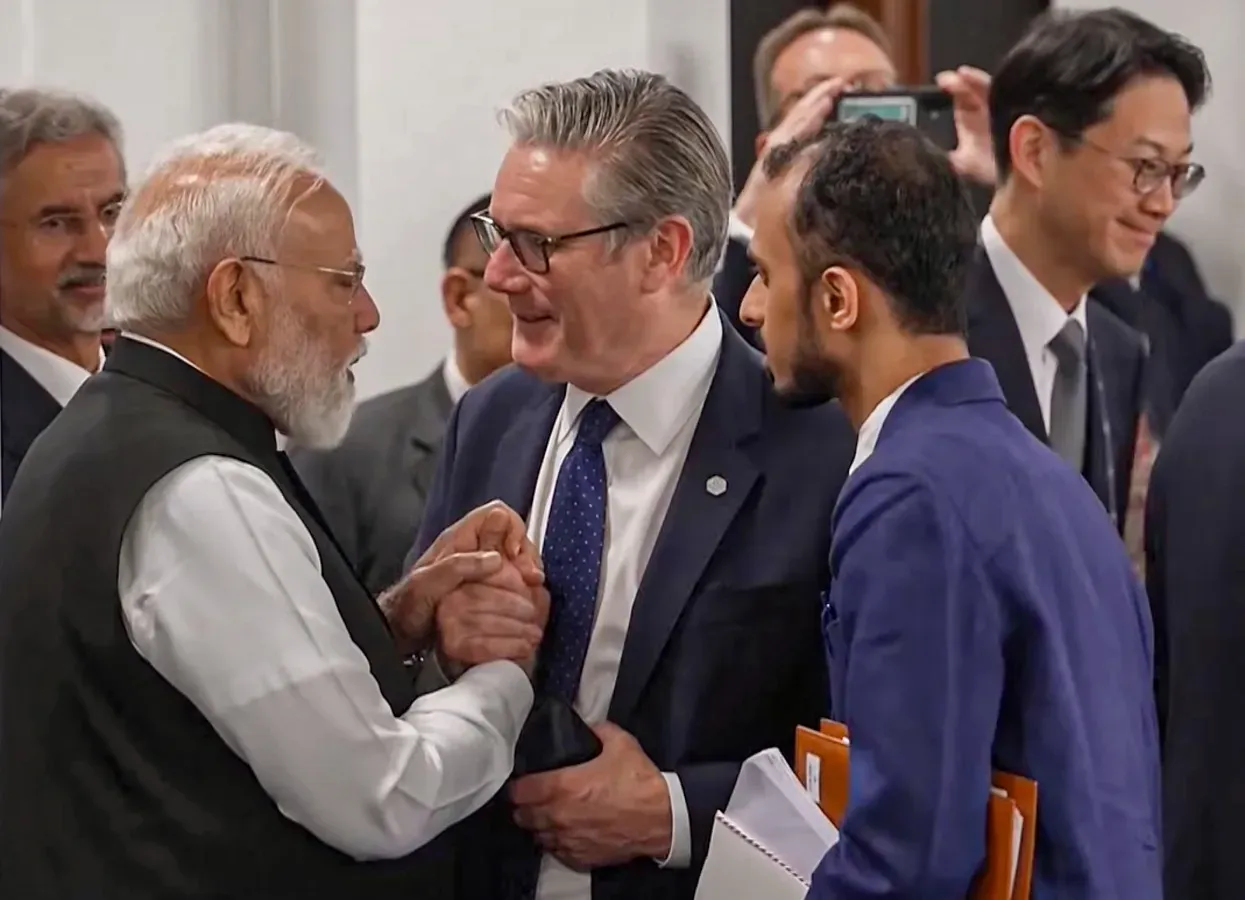
Prime Minister Narendra Modi interacts with Britain's Prime Minister Keir Starmer during a working session at the G7 Summit, in Evian-les-Bains, France. (@NarendraModi/YT via PTI Photo)
India and the United Kingdom's landmark Comprehensive Economic and Trade Agreement (CETA) will come into force on July 15, Prime Minister Narendra Modi announced on Wednesday.
The announcement comes after both countries completed their internal procedures and ratification processes for the agreements, which are expected to deepen bilateral trade, investment and economic cooperation.
"A historic milestone for India-UK relations. Delighted to note that the India-UK Comprehensive Economic and Trade Agreement will enter into force on 15th July 2026," Modi said in a post on X.
The prime minister said the agreement would significantly boost bilateral trade and investment and create opportunities for Indian farmers, workers, MSMEs, startups and innovators.
From July 1, 2026, the UK will limit tariff-free steel imports, reducing overall quota volumes by 60% compared to the existing safeguard mechanism.
Any imports above these levels would have faced a 50% tariff.
After negotiations, London agreed to raise the duty-free quota for India to 85%.
UK Business and Trade Secretary Peter Kyle said: "We are bringing our landmark trade deal with India into force as quickly as we can because we want businesses in both India and the UK to immediately feel the benefits of 99% of UK tariffs and 90% of Indian tariffs being liberalised."
"Trade is going to be cheaper, quicker, and easier for businesses on both sides, and I encourage all businesses to ensure that they are properly prepared to sell to each other’s market in the years to come," he said.
"The date is now set to boost our 48 billion pounds trading relationship and take it to the next level."
According to the Ministry of Commerce and Industry, the Agreement on Social Security, also known as the Double Contribution Convention (DCC), will also take effect from July 15.
The DCC was signed on February 10, 2026.
Under the pact, the exemption period for Indian professionals and their employers from making dual social security contributions in the UK has been extended from three years to five years.
The ministry said the trade agreement provides zero-duty access to nearly 99% of India's exports to the UK, covering almost 100% of the trade value.
Indian exporters are expected to benefit from the elimination of UK tariffs on a range of products, including processed food, marine products, engineering goods, auto components, leather and footwear, textiles and clothing, chemicals and pharmaceuticals.
India has safeguarded sensitive sectors such as dairy products, cereals, millets, edible oils, oilseeds, apples and several vegetable products.
The ministry said the UK has offered one of its most comprehensive services packages to India, covering all major services sectors and 137 sub-sectors, including IT and IT-enabled services, financial services, healthcare, education, engineering, telecommunications and consultancy services.
The agreement also provides mobility pathways for business visitors, intra-corporate transferees, contractual service suppliers, independent professionals and investors.
In a first-of-its-kind arrangement, 1,800 Indian chefs, yoga instructors and classical musicians will be able to access dedicated mobility opportunities in the UK every year under the pact.
The social security agreement is expected to benefit more than 75,000 Indian professionals and over 900 companies by exempting temporary workers from making social security contributions in both countries simultaneously.
Commerce and Industry Minister Piyush Goyal said the simultaneous enforcement of the CETA and the DCC would open significant opportunities for Indian exports by providing immediate duty-free access on 99% of tariff lines while protecting sensitive domestic sectors.
The two countries are aiming to double bilateral trade to USD 100 billion by 2030 under the India-UK Roadmap 2030.
About The Author
Next Story

