
Personal Finance News
She had no mobile number or email but a wine shop in her name. Her father-in-law handled her taxes, and after his death, she landed in tax trouble. What ITAT held

4 min read | Updated on November 18, 2026, 07:16 IST

SUMMARY
The ITAT ruling matters to homemakers and small business owners who rely on a family member for tax compliance, and to any assessee facing an ad hoc disallowance.

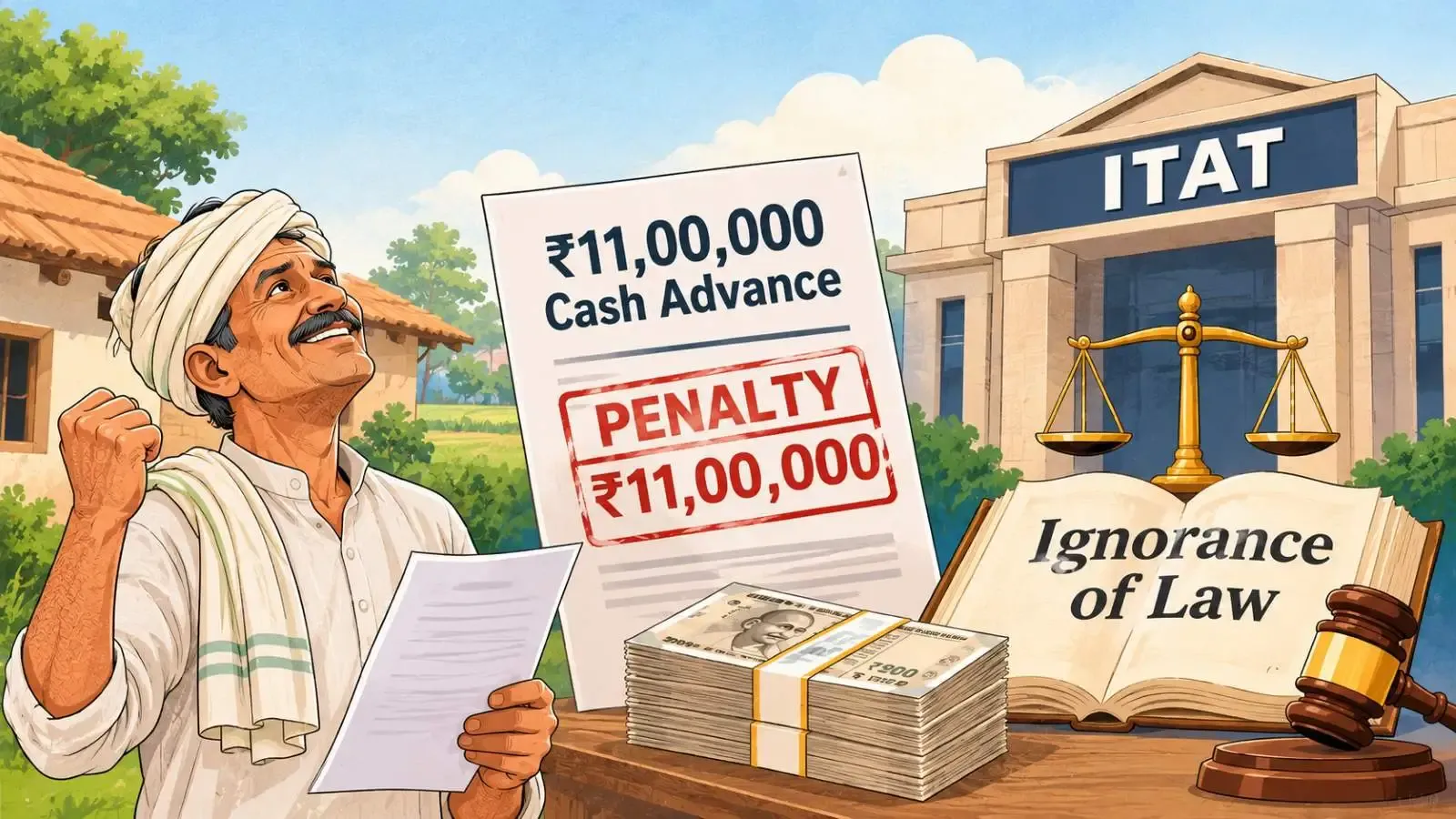
The assessee said she is a household lady who was not having her own mobile number and email ID. | Representational image/AI generated
A house hold lady in Bharatpur had a licence in her name to run a wine shop. For years, her income-tax affairs were handled by her father-in-law. After he died on April 15, 2024, an order of the first appellate authority went against her, but nobody was there to file the appeal. And by the time a penalty notice reached her on May 30, 2025, she had lost 105 days. She filed the appeal on June 13, 2025.
Based on the ITAT order dated November 2, 2026, this article explains the case history and takeaways for readers.
How the tax dispute started
The assessee's return for assessment year 2017-18 declared a total income of ₹3,87,230. It was taken up for scrutiny, and notices under sections 143(2) and 142(1) were issued. While no reply was filed at first, she furnished details including month-wise salary, month-wise purchases and capital account particulars on December 15, 2019.
The assessing officer then made an ad hoc disallowance of 20% of the breakage expenses she had claimed, and framed the assessment under section 143(3) at a total income of ₹27,03,020. She appealed against this to the CIT(A), who gave only a partial relief. She then came to the tribunal against the remaining disallowance.
In her affidavit, the assessee explained that she is a household lady who "was not having her own mobile number and email ID, nor is having any knowledge of computer and internet."
All her income-tax cases were being looked after by her father-in-law. Because of his death, she had no way of knowing an appeal was due. It was only when she received a notice about penalty proceedings dated May 30, 2025 that she came to know of the position, and she filed the appeal immediately on June 13, 2025.
The tribunal found that this constituted sufficient cause. "Keeping in view the facts that the entire income tax proceedings of the assessee were being looked after by her father-in-law, who has unfortunately expired on 15.04.2024," it observed, the delay was condoned and the appeal heard on merits.
What the ITAT held
The tribunal noted that the assessee runs a wine shop as a licensee. It had a turnover of ₹4,03,28,175 for the year, and showed a net profit of 0.96%. Her books of accounts were audited and had been accepted by the assessing officer while making the assessment. Yet the officer made an ad hoc disallowance at 20% of the breakage expenses claimed.
Her counsel argued that when the full details, including the breakage expenses, had been examined by the officer and the books audited under section 44AB, with Form 3CB and Form 3CD on record, had been accepted, an ad hoc disallowance could not stand. The tribunal agreed with this argument.
It further noted that the assessing officer had compared the assessee with other businessmen in the same line who showed higher net profits, but held that this comparison could not justify the disallowance.
"Even in the same business one cannot get the same profit because it depends on many factors viz individual expertise of the businessman, trained staff and better marketing strategies," the bench observed.
"So merely on the basis of difference in the net profit adhoc disallowance cannot be made, particularly when duly audited of books of accounts have been accepted," the ITAT said. It accordingly held that the breakage expenses claimed, "which are duly detailed in the audited financials cannot be disallowed on adhoc basis," and ordered the disallowance deleted.
Takeaways
The ruling matters to homemakers and small business owners who rely on a family member for tax compliance, and to any assessee facing an ad hoc disallowance.
It shows that the tribunal may look at who was actually handling the file when the delay occurred, and that a disallowance fixed at a round percentage, without reasons, will not survive where the books have been audited and accepted.
However, for a taxpayer who has handed her tax affairs to a family member, the order is a reminder that the arrangement carries a risk: if that person dies or falls away, deadlines can pass unnoticed. The only thing that saved this assessee was a documented, honest explanation of exactly that.
Related News

About The Author
Next Story

