
Personal Finance News
He filed ITR for ₹2.69 lakh but invested ₹11 lakh in land from family's agricultural income; 3 documents helped him win at ITAT

5 min read | Updated on November 09, 2026, 13:49 IST

SUMMARY
The ITAT ruling sets a realistic evidentiary standard while accepting that a person living in a village without banking facilities cannot be expected to produce a perfect paper trail for every rupee.
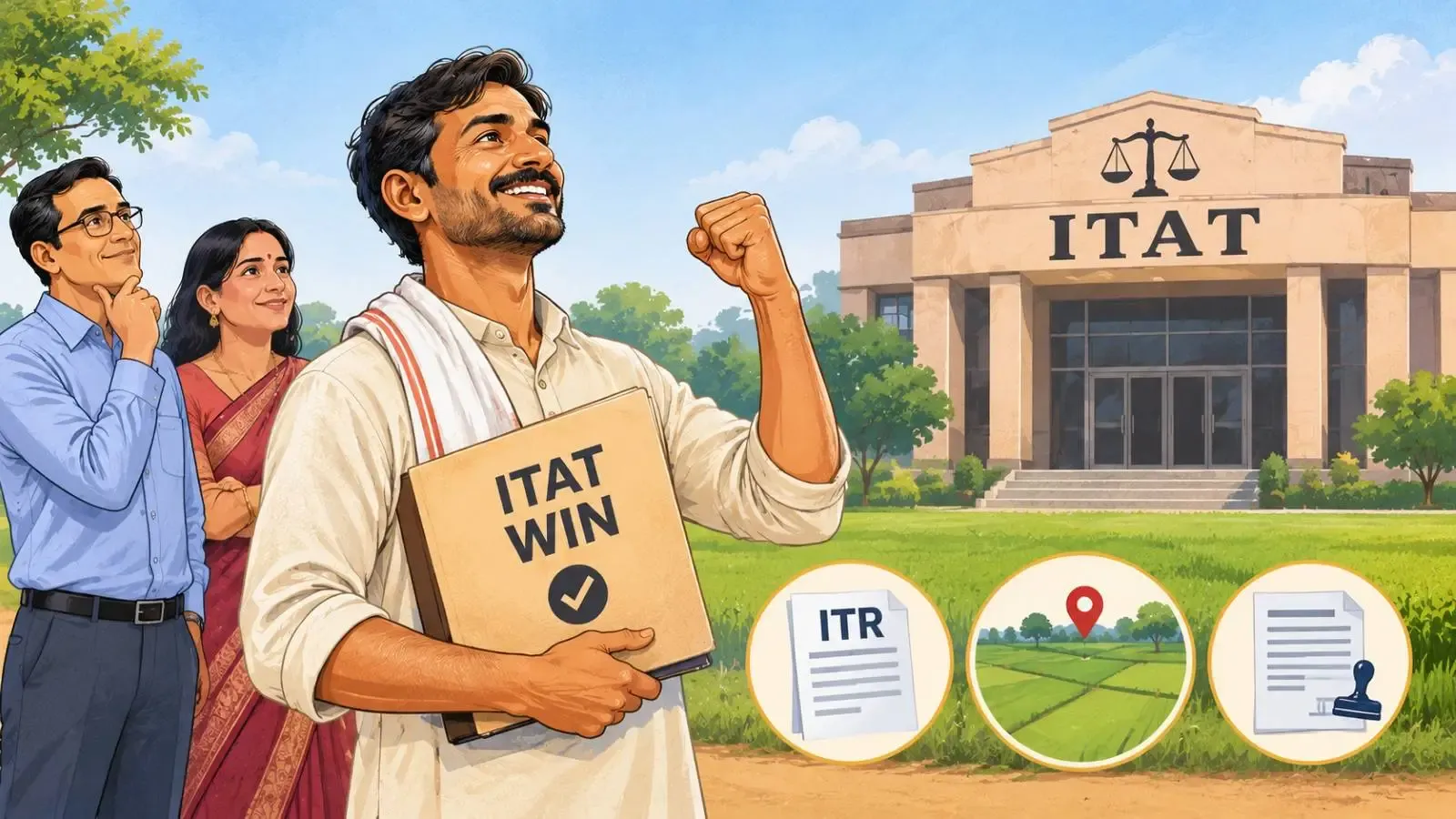
The tax officer had added ₹11 lakh to his income, ITAT deleted it. | Representational image/Shutterstock
Vinod Kumar Sharma declared an income of ₹2,69,380 for assessment year 2015-16. In the same year he paid ₹11 lakh towards the purchase of agricultural land as a part of a ₹25 lakh deal registered in March 2014. The tax department reopened his assessment and treated the ₹11 lakh as an unexplained investment. The first appellate authority confirmed the addition.
Based on the ITAT's order dated October 26, 2026, this article explains the case history and takeaways for taxpayers.
Case history
The case was reopened by a notice under section 148 after the assessing officer came to have information that Sharma had purchased agricultural land for ₹25 lakh, registered after payment of stamp duty on 14/15 March 2014. And that part payment of ₹11 lakh had been made during the assessment year in question. His return for the year had declared income of only ₹2,69,380.
The tax officer framed the assessment under section 147. After finding that the source of the investment in land had not been adequately explained, the officer added ₹11 lakh to his income and later, the CIT(A) also confirmed it. Then Sharma appealed before the ITAT
How Sharma defended himself
Sharma's explanation, consistently given to the lower authorities, was that the money came from the accumulated fund of his family. All of whom were involved in agricultural operations. He said he lived in a joint family in a small village in Dausa district of Rajasthan, which is an economically backward area where no banking facilities available in the vicinity. Agriculture was his major source of income.
In support, he furnished three documents:
-
An irrigation certificate, or sinchai praman patra, to show that he and his father lived together and earned their livelihood with the co-owners of the agricultural land (his father's brothers and himself). The family held 60 bighas.
-
Electricity bills for the irrigation well
-
Affidavits from himself and his father stating that the family had earned an estimated ₹55 lakh from agriculture over the previous eight years.
Earlier, the CIT(A) did not find any of the documents to be false. Its objection was that they were not enough. It said there was no documentary proof of ownership of the land, no details of crops cultivated, no evidence of pre-germination or harvesting operations, of inputs such as seeds and fertiliser, of transportation, or of the sale of produce.
The CIT(A) observed that the assessee had submitted "only solitary document to show that the assessee has some agricultural land in the form of irrigation certificate," and that nothing else supported his claim of ownership or cultivation.
However, the tribunal took a different view. It found that the assessee was purely an agriculturalist living in a small village in Dausa. He had furnished an irrigation certificate proving that he and his father's joint family carried out irrigation on 60 bighas, along with electricity bills for the well.
None of this had been disputed by the Revenue, which had not suggested that the certificate was false or that it did not mention the 60 bighas.
"The irrigation certificate sufficiently established the fact of the assessee along with joint family of his father carrying out agricultural operations on 60 bighas of land," the bench held. It added that this was strengthened by the electricity bills and the affidavits about ₹55 lakh of agricultural income over eight years, and by the return declaring ₹2,69,380.
The tribunal was also candid about the practical realities of the case. "The assessee being an agriculturist, living in a back ward area, it is asking for too much for him to have and retain documentary evidences of having carried out agricultural activities," the ITAT observed.
And on the missing documents the Revenue relied on, it held that "the evidences, which the Revenue has found lacking are mere add on to evidences already furnished by the assessee and until and unless the Revenue discards the evidences already furnished by the assessee, there is no need for any further evidences to be produced by the assessee".
The tribunal noted that the Revenue had not disputed the affidavits stating that the family earned ₹55 lakh over eight years, and had carried out no inquiry to disprove them.
The source of the ₹11 lakh investment was therefore sufficiently established, and the addition was deleted.
Takeaways
The ITAT ruling is relevant for taxpayers in the cash economy like farmers, small traders and families who pool their earnings. It sets a realistic evidentiary standard while accepting that a person living in a village without banking facilities cannot be expected to produce a perfect paper trail for every rupee. And once the department fails to disprove the evidence produced, it cannot keep demanding more.
For taxpayers in a situation where income is earned in cash and in a family setting, the documents that matter are the ones that tie the family to the land and to the activity. For example, an irrigation certificate, electricity bills for a well, affidavits, and whatever return has been filed.
A taxpayer may not need to reconstruct a perfect harvest-by-harvest record, but he does need enough to shift the burden back to the department. Once that is done, as this order shows, the department must actually disprove the explanation rather than ask for more papers.
Related News
About The Author
Next Story

