
Personal Finance News
Gold at home: Can wedding photos prove it is legit? ITAT says only up to a point

4 min read | Updated on September 15, 2026, 14:18 IST


SUMMARY
Wedding photographs may help establish the existence of jewellery but do not prove its source.
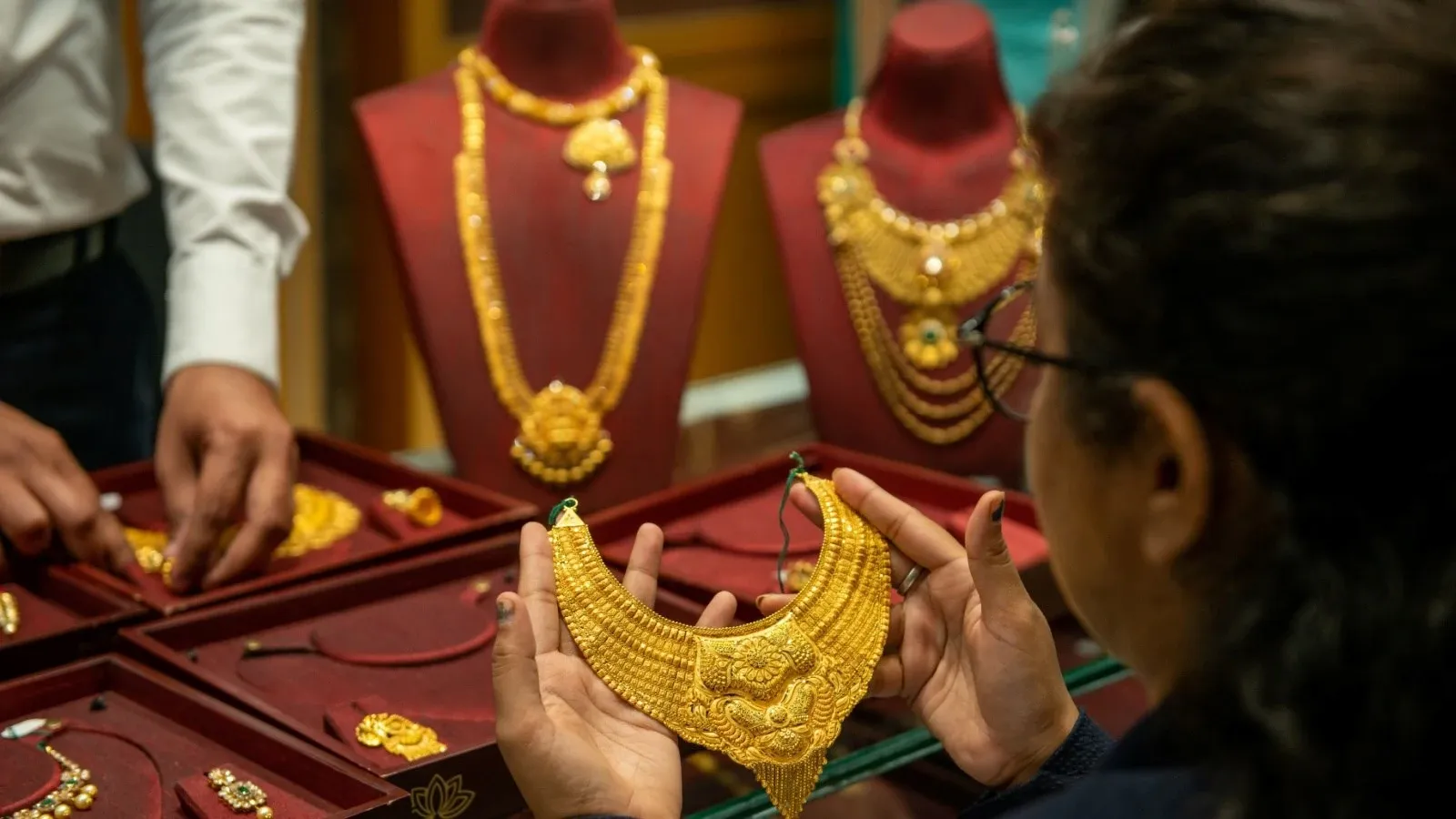
The CBDT instruction protects up to 500 grams per married woman. | Image: Shutterstock
The Income Tax Appellate Tribunal, Delhi, has partly upheld and partly struck down an addition of nearly ₹70 lakh made against a Delhi businessman, whose gold and silver jewellery was seized during a search. The ITAT order dated September 10, 2026, clarifies what Indian households need to do to protect their jewellery holdings from being treated as unexplained income.
The order may have significant implications for families who hold gold accumulated over generations, through weddings, or through past disclosure schemes.
The case
The ITAT order came in the case of Kanishk Bafna, whose premises were searched under Section 132 of the Income Tax Act on March 4, 2020. The search team found gold and diamond jewellery weighing 1043.07 grams at his residence, then valued at ₹50,23,189, and 2,343.30 grams in a locker, then valued at ₹1,05,00,198. Silver weighing 39,580 grams worth ₹17,77,426 was also found. The total gold and diamond jewellery weighed 3,386.57 grams with a gross value of ₹1,55,23,387.
The assessing officer accepted most of the jewellery but treated two portions as unexplained. The first was 581.30 grams out of 1,281.30 grams of jewellery that Bafna tried to explain through photographs of his wife wearing gold ornaments at their wedding.
The second was 899.95 grams that he claimed had been declared under the Voluntary Disclosure of Income Scheme of 1997. The total addition made under Section 69A was ₹69,97,492.
On the wedding photo portion, the AO allowed 700 grams as covered by CBDT's Instruction No. 1916 dated April 11, 1994, which prescribes limits for gold jewellery that cannot be seized during searches, and treated the remaining 581.30 grams as unexplained because "no documentary evidence was brought on record" of the source of purchase. On the VDIS portion, the AO held that since no VDIS certificate was produced, the 899.95 grams was unexplained. The CIT(A) confirmed both additions on January 27, 2026.
Before the tribunal, the outcome diverged sharply for the two claims.
On the VDIS jewellery, Bafna produced his income tax returns for Assessment Years 2001-02, 2002-03 and 2006-07, supported by balance sheets in which the jewellery was disclosed. The order noted that "when this argument was confronted to the Ld. CIT(DR), he could not controvert the same" and that these documents had been placed before the AO and CIT(A) but neither authority had commented on them.
The tribunal said, "It seems that assessee has already disclosed this jewellery and hence, this cannot be treated as unexplained and accordingly, we delete the addition".
On the wedding photo jewellery, the tribunal took the opposite view. It noted that the AO had already allowed 700 grams under Instruction No. 1916 and that "there is no evidence brought on record to substantiate the source of purchase of this jewellery." The bench held that "the Assessing Officer has rightly added the balance jewellery of 581.30 gms" and confirmed the addition. The appeal was partly allowed.
Two takeaways
For households holding gold, the ruling carries two key lessons.
Second, jewellery declared under past schemes like VDIS is protected even decades later if it appears in old income tax returns and balance sheets, even if the original VDIS certificate has been lost. Keeping those old returns and balance sheets can be the difference between keeping family gold and losing a large amount to a tax addition.
Related News



About The Author
Next Story

