
Personal Finance News
₹15 lakh, ₹25 lakh or ₹30 lakh salary? Check which tax regime saves you more in FY 2025-26

4 min read | Updated on May 30, 2026, 08:24 IST


SUMMARY
Compare ₹15 lakh, ₹25 lakh, and ₹30 lakh salaries under old vs new tax regime for FY 2026-27. Check detailed tax calculation, deductions, and which regime saves more tax for salaried individuals.

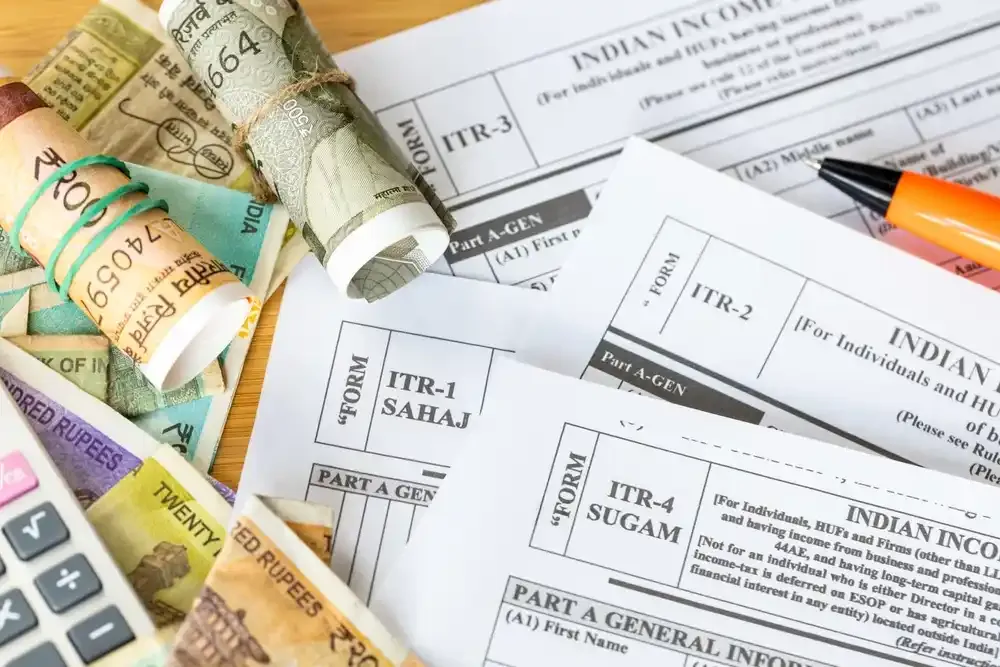
At lower income levels like ₹15 lakh, the old regime may still be beneficial if you claim sufficient deductions. | Image: Shutterstock.
With income levels rising, salaried taxpayers often find themselves asking a simple question: which tax regime actually leaves more money in hand?
For FY 2025-26, we break this down in a simple way using three common salary levels. For this purpose, we have taken ₹15 lakh, ₹25 lakh, and ₹30 lakh take-home salaries to understand whether the old tax regime or the new one works better, and for whom which option actually makes sense.
On the other hand, the old tax regime allows taxpayers to significantly reduce their taxable income through a wide range of deductions and exemptions. Along with the ₹50,000 standard deduction available to salaried individuals, it provides Section 80C benefits of up to ₹1.5 lakh for investments such as PPF, EPF, ELSS, LIC premiums, and home loan principal repayment.
Additionally, taxpayers can claim up to ₹2 lakh as a deduction on home loan interest under Section 24(b) for a self-occupied property.
Over and above this, an extra deduction of up to ₹50,000 is available under Section 80CCD(1B) for contributions to NPS, along with health insurance premium deductions under Section 80D of up to ₹25,000 for self and family, with higher limits applicable if parents are senior citizens.
Together, these deductions can substantially lower taxable income, which is then taxed according to the applicable slab rates.
| Particulars | FY 2025-26 (₹15,00,000) New | FY 2025-26 (₹15,00,000) Old | FY 2025-26 (₹25,00,000) New | FY 2025-26 (₹25,00,000) Old | FY 2025-26 (₹30,00,000) New | FY 2025-26 (₹30,00,000) Old |
|---|---|---|---|---|---|---|
| Salary | 15,00,000 | 15,00,000 | 25,00,000 | 25,00,000 | 30,00,000 | 30,00,000 |
| Standard Deduction | 75,000 | 50,000 | 75,000 | 50,000 | 75,000 | 50,000 |
| Net Salary | 14,25,000 | 14,50,000 | 24,25,000 | 24,50,000 | 29,25,000 | 29,50,000 |
| House Property Loss | - | 2,00,000 | - | 2,00,000 | - | 2,00,000 |
| GTI | 14,25,000 | 12,50,000 | 24,25,000 | 22,50,000 | 29,25,000 | 27,50,000 |
| Section 80C Deduction | - | 1,50,000 | - | 1,50,000 | - | 1,50,000 |
| Section 80D Deduction | - | 75,000 | - | 75,000 | - | 75,000 |
| Taxable Income (TI) | 14,25,000 | 10,25,000 | 24,25,000 | 20,25,000 | 29,25,000 | 25,25,000 |
| Income Tax | 93,750 | 1,20,000 | 3,07,500 | 4,20,000 | 4,57,500 | 5,70,000 |
| Health & Education Cess | 3,750 | 4,800 | 12,300 | 16,800 | 18,300 | 22,800 |
| Total Tax Liability | 97,500 | 1,24,800 | 3,19,800 | 4,36,800 | 4,75,800 | 5,92,800 |
_ ( Source: Tax2win)_
At the ₹15 lakh income level, taxpayers with higher eligible deductions may still find the old regime better. However, at the ₹25 lakh and ₹30 lakh income brackets, the new regime often becomes more attractive for individuals who do not have significant deductions to claim.
"If your salary is ₹15 lakh, ₹25 lakh, or ₹30 lakh in FY 2025-26, the new tax regime generally helps you save more tax compared to the old regime," said CA Abhishek Soni, CEO & Co-founder, Tax2win.
For a salary of ₹15 lakh, the tax payable under the old regime is ₹1,24,800, while under the new regime it comes down to ₹97,500, resulting in a tax saving of ₹27,300. At ₹25 lakh salary, the tax liability is ₹4,36,800 under the old regime compared to ₹3,19,800 under the new regime, helping taxpayers save ₹1,16,200. Similarly, for a ₹30 lakh salary, the old regime tax stands at ₹5,92,800, whereas the new regime tax is ₹4,75,800, leading to a saving of ₹1,17,000.
The actual savings, however, depend on factors such as investment patterns, insurance premiums, home loan interest, and applicable rebates.
"Even after claiming common deductions like HRA, Section 80C, NPS, health insurance, and children's education allowance, the new tax regime still results in lower tax liability. However, if your deductions are significantly higher, especially because of other exemptions and allowances Then the old regime may become more beneficial. The best option depends on how much total deduction you can actually claim under the old regime," said CA Abhishek Soni.
Related News




About The Author
Next Story

