
Personal Finance News
8th Pay Commission: Merger of 50% dearness allowance with basic pay demand returns as 8th CPC completes a year

4 min read | Updated on November 21, 2026, 14:35 IST

SUMMARY
BPMS has asked for the DA-Basic Pay merger to be done “prior to determining” the structure. Such a move can make the step visible
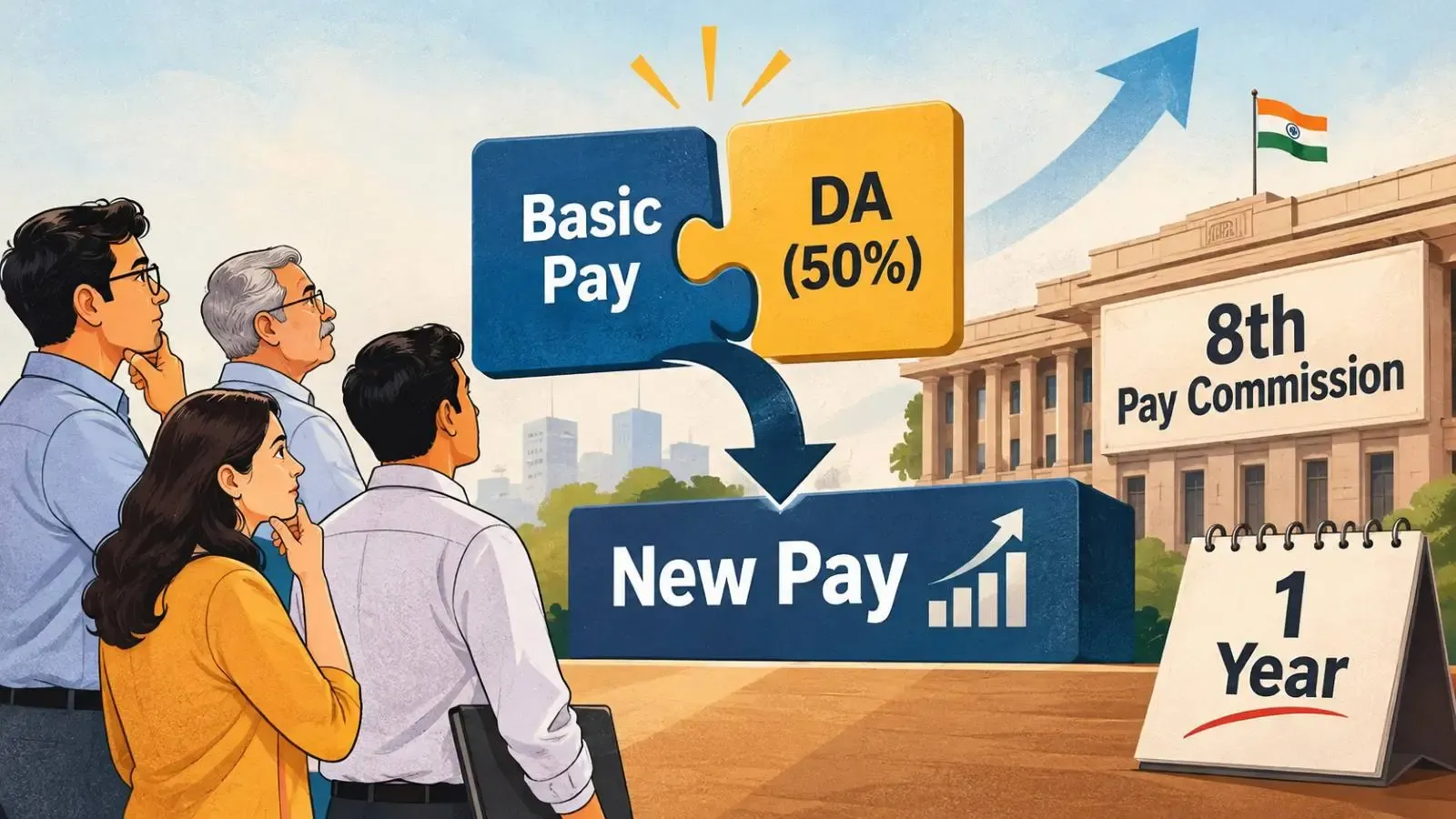
BPMS has asked to merge 50% DA and Basic before 8th CPC report. | Representational image/AI generated
Whether the merger happens ahead 8th CPC report, or is folded silently into it, can change what every employee and pensioner will draw for the rest of their career under 8th CPC. The latest demand to merge 50% DA with basic pay before the 8th CPC report appeared in BPMS's submission for its second-round of interaction with the Commission on November 18, 2026.
Signed by BPMS General Secretary Rabindra Kr Mishra, the submission said, “50% of the existing Dearness Allowance (DA) should be merged with Basic Pay and Pension prior to determining the revised pay and pension structures.”
Why it matters
For example, take a Level 6 employee on a basic pay of ₹44,900, drawing DA at the current 63%, which is ₹28,287. Merging half of that DA, or ₹14,144, into basic pay would take the base pay to ₹59,044, or about 31.5% higher. If the new fitment factor is applied to this amount, than the revised starting pay would for this level would be much higher than it would be without the merger.
Dearness allowance usually resets when a new pay structure begins. After merger, the new amount becomes the basic pay, which is then multiplied by the fitment factor. The 7th CPC did this quietly by having merger ingrained in its construction of the 2.57 fitment factor. “of this multiple, 2.25 provides for merging of basic pay with DA, assumed at 125 percent on 01.01.2016, while the balance is the real increase being recommended by the Commission,” the 7th CPC said.
Unions have pointed out that under the 7th CPC, the DA-Basic merger happened in 2016, but implicitly, at a DA rate the Commission assumed rather than one the employee was actually drawing, The merger was also not shown as a separate step.
Therefore, the BPMS has asked for the merger to be done “prior to determining” the structure. Such a move can make the step visible.
The demand goes back to the 5th CPC
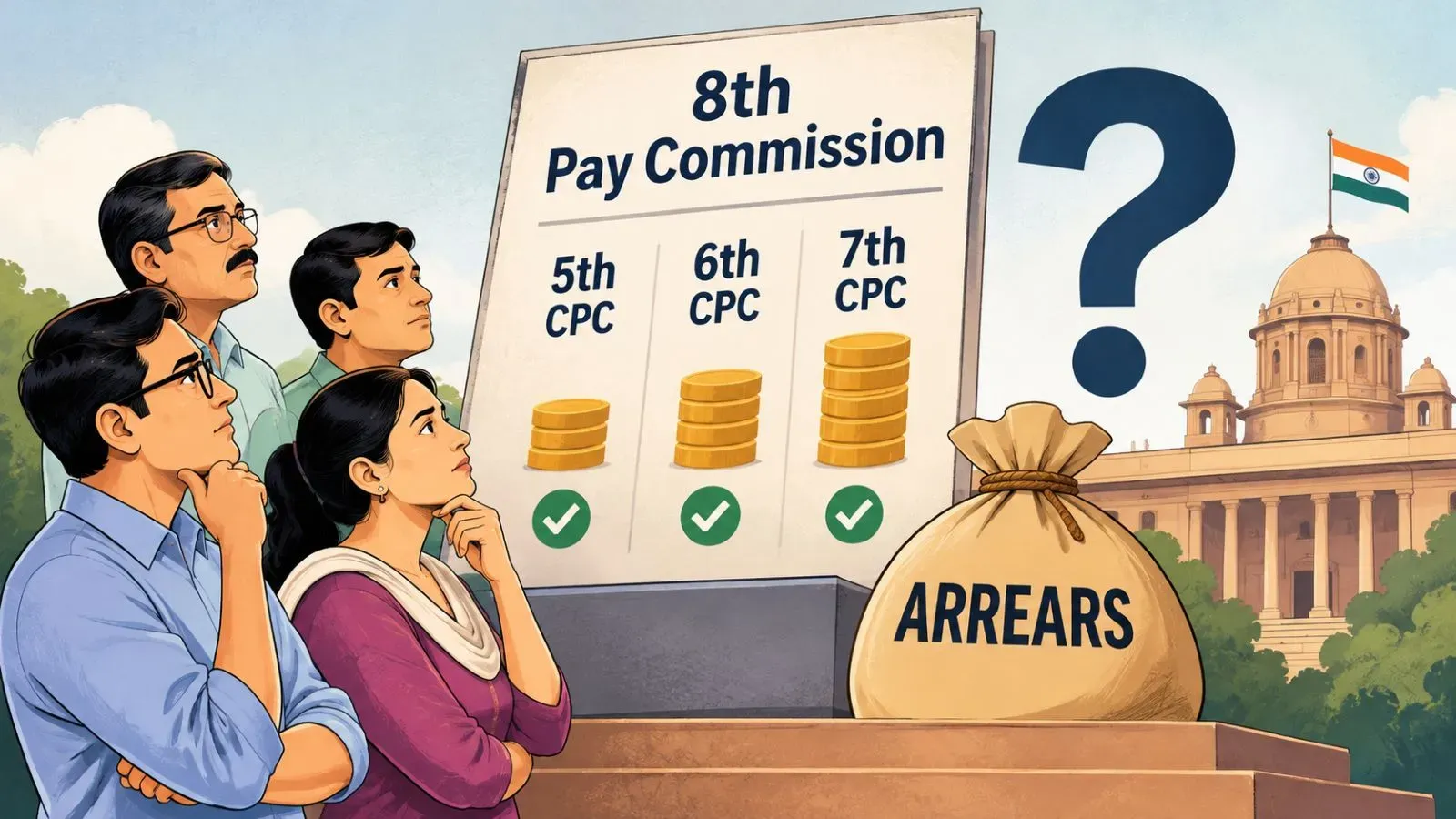
Merger of DA with Basic has a history since 5th CPC.
The 5th CPC “recommended uniform neutralization of DA at 100% to employees at all levels; conversion of DA into Dearness Pay each time the CPI increases by 50% over the base index with Dearness Pay counting for all purposes including retirement benefits.”
When the 6th CPC took up the question, the demand before it was to lower “the principle laid down by the 5th CPC for merger of 50% of DA with the Pay as DP should be modified to 25% to remove distortions in the pay structures.”
The 6th CPC refused, and its words have framed every argument since: “The Commission is, therefore, not recommending merger of dearness allowance with basic pay at any stage.”
Where the unions stand now
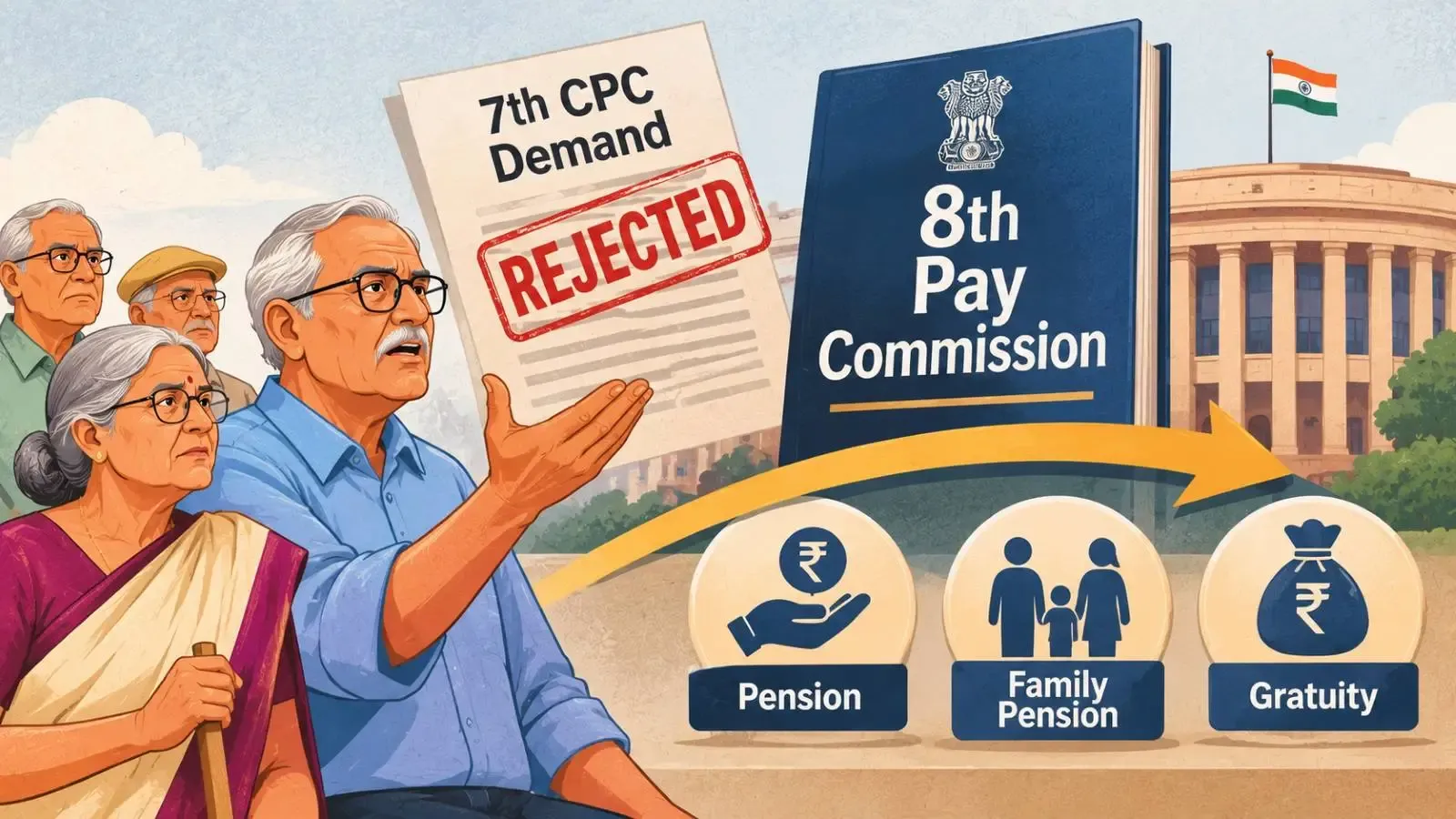
Current demands on DA merger are split into two parts: the threshold and the timing. The FNPO has asked that the 8th CPC may recommend merger of DA/DR with Basic Pay whenever it crosses 25% , and the Bharat Pensioners Samaj has sought examination of the merger of DR with basic pension after it exceeds 25%.
BPMS, by contrast, wants 50% merged now, before the structure is determined.
The same BPMS submission also carries several other demands that bear on the same calculation, including a maximum-to-minimum pay ratio not exceeding 1:10, an annual increment raised from 3% to 6%, CGEGIS cover raised from ₹30,000 to at least ₹15 lakh, and risk allowance enhanced to ₹10,000 a month.
The Commission was constituted on November 3, 2025 and its 18-month deadline expires in May 2027. The merger question has to be settled before the fitment factor is fixed, because it changes the base the factor is applied to. This is why BPMS has raised it in the second round of its meeting with the 8th CPC rather than waiting for the report.
Related News
About The Author
Next Story

