
Personal Finance News
More ETFs, same stocks? Why investors may not be as diversified as they think

5 min read | Updated on August 19, 2026, 07:46 IST


SUMMARY
ETFs enable investors to purchase a variety of securities through a single exchange-traded product. They can give access to broad-market indices, sectors, factors and other asset classes. However, experts advise investors to comprehend the underlying principles of each product and look beyond the quantity of ETFs they possess.
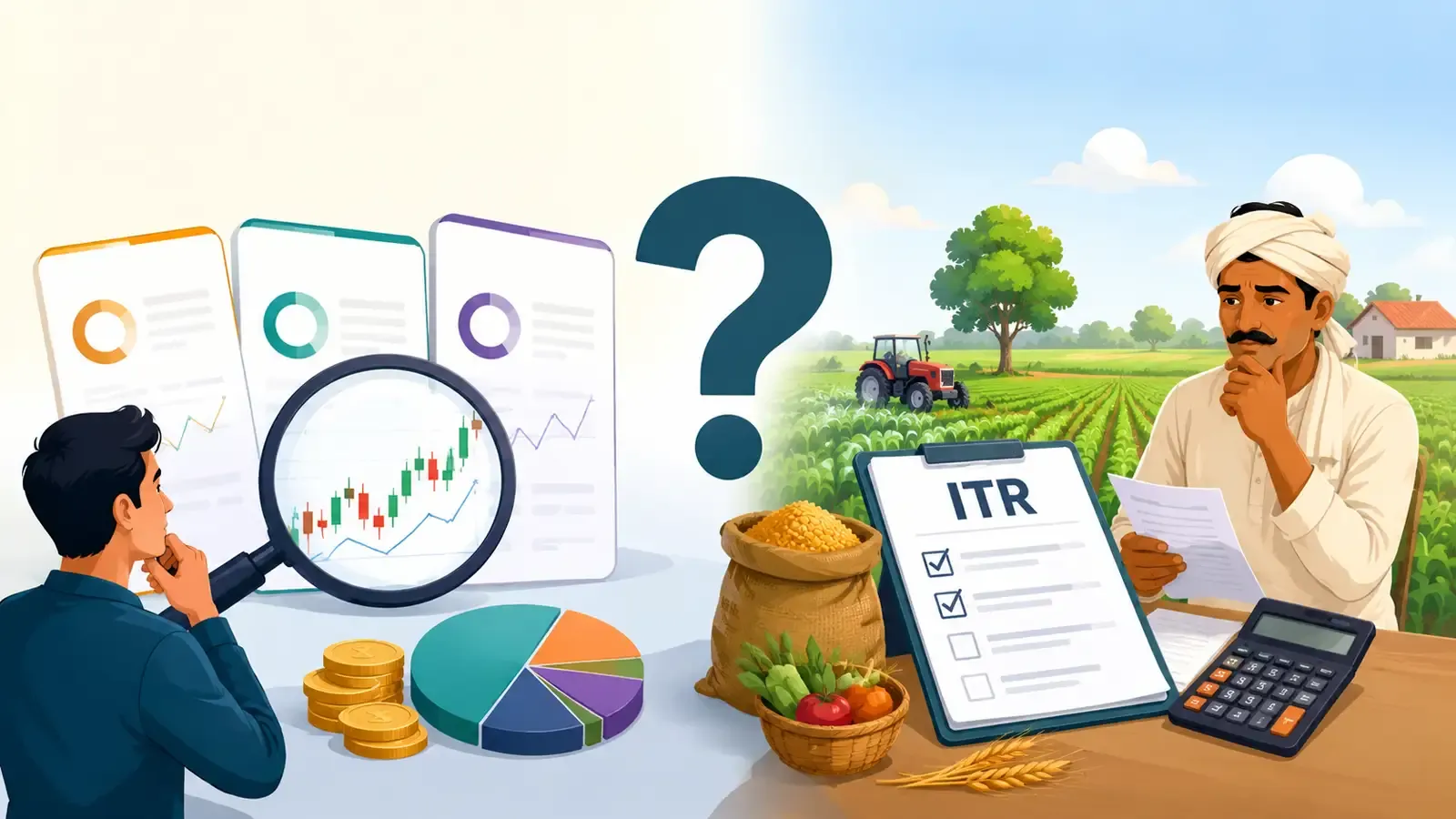
Diversification is about exposure, not product count. A portfolio may appear more diverse if it contains a number of ETFs, but diversification is not determined by the quantity of products. | Image: Shutterstock.
Although there are more ETFs available to retail investors than ever before, a more diversified portfolio does not necessarily mean their portfolio is diversified.
For example, an investor with a Nifty 50 ETF, Nifty 100 ETF, and Nifty 500 ETF for instance, may appear to have exposure to 50, 100 and 500 stocks. However, there may be a lot of overlap across the three indices, especially when it comes to large-cap firms that are given more weight in market-cap-based indices.
ETFs enable investors to purchase a variety of securities through a single exchange-traded product. They can give access to broad-market indices, sectors, factors and other asset classes. However, experts advise investors to comprehend the underlying principles of each product and look beyond the quantity of ETFs they possess.
“If investors are purely adding broad-based index funds/ ETFs, along with their normal mutual funds portfolio, then it doesn't make sense, as there will be a lot of duplication and portfolio overlap,” said Ronak Morjaria, Partner at ValueCurve Financial Services.
Morjaria said ETFs and index funds can still be useful when investors are looking for exposures that may be less available through active funds.
“ETFs/Index Funds are good for investors who are investing in, say, factor-based strategies like Momentum, for example, where active funds following this strategy are only 2 or 3 funds,” he said.
The same issue can arise when investors buy ETFs tracking the same index from different fund houses.
“The same applies when an investor buys two different Nifty 50 ETFs from different fund houses. The products may have different names, but the underlying exposure is essentially the same,” said CFP Shweta Shastri.
However, overlap is not necessarily a bad thing.
“If an investor deliberately wants a higher allocation to large caps, some overlap can be perfectly reasonable. The problem is adding another ETF without understanding whether it is actually changing the portfolio's risk or return profile,” Shastri said.
She said investors should consider diversification at three levels:
-
asset allocation
-
market exposure and
-
the product itself
“For example, adding a Gold ETF such as Gold BeES to an equity-heavy portfolio can provide a genuinely different asset class exposure. On the other hand, adding another broad-market equity ETF may simply increase exposure to stocks the investor already owns,” Shastri added.
More ETFs, more overlap?
ETFs were introduced in India in 1993 and have grown increasingly popular among investors. The growing number of products has also made it easier for investors to build portfolios with overlapping exposures.
“Many retail investors do end up with too many similar funds. It is because exchange-traded funds make buying a basket of assets as easy as buying a single stock. Investors often collect multiple overlapping products, like a broad market index fund, a large-cap tech fund, and a smart-beta momentum fund; all these end up holding the same top companies,” said Sharad Chand, Business Head - Wealth Management, Alankit Limited.
Chand said investors should first identify their investment objective before choosing an ETF and then assess factors such as risk, performance, fees and expenses, taxes and assets under management.
“Before investing in an ETF, an investor’s first step in selecting any investment product, whether it’s a mutual fund, an individual stock or bond, or an ETF, should be to determine the desired investment objective,” Chand said.
The risk of duplication becomes more relevant as passive investing grows.
“As per AMFI, passive fund assets crossed ₹15.27 lakh crore as of May 2026, a 24.7% increase year on year, whereas ETF investments reportedly increased by around 40% in FY26. Thus, investors must pay attention to the exposures provided by ETFs instead of only expanding the number of investment products they possess,” said Piyush Jhunjhunwala, Founder & CEO, Stockify.
Jhunjhunwala said investors should examine the underlying index, major holdings, sector allocation and portfolio overlap before adding another ETF.
“One has to research the underlying index of the fund, its main holdings, allocation by sectors and portfolio overlaps to avoid repetitions,” he said.
A portfolio with a small number of ETFs, each with a distinct function, might be simpler to comprehend and keep an eye on.
Related News



About The Author
Next Story

