
Personal Finance News
Buying a new car? Your dealer may earn up to 38% commission on motor insurance; IRDAI moves to rein it in

5 min read | Updated on September 24, 2026, 18:42 IST


SUMMARY
The cost of motor insurance for policyholders has escalated sharply in just two years. Between FY23 and FY25, motor premium grew by around 34% while motor commission grew by around 259%,
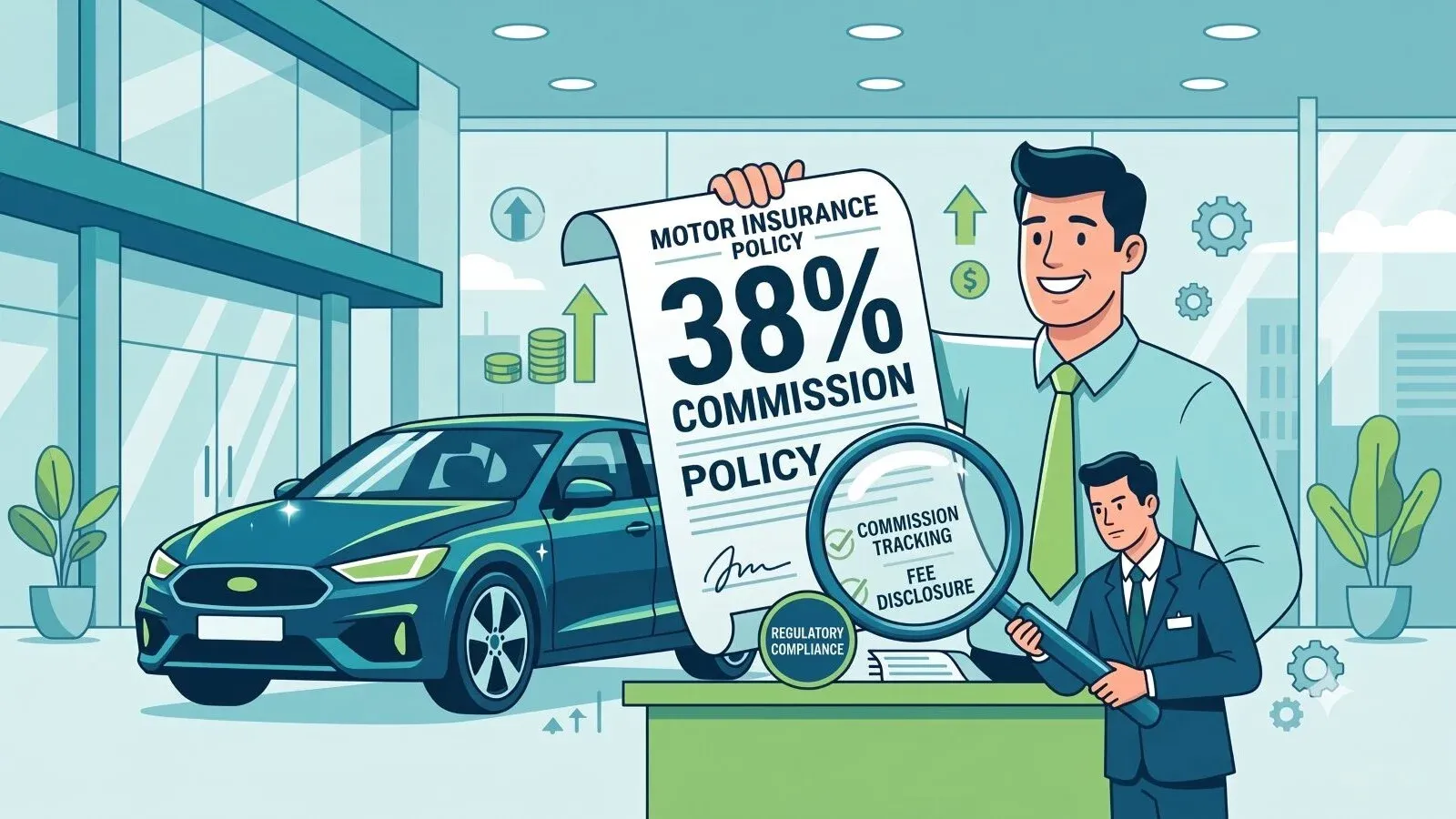
The IRDAI has proposed that commission on third-party insurance for new vehicles should be nil for distribution entities. | Representational image
Motor vehicle dealers and manufacturer-linked insurance brokers earned almost ₹7,050 crore as commission on ₹29,000 crore of premium in FY25, according to the Insurance Regulatory and Development Authority of India (IRDAI).
IRDAI's Consultation Paper on 'Recalibrating Economics of Insurance Distribution', Part 1, reveals motor insurance carries some of the highest commission pay-outs in the industry, with an average of 24%, ranging from 13% to 50%, despite a significant portion being mandatory third-party cover on regulated tariffs.
The cost of insurance for policyholders has escalated sharply in just two years. Between FY23 and FY25, motor premium grew by around 34% while motor commission grew by around 259%, with average commission rates on broker-placed motor business rising from about 9% to 25%, nearly tripling over two years for the same underlying product.
Even on regulated third-party cover, commissions rose from 4.3% to 22% of premium.
| Item | FY23 | FY25 |
|---|---|---|
| Average commission on broker-placed motor business | 9% | 25% |
| Commission on mandatory third-party cover (premium regulated) | 4.3% | 22% |
Who earns the most
The paper shows that the biggest commission earners sit at the point of sale.
Original Equipment Manufacturer (OEM) brokers and Motor Insurance Service Providers (MISPs), who are motor vehicle dealers, command a 30% share of motor insurance business across new and old vehicles. They get an average commission of 27% and 38% respectively on new vehicles. MISPs also average 12% on policies for old vehicles brought to their garages for servicing.
Across insurers, average commission in the new-vehicle category ranged from 17% to 40%, with the maximum commission for this category ranging from 24% to 75%.
| Who earns it | Average | Maximum |
|---|---|---|
| Motor insurance, all channels | 24% | 50% |
| OEM brokers, new vehicles | 27% | – |
| Motor dealers (MISPs), new vehicles | 38% | – |
| Motor dealers (MISPs), old vehicles | 12% | – |
| Banks and NBFCs bundling insurance with vehicle loans | 16% | – |
“A Motor dealer acting as a MISP has its primary business of selling motor vehicles. Providing insurance is only incidental,” the paper observed, noting that “mostly, the choice of motor insurance policy is guided by the motor vehicle dealer than by the choice of the customer”.
In both cases, it said, “the customers remain oblivious of the high commission rates”.
“As the point of sale in motor insurance is typically controlled by the dealer or OEM-linked broker at the moment of vehicle purchase, customers are generally not in a position to compare or negotiate, and the resulting pricing power appears to reflect control over distribution access rather than advisory effort or product competition,” the paper said.
The consultation paper has also flagged that “there are concerns that certain OEM-linked brokers sponsoring MISPs influence insurers not to offer lower pricing through other distribution channels. Such practices, where they occur, can restrict price competition across channels and result in higher premiums for policyholders, and are therefore contrary to policyholder interests”.
IRDAI's fix
The IRDAI's paper has proposed that commission on mandatory third-party insurance for new vehicles should be nil for distribution entities and 2.5% for agents, with own-damage and other covers capped at 5% to 15% depending on the channel and the age of the vehicle.
Dealers structured as companies, LLPs or registered partnerships will have to register as Insurance Distribution Entities (IDEs), while smaller ones will operate as associates of an insurer or point-of-sale persons of an IDE.
For the buyer at the showroom, the paper proposes certain obligations for dealers. They have to “prominently display the option of motor insurance purchase on the MII platform including the QR code to access the platform”. They are also required to make customers of new vehicles aware of the option, with the Public Insurance Registry verifying compliance through the vehicle registration system. These not-for-profit platforms, Bima Sugam being the first, expected to become operational in the next four to six months, cannot charge more than 5% of the premium as platform fee.
Among the market conduct norms proposed for dealers is an obligation “not to deny cashless repair service to a customer on the grounds that the insurance policy was not purchased from the dealer”, along with a bar on agreements that go against policyholder interests, including OEM incentive plans that reward dealers for insurance sales.
The overhaul proposed in the paper is part of a wider recalibration under which the expense limit for general insurers may fall from 30% of gross written premium to 20% of gross direct premium income over five years. This reduction IRDAI said “is intended to lower the overall cost of insurance, thereby expanding the risk pool available in general insurance and enhancing returns to policyholders in life savings products”.
The insurance regulator has invited public comments on the proposals until October 25, 2026.
Related News

About The Author
Next Story

