
Personal Finance News
How are gold jewellery making charges decided? How can customers reduce their burden?

4 min read | Updated on May 15, 2026, 16:12 IST


SUMMARY
Gold making charges, may range anywhere between 3-30%, and for a heavily worked set or jewellery piece, it can be still on the higher end.
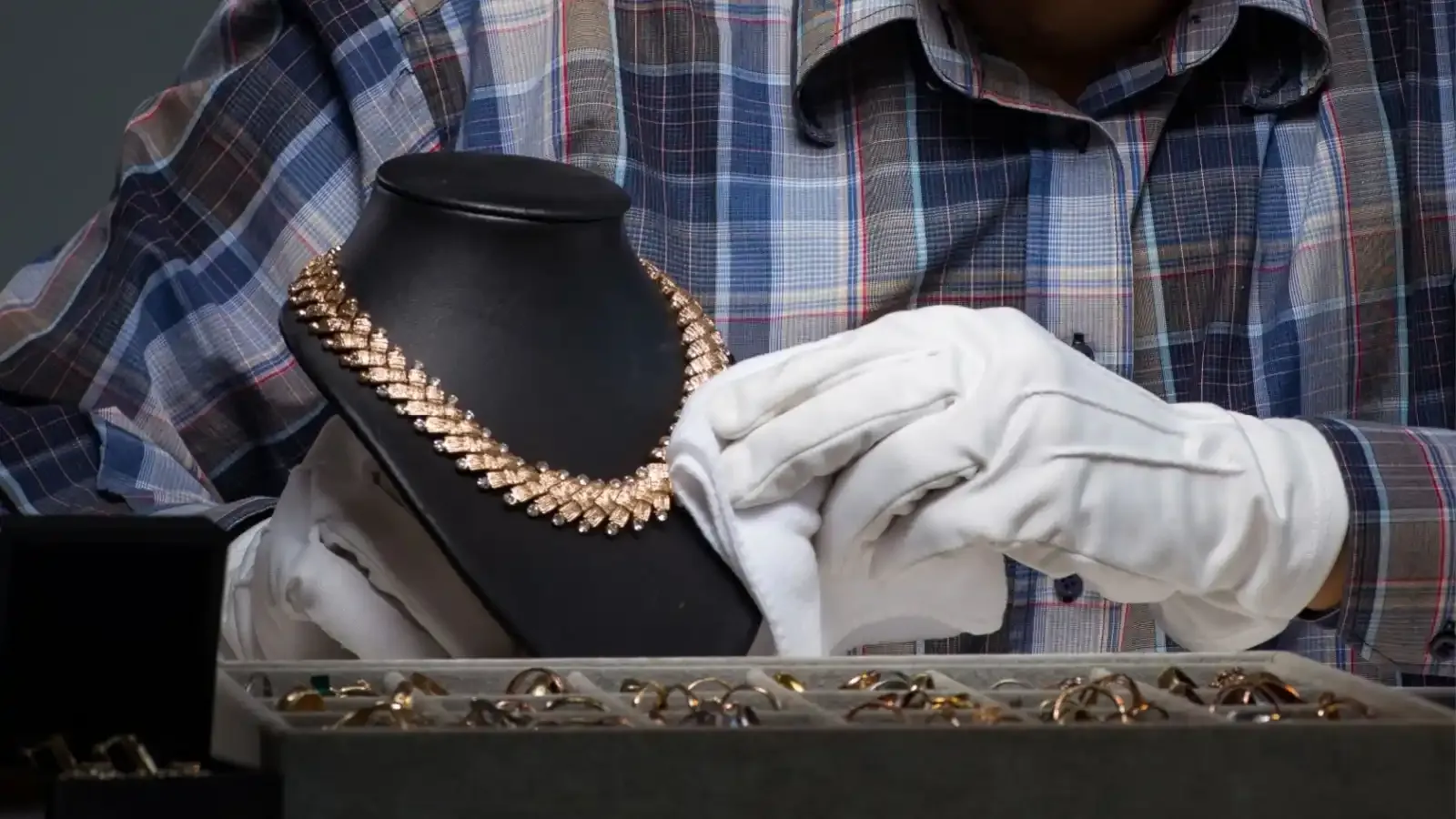
Kumar Binit, CEO, airpay money said, “Strain when buying gold jewellery is reflected upon or felt at resale.” | Image: Shutterstock
Gold jewellery has had long-standing appeal for Indian households. In fact, it has an emotional element attached to it. Nonetheless, as a conscious and financially aware gold buyer, have you really examined what all goes into deciding gold jewellery making charges in India. And do you by any chance get back what was put into designing that intricately designed jewellery you proudly own on resale? Here is a low down on what all constitutes gold jewellery making charges in India and what should a genuine gold buyer look for.
Typically making charges, may range anywhere between 3-30%, and for a heavily worked set or jewellery piece, it can be still on the higher end.
- Labour costs: The labour cost involved in converting raw gold into a finished jewellery piece. These charges depend on several factors such as the complexity of the design, intricacy of craftsmanship, handwork involved, stone setting, enamel work, finishing requirements, and the time taken to create the final piece.
- Design intricacy also contributes to the cost - 10-25% of gold cost.
- GST on making charges - a 5% GST is levied on the making charges. This is over and above the 3% GST charged on the total gold value purchase.
- Wastage i.e. in the range of 5-10%, further inflating the jewellery making charges for a buyer.
Suvankar Sen, MD and CEO, Senco Gold noted that in India, the jewellery industry typically calculates gold jewellery charges in two ways i.e. either as a fixed amount per gram or as a percentage of the gold value. And determination of gold jewellery making charges as a percentage of the gold value is more common when it comes to intricate jewellery.
This is why two similar-looking pieces may still have different pricing structures depending on craftsmanship and calculation method, he added.
Also acknowledging the intricate work involved, as well as rare availability of these handcrafted artisans, Sen pointed out that we need to value the effort put in making jewellery and preserving skill & art.
Making things more specific, Kumar Binit, CEO, airpay money said, “Strain when buying gold jewellery is reflected upon or felt at resale.”
He pointed out that jewellers buy back by weight at the gold rate. Hence, making charges once paid are simply not recovered, ever. So, a buyer who spends ₹20,000 in making charges on a ₹1 lakh purchase has effectively lost that amount the moment she/ he walks out.
The love for gold does not seem to diminish, even despite skyrocketing prices. This is evident from the World Gold Council report that showed Indians during the first quarter of the calendar year 2026 bought 62 tonnes of gold bars and coins. This was far more than the net demand for the ETF.
This may be for a simple reason that even though some jewellers may attach a premium to gold coins and bars, they do not entail such high jewellery making charges, and carry typically 3% GST on gold value, resulting in a cost-effective way of investment in gold.
How can customers mitigate rising gold jewellery making charges as gold prices rally?
Prithviraj Kothari, Managing Director at RiddiSiddhi Bullions Ltd and President of India Bullion and Jewellers Association Ltd noted that for mitigating rising gold jewellery making charges cost in the wake of rising gold prices, customers can choose machine-made pieces, and always request itemised invoices.
Sen, meanwhile, echoing a similar view said if customers want low making charges, they should look for basic designs, machine made items that are old styles or wait for gold prices to come down to fit it within the budget.
Adding further, he said it is also helpful to look out for festive offers, wedding promotions, exchange programs, and special making charge waivers that many jewellers introduce during key shopping periods. Customers upgrading old gold can also benefit from exchange schemes, which help optimise the final outflow.
Also looking at 9KT, 14KT, 18KT or light 22KT jewellery is a better choice to fit into the budget rather than looking for a low making charge.
Related News

About The Author
Next Story

