
Market News
Paytm now majority Indian-owned firm as DIIs raise stake to 50.3%; shares in spotlight

4 min read | Updated on April 15, 2026, 08:04 IST


SUMMARY
Paytm share price: Domestic institutional investors (DIIs) have raised their stake to a record 23.1% in the March quarter, up 2.8 percentage points sequentially and 9.1 percentage points from a year earlier, according to regulatory filings.
Stock list
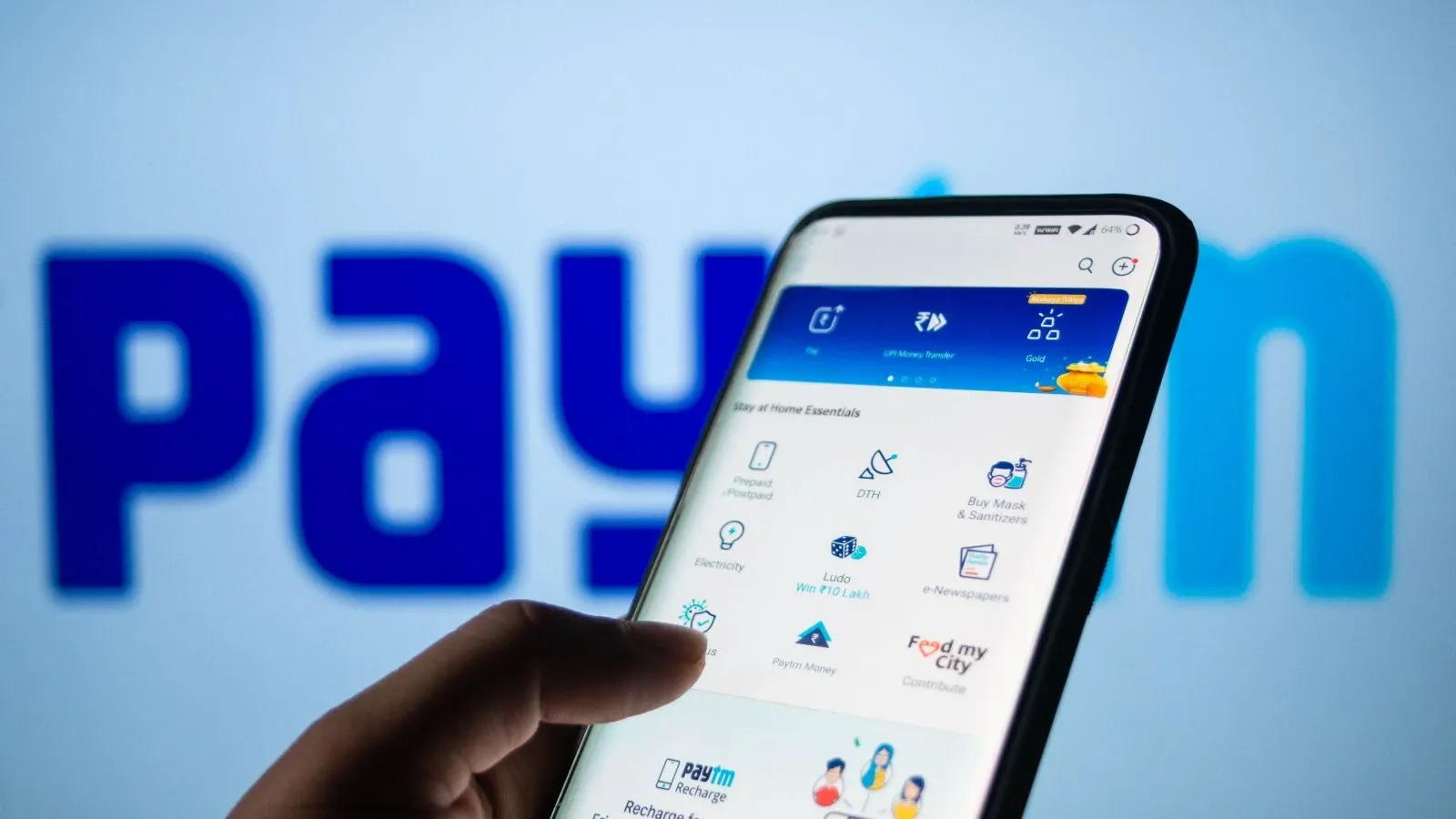
Paytm recorded a 20% year-on-year increase in operating revenue to ₹2,194 crore in Q3 FY26. | Image: Shutterstock
The shift, analysts note, signals a structural change in the fintech firm’s ownership, with domestic shareholding rising steadily in recent quarters, reflecting improving investor confidence.
Domestic institutional investors (DIIs) have raised their stake to a record 23.1% in the March quarter, up 2.8 percentage points sequentially and 9.1 percentage points from a year earlier, according to regulatory filings.
Mutual funds led the increase, with their holdings climbing to 16.6% from 14.3% in the previous quarter, while the number of funds investing in the company rose to 41 from 36, with entities such as Motilal Oswal Mutual Fund, Mirae Asset, and Bandhan Mutual Fund continuing to expand their shareholding.
Insurance companies also added to their positions, taking their combined stake to 5.1% from about 4.8% earlier, with players, such as Tata AIA Life Insurance and SBI Life Insurance, among those, increasing exposure.
How Paytm performed in Q3 FY26
One 97 Communications Ltd (Paytm) continued its profitability momentum in the December quarter (Q3 FY26), reporting a profit after tax (PAT) of ₹225 crore to mark its third consecutive profitable quarter.
The performance was backed by industry-leading customer monetisation and UPI transaction growth that outpaced industry averages.
The company recorded a 20% year-on-year increase in operating revenue to ₹2,194 crore, driven by higher payments GMV, growth in merchant subscriptions, and expansion in financial services distribution.
Paytm said its AI-first, product-led strategy has driven consistent gains in consumer UPI market share, with Paytm's UPI GMV growing 35% over the last nine months, significantly ahead of industry growth of 16%.
The results were supported by sustained growth across core payments and financial services businesses, improved operating leverage, and disciplined cost management.
EBITDA improved to ₹156 crore, translating into an EBITDA margin of 7%, an improvement of ₹379 crore year-on-year. Indirect costs declined 8% YoY at ₹1,092 crore, driven by lower employee costs and lower provision for doubtful debt (PDD).
A part of Paytm's payments revenue during the quarter included incentives under the RBI's Payments Infrastructure Development Fund (PIDF) scheme, which was applicable until December 2025.
The company earned a total of ₹216 crore in incentives for the nine months ended December 2025. In the absence of PIDF incentives going forward, Paytm said it expects its contribution margin to remain in the mid-50% range.
Leading analysts on Paytm
BofA, in its recent note, said that Paytm is "strong in B2B" and "is ahead in its monetisation journey with a more diversified business mix and better margins", driven by strength in merchant payments and lending.
Bernstein also highlighted Paytm’s monetisation edge, noting that its merchant revenues are nearly twice those of its closest competitor despite similar merchant payment volumes, and added that the company is further along the path to profitability.
About Paytm
Paytm is a financial services and digital payments platform in India. Its parent, One97 Communications Limited, was founded in 2010 by Vijay Shekhar Sharma. The Noida-headquartered company deals in digital payments, payment gateways for businesses, online loans, a stock trading platform, and the distribution of insurance.
It also provides services to merchants in accepting payments using QR codes. Paytm offers loans to small traders and businesses registered on its platform.
Paytm was listed on the stock exchanges in November 2021.
Sapphire Ventures (previously SAP Ventures) invested $10 million in One97 Communications Ltd in October 2011. Later, an Alibaba affiliate acquired a 40% stake in Paytm’s parent, One97 Communications Limited. Paytm secured funding from Mountain Capital in August 2016. This increased the company's valuation to over $5 billion.
Paytm witnessed its largest single investor when SoftBank invested in it in May 2017. This increased the company's valuation to around $10 billion. Berkshire Hathaway also invested $356 million in Paytm in August 2018. The company raised $1 billion in a funding round led by US asset manager T Rowe Price in November 2019.
Related News
About The Author
Next Story

