
Market News
Can IndiGo navigate its near-term cost headwinds? Experts weigh in

6 min read | Updated on June 09, 2026, 20:09 IST


SUMMARY
IndiGo is facing several cost pressures with the rising energy prices and expansion plans, as experts predict the cost pressures are likely to normalise as services return to normalcy.
Stock list
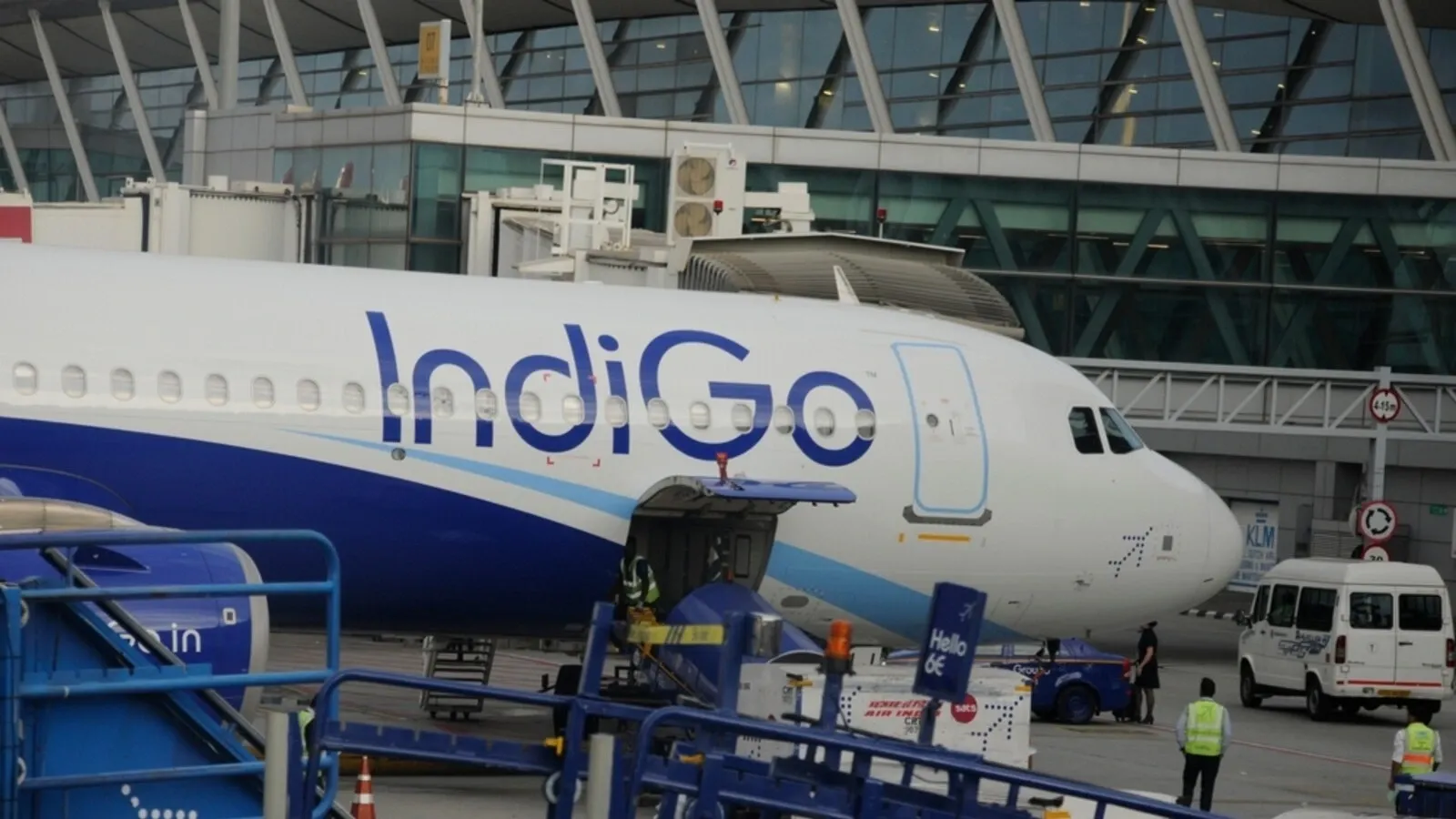
IndiGo shares have delivered more than 152% returns on their investment in the last five years. | Image: Shutterstock
InterGlobe Aviation, the parent company which owns and operates India’s largest airline, IndiGo, is expected to witness a year full of cost pressure with the rising energy prices and the company’s expansion plans.
However, market analysts predict that the costs are likely to normalise as the airline’s fleet returns to service after temporary disruptions.
For an airline, energy costs accumulate up to nearly 40% of the total operating cost in a particular period. With the rising cost of jet fuel or aviation turbine fuel (ATF) in the market, the margins of airline operators have come under pressure.
Since the beginning of the US-Iran conflict in West Asia, reports suggest that the average jet fuel prices have risen by 70% year-on-year (YoY) due to the supply chain crisis, in turn increasing the demand for the energy source.
What are IndiGo’s near-term challenges?
Market experts predict that the near-term challenges for IndiGo remain in how the company is going to manage its costs amid rising fuel prices and a volatile Indian rupee rate in the market.
With the heat from rising costs, the focus is also on the growth perspective as investors now look forward to the cost management measures without compromising on the services.
However, IndiGo is facing significant headwinds like the currency costs, the Pratt & Whitney engine aircrafts being grounded, and the overall uncertainty of demand in the market over the near term.
“Extreme challenges in near term. High fuel cost requires further increase in yield, which could be demand-destructive,” said HSBC analysts in a recent note.
Explaining the currency impact on costs, market experts said that the airline’s bottom-line revenues are facing the impact of the weaker Indian rupee in the market, as the expenses keep on increasing for the company.
“The problem is that a lot of IndiGo’s costs, like leases, maintenance, and fuel, are in dollars, but not as much of their revenue is. So, when the rupee weakens, it really hurts the bottom line,” said Sonam Srivastava, Founder and Fund Manager of Wright Research.
Can IndiGo navigate near-term cost headwinds?
With IndiGo’s focus on a disciplined premiumisation strategy, while bridging low-cost operations and full-service routes, the company’s revenues are expected to grow with the increase in airfares, according to Morgan Stanley analysts.
“FY27 revenue growth driven by fares; capacity growth expected in single digits,” they said.
The elevated cost of fuel in the market, and the overall volatility of energy prices, adding to the overall costs, the focus of the airline is now on cost management, which can potentially lead to the company saving on lease payments and fuel.
“The CFO mentioned they’re being cautious about adding new capacity, especially since fuel prices are still high. They’re planning to return some of the pricier leased planes and use fewer of the older, less fuel-efficient aircraft. This should help them save on both lease payments and fuel, which is a smart move in this environment,” said Sonam Srivastava.
However, as IndiGo plans to continue its expansion strategy, the cost setup is likely to improve as the P&W engine issues normalise and the airline recovers its existing capacity in the market.
“The setup looks constructive into the next two to three quarters as the engine issue normalises and capacity recovers. The cost line should compress through FY27, but the operating leverage on the recovery is what makes the structural story interesting,” said Harshal Dasani, the Business Head of INVasset PMS.
IndiGo’s pricing-over-capacity strategy?
US-based leading investment firm, Jefferies analysts, said that IndiGo has charted a growth and profitability approach where the near-term focus of the company remains on the pricing-over-capacity strategy as the firm faces cost pressures.
With a focus on the overall capacity expansion and growth, a good pricing strategy while maintaining its low-cost carrier business model is essential for IndiGo to expand the overall margins of the airline.
The analysts said that although the near-term forecast for the company remains volatile, the longer-term story for IndiGo remains one of market leadership backed by fundamentals and ambition.
“In a duopoly-like structure, the rational behaviour for the dominant carrier is to prioritise yields over chasing market share,” said Dasani. “If pricing power persists alongside the cost normalisation expected through the year, the margin expansion potential is meaningful,” he said.
IndiGo is making a clear choice to give its passengers better prices, and not just add more flights to its fleet. In contrast, recently the company announced that it is rolling back operations to six international destinations as part of its cost-cutting strategy.
“At the moment, IndiGo is making a clear choice: they’d rather get better prices than just add more flights,” said Sonam Srivastava, Founder and Fund Manager of Wright Research.
Passenger flights vs cargo operations
A bulk portion of the low-cost carrier operator, IndiGo’s revenues come from passenger airline operations, while the cargo and ancillary revenues remain materially smaller in size as of date.
“Within passenger, the domestic network remains the largest contributor, but international routes have been growing faster and now form a rising share of the mix,” said Harshal Dasani.
In line with Dasani’s prediction, Srivastava also said that “for IndiGo, passenger ticket sales are still the main money-maker, and that’s not going to change anytime soon.”
The experts also highlighted that over the next few years, IndiGo is expected to witness international flight operations capture a major share of the revenue mix for the airline as the company works towards increasing its capacity and international routes.
“The near-term revenue story is overwhelmingly a passenger story; the medium-term diversification into cargo and long-haul is what changes the longer-cycle margin profile,” said capital markets expert, Dasani.
In the year-end FY26 analyst meeting, the airline said that the company expects to reach a 40% international mix by the financial year ending 2030, from its level of 32% in the fiscal year ended 2026.
IndiGo also said that the new Airbus XLR aircraft and A350 aircraft fleet are expected to add 10-15% to the airline’s mid/long-haul international capacity by FY30.
How have IndiGo shares performed?
IndiGo’s parent company, InterGlobe Aviation, shares have delivered investors more than 152% returns on their investment in the last five years, and over 84% gains in the last three years, according to NSE data.
However, the company’s shares have lost 20% in the past one year, and were down 11% so far in 2026. In the last one month, IndiGo shares have risen 0.28%, and were trading 1.5% higher in the last five trading sessions.
Shares of IndiGo closed around 4% lower at ₹4,537.60 after Tuesday’s trading session, compared to ₹4,359.70 at the previous stock market close, according to the exchange data.
The company’s stock hit its 52-week high of ₹6,232.50 on August 18, 2025, while the 52-week low was at ₹3,895.20 at the previous market close. The airline’s market capitalisation (m-cap) was at over ₹1.75 lakh crore as of the stock market close on Tuesday, June 9, 2026.
Related News


About The Author
Next Story

