
Market News
Hyundai India versus Maruti: Here is how two auto giants performed in March quarter
.jpeg)
4 min read | Updated on May 11, 2026, 12:05 IST


SUMMARY
For financial year 2025-26, Maruti Suzuki sold a record 2,422,713 units, of which domestic sales were at 1,974,939 units and exports were 4,47,774 units.
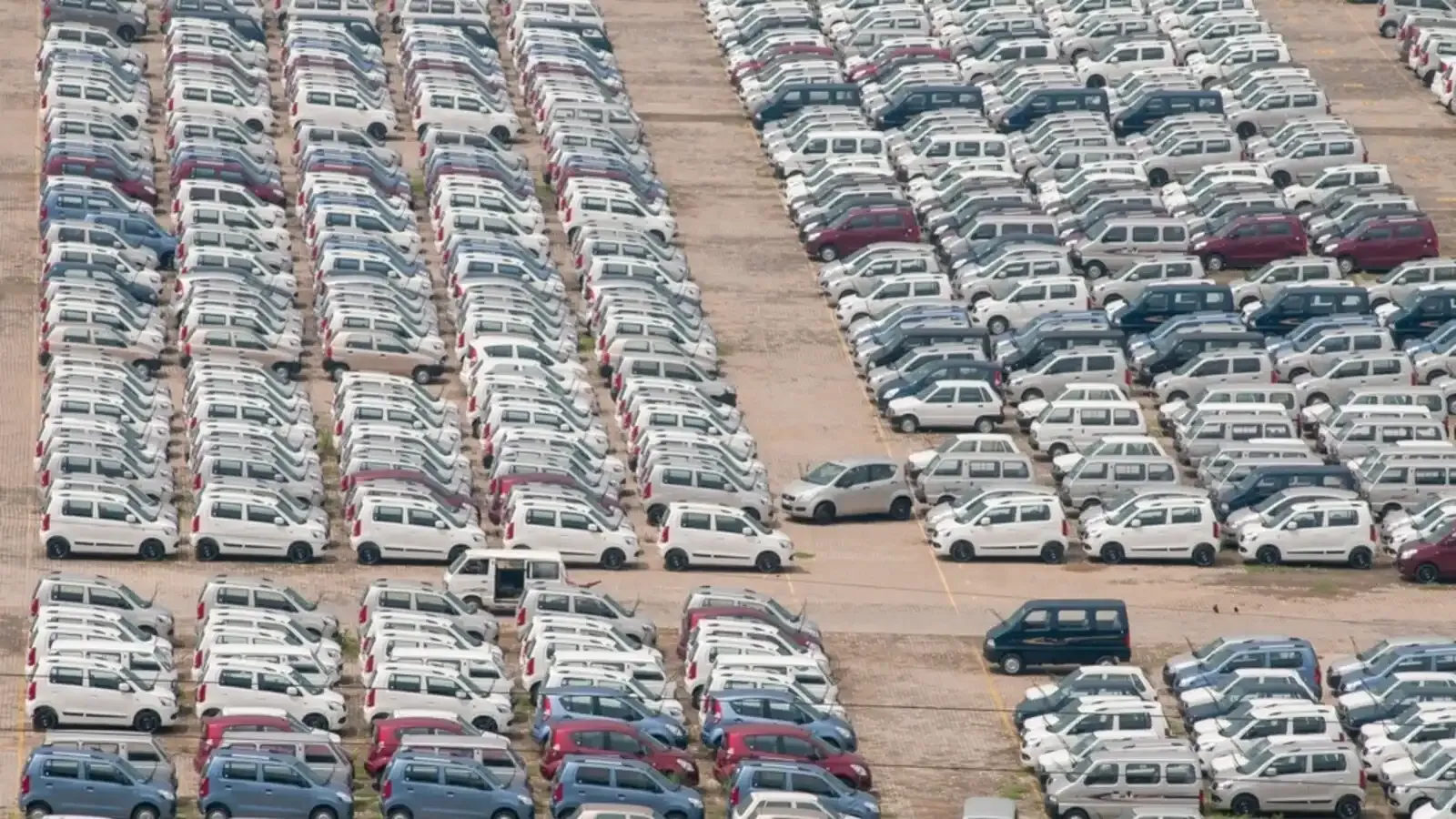
Hyundai Motor last week reported a 22% decline in its consolidated net profit at ₹1,256 crore in Q4. | Image: Shutterstock
The country's two major car makers Maruti Suzuki and Hyundai Motor India reported March quarter earnings over the last two weeks. Both the companies recorded their highest-ever domestic sales in financial year 2026 on the back of Goods and Services Tax (GST) rate cut undertaken by the government of India in September last year.
Sales performance
For financial year 2025-26, Maruti Suzuki sold a record 2,422,713 units, of which domestic sales were at 1,974,939 units and exports were 4,47,774 units while Hyundai Motor India sold 7,75,031 cars in FY26, registering an annual growth of 1.7%. Hyundai's domestic sales, however, declined 2.3% to 5,98,666 units but its exports jumped 16.4% year on year to 1,90,125 units.
Both Hyundai Motor and Maruti Suzuki said that the growth in sales of entry segment cars got a boost from GST cut. Sales of Maruti Suzuki's compact and mini segment cars like Alto, S-Presso, Baleno, Celerio, Dzire, Ignis, Swift and WagonR jumped 45.8% in Q4 to 2,47,160 units.
Hyundai Motor said that sales of its hatchback cars such as Santro, Grand i10 Nios (compact), the i20 (premium), and the i20 N Line (performance-oriented) advanced 18% to 28,062 units in Q4.
In the SUV segment, Hyundai Motor said that it sold 1,06,814 sports utility vehicle (SUVs) like Exter, Venue, Venue N Line, Creta, Creta N Line, Alcazar, Tucson, Kona Electric, and Ioniq 5 in Q4 while Maruti Suzuki's utility vehicle sales for cars like Brezza, Ertiga, eVitara, Fronx, Jimny, Victoris and XL6 rose 14.9% to 2,19,721 units.
Sales of sedan cars for Hyundai rose 15% annually to 24,290 cars.
Management commentary on Q4
Adverse commodity prices, new model expenses, higher manufacturing and administrative expenses and lower non-operating income were the key negative factors for Maruti Suzuki. On the other hand, lower employee cost, lower sales promotion expense, favourable fixed cost incidence due to inventory accretion and favourable foreign exchange movement were among the key positives in Q4.
Hyundai said that its top line growth was driven by better volumes and prudent pricing actions but cost headwinds and unfavourable mix weighed on margins.
Both the car makers, however, mentioned that they faced challenges due to higher commodity prices.
Maruti Suzuki and Hyundai Motor Q4 financial performance
Maruti Suzuki last month said that it earned a net profit of ₹3,591 crore in January-March quarter, marking a decline of 7% from ₹3,857 crore in the same period last financial year.
For financial year 2025-26, Maruti Suzuki said that its net profit rose 1% to ₹14,454 crore.
The Delhi-based company's revenue from operations, however, rose 28% to ₹52,449 crore in the fourth quarter of financial year 2025-26 compared with ₹40,910 crore in the year-ago period.
Maruti Suzuki's operational performance remained stable in Q4 as its operating profit also known as Earnings Before Interest, Taxes, Depreciation, and Amortization (EBITDA) advanced 27% to ₹6,157 crore but its EBITDA margin contracted by 10 basis points to 11.74%.
Hyundai Motor last week reported a 22% decline in its consolidated net profit at ₹1,256 crore for the quarter ended March 31, 2026, as compared to ₹1,614 crore in the same quarter of the previous fiscal year.
Its revenue from operations stood at ₹18,916 crore for the quarter under review as against ₹17,940 crore seen in the corresponding quarter last year, marking a growth of 5.4% year-on-year (YoY).
Hyundai’s operating profit, also known as earnings before interest, taxes, depreciation, and amortisation (EBITDA) for Q4 FY26, slipped 22% to ₹1,966 crore in contrast to ₹2,532 crore seen in the corresponding quarter the previous year.
Its margin contracted to 10.4% in the reporting quarter as compared to 14.1% YoY.
Both the companies announced dividend to shareholders. Hyundai Motor announced a dividend of ₹21 per equity share while Maruti Suzuki recommended a final dividend of ₹140 per share.
Related News


About The Author
Next Story

