Market News
DMart Q1FY27 results: Revenue and net profit could see double-digit growth; check key details
.png)
3 min read | Updated on July 10, 2026, 10:58 IST


SUMMARY
Avenue Supermarts, which operates the DMart retail chain, will announce its Q1FY27 results on Saturday, July 11. Investors will closely track management commentary on consumer demand, same-store sales growth, store productivity and business momentum amid increasing competition from quick-commerce platforms.
Stock list
Options data for DMart’s 28 July expiry saw significant call and put open interest (OI) at the 4,000 strike.
Avenue Supermarts, a supermarket retail chain operating under the DMart brand, will announce its Q1 results on Saturday, July 11. As the results are being announced on market closing day, the company’s stock will react to earnings on Monday, July 13.
Last week, the company released its first-quarter business updates. Its standalone revenue from operations for the June quarter stood at ₹18,343 crore, up 15.1% YoY. DMart reported revenue of ₹15,932 crore in the same quarter of last year, while it stood at ₹17,204 crore in the previous quarter.
As per experts, DMart's net profit is expected between ₹930 and ₹965 crore, up 12% to 16% YoY. The company reported standalone net profit of ₹725 crore in the previous quarter and ₹830 crore in Q1FY26. Avenue Supermarts' EBITDA is expected to increase by 13% to 15% YoY to ₹1,490 to ₹1,530 crore. Meanwhile, the total number of DMart stores stands at 503 as of June 30, 2026.
DMart investors will closely watch management commentary on demand outlook and overall business performance. Any commentary on business momentum amid rising quick-commerce competition will also be watched. Key metrics like same-store sales and store productivity will also be tracked closely.
Ahead of the Q1 result announcement, DMart shares are trading 0.3% lower at ₹4,066. So far this year, DMart shares have delivered over 7.8% return to investors.
Technical view
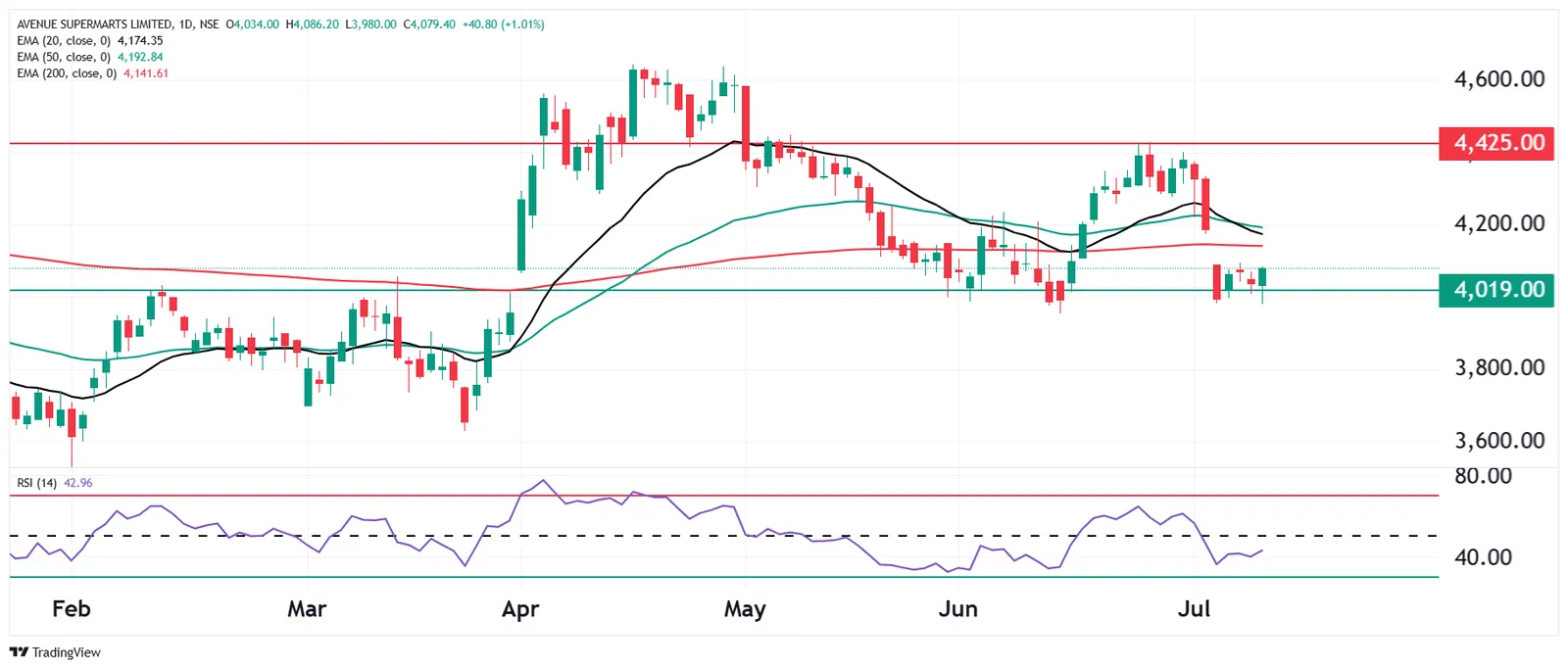
DMart is trading near ₹4,079, attempting a mild recovery from the immediate support zone of ₹4,019–₹4,000. However, the stock remains below all its key moving averages. A move above the ₹4,140–₹4,200 zone will be important for the stock to regain strength.
On the downside, ₹4,019 remains the key support to watch. A sustained close below this level may trigger further weakness towards ₹3,900–₹3,850. The RSI near 43 suggests weak momentum, so the stock remains rangebound with a slightly negative bias unless it closes above ₹4,200.
Options outlook
Options data for DMart’s 28 July expiry saw significant call and put open interest (OI) at the 4,000 strike, suggesting rangebound movement around this zone.
The ATM strike for DMart on July 9 is 4,050, with both the call and put options priced at ₹242. This suggests an implied price movement of approximately ±6% ahead of its expiry.
Options strategy for DMart
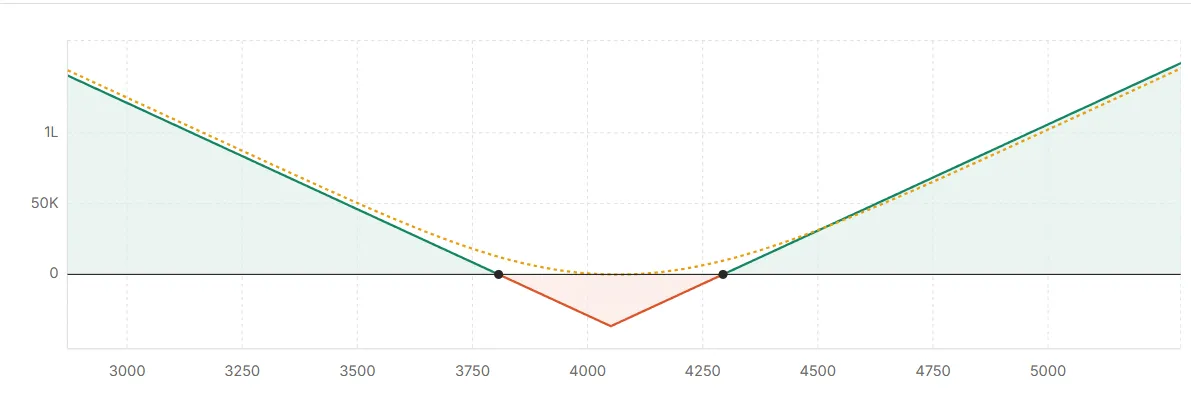
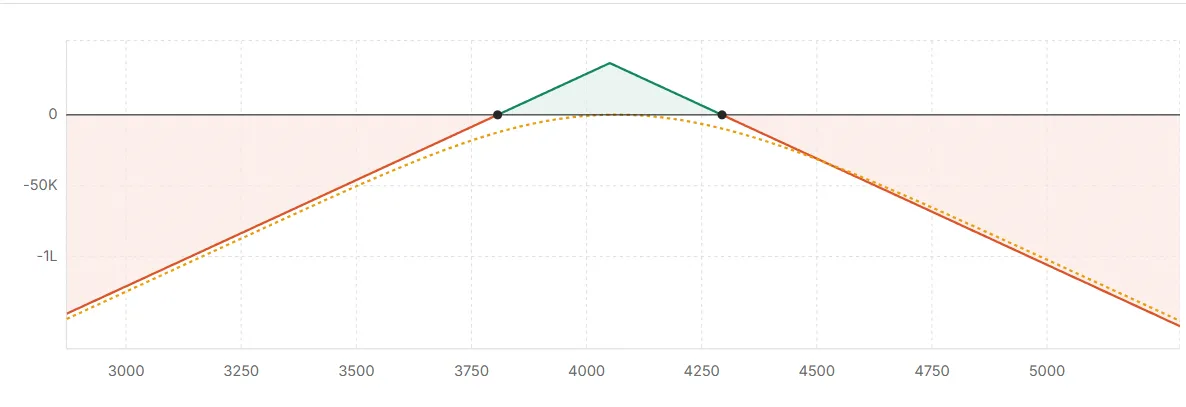
With the options market pricing in a ±6% move ahead of the July 28 expiry, traders might consider long or short straddle strategies to capitalise on potential volatility.
A long straddle means buying both an at-the-money (ATM) call and put option on DMart with the same strike and expiry. This sets up profits if the stock moves more than ±6% in either direction.
A short straddle involves selling the same pair of ATM options. It pays off if the stock stays relatively flat and moves less than ±6% by expiry.
Disclaimer:
Derivatives trading must be done only by traders who fully understand the risks associated with them and strictly apply risk mechanisms like stop-losses. We do not recommend any particular stock, securities, or trading strategies. The securities quoted are exemplary and not recommendatory. The stock names mentioned in this article are purely to show how to do an analysis.
About The Author
Next Story