
Business News
What's delaying the India-UK FTA rollout? Two British trade measures in focus

4 min read | Updated on June 03, 2026, 14:03 IST


SUMMARY
Commerce Secretary Rajesh Agrawal on Tuesday said he held extensive discussions with UK Permanent Secretary Amanda Brooks on the implementation of the agreement.
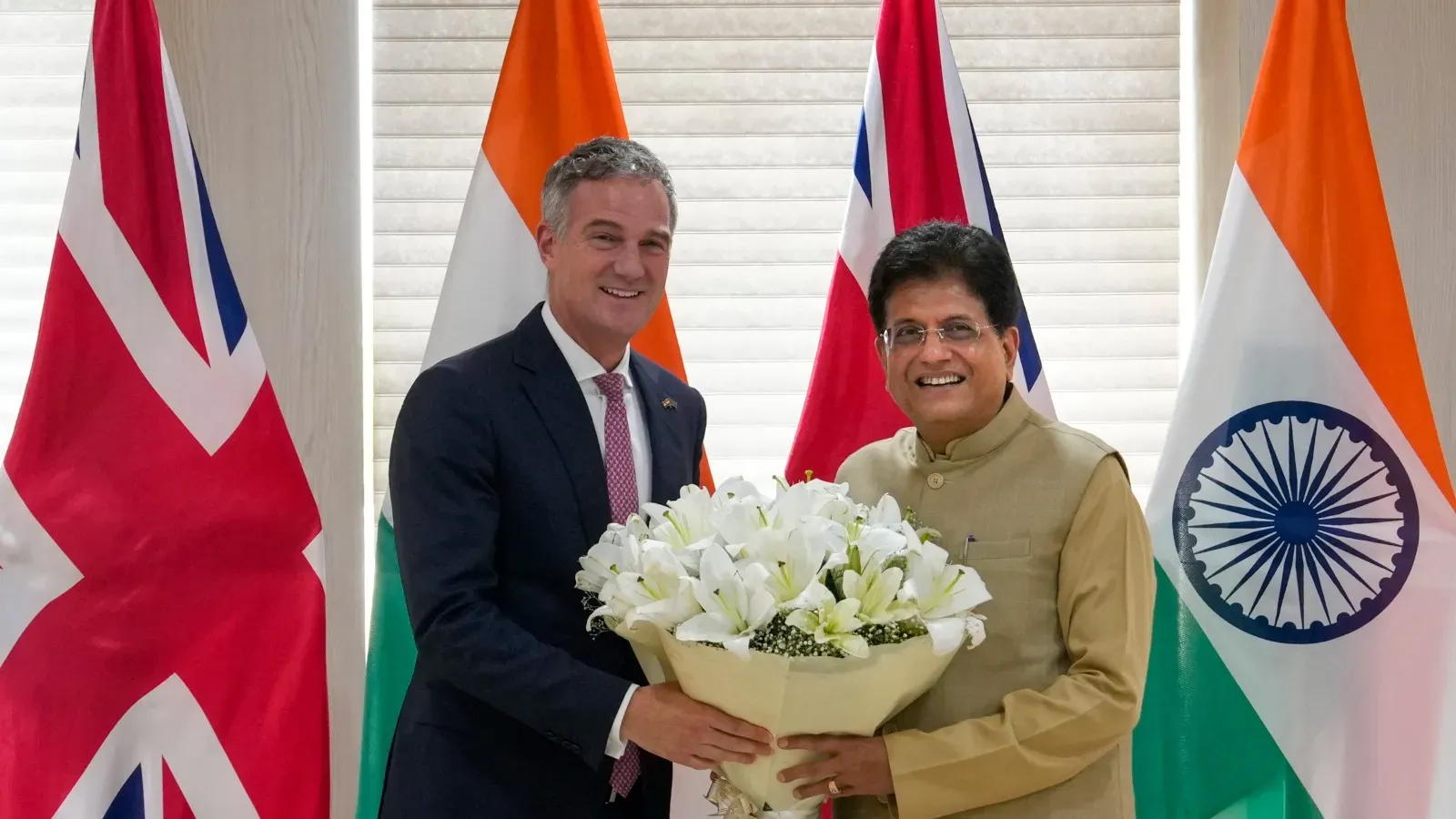
Union Minister of Commerce and Industry Piyush Goyal welcomes United Kingdom's Secretary of State for Business and Trade Peter Kyle before a meeting, in New Delhi, Tuesday, June 2, 2026. (PTI Photo)
The implementation of the India-UK free trade agreement (FTA), formally called the Comprehensive Economic and Trade Agreement (CETA), is facing delays as both sides seek to resolve differences over Britain's new steel safeguard measures and its planned Carbon Border Adjustment Mechanism (CBAM).
The issues reportedly figured in discussions between senior officials of the two countries as they reviewed the progress of the trade pact and explored ways to address the remaining concerns.
Commerce Secretary Rajesh Agrawal on Tuesday said he held extensive discussions with UK Permanent Secretary Amanda Brooks on the implementation of the agreement.
"Engaged in extensive discussions with UK Permanent Secretary Ms. Amanda Brooks on #IndiaUKCETA implementation. Took stock of progress and worked though the sticking points, while exploring new pathways under #IndiaUKCETA #GlobalTrade #EconomicPartnership aligned with #ViksitBharat," Agrawal said in a post on X.
Steel, carbon tax concerns emerge
The FTA is billed as the UK's most economically significant bilateral trade deal since leaving the European Union.
Under the agreement, India will cut average tariffs on British goods to 3% from 15% earlier.
The UK will eliminate tariffs on all Indian goods except a few agricultural items like rice.
From July 1, 2026, the UK will limit tariff-free steel imports, reducing overall quota volumes by 60% compared to the existing safeguard mechanism.
Any imports above these levels will then face a 50% tariff.
The measure would apply to steel products that can also be manufactured within the UK.
India is also concerned about the UK's CBAM, which is aimed at ensuring imported carbon-intensive products face a carbon cost comparable to that borne by British manufacturers under the country's Emission Trading System (ETS).
The mechanism will apply across the UK from January 1, 2027, and cover imports in sectors such as aluminium, cement, fertiliser, hydrogen, iron and steel.
According to estimates, the levy could range between 14% and 24% of the import value once free emission allowances under the ETS are fully phased out.
New Delhi may consider rebalancing some of the tariff concessions offered to British products under the agreement, including on Scotch whisky, if its concerns over steel safeguards and CBAM are not adequately addressed, reported PTI, citing government sources.
As part of the trade pact, India has agreed to reduce customs duties on UK whisky and gin from 150% to 75% immediately, with the tariff declining further to 40% by the tenth year of implementation.
Scotch whisky brands such as Johnnie Walker, Chivas Regal and The Glenlivet are among the leading premium spirits sold in the Indian market.
India's exports of iron and steel and related products to the UK stood at USD 893.4 million in 2025-26, accounting for a sizeable share of the country's total merchandise exports of USD 13.4 billion to Britain during the year.
The trade agreement was concluded last year after prolonged negotiations and is expected to significantly boost bilateral trade and investment flows.
Meanwhile, Commerce and Industry Minister Piyush Goyal on Tuesday held talks with UK Secretary of State for Business and Trade Peter Kyle on advancing economic cooperation between the two countries.
"Had great conversations on charting the next phase of India-UK economic engagement, advancing shared business priorities, and further strengthening our robust and forward-looking partnership," Goyal said in a social media post.
Related News
About The Author
Next Story

