
Business News
US proposes scrapping 60-day grace period for H-1B: What Indian workers need to know

5 min read | Updated on September 11, 2026, 09:08 IST


SUMMARY
If finalised, affected workers could be required to leave the US immediately after employment ends unless they have another lawful basis to stay.
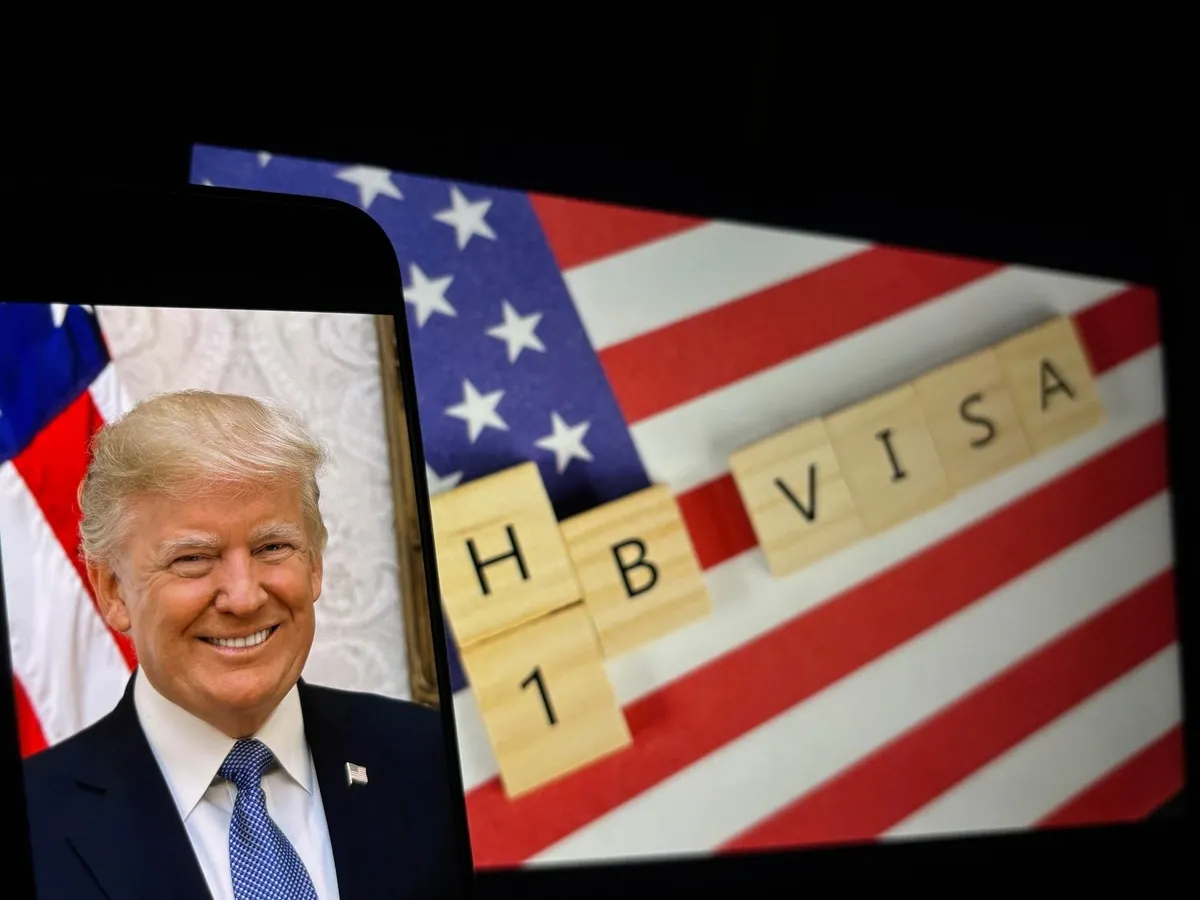
The 60-day grace period was introduced under Obama-era regulations to give high-skilled foreign workers time to find new employment and enable employers to facilitate job changes.
The US Department of Homeland Security has proposed eliminating the discretionary 60-day grace period that allows certain foreign workers, including H-1B visa holders, to find a new job after losing employment.
The move will significantly impact Indian technology workers hired by tech companies and others on H-1B visas.
The H-1B visa is a non-immigrant visa that allows US companies to employ foreign workers in speciality occupations that require theoretical or technical expertise. Technology companies depend on it to hire tens of thousands of employees each year from countries like India and China.
The proposed rule is scheduled to be published in the Federal Register on Friday.
The Department of Homeland Security (DHS) has invited comments from the public within the next 60 days.
H-1B workers could face immediate departure
If finalised, workers in the E-1, E-2, E-3, H-1B, H-1B1, L-1, O-1 and TN nonimmigrant categories would generally be required to leave the US immediately after their qualifying employment or activity ends, unless they are otherwise authorised to remain legally in the country.
“This proposal restores a direct relationship between an alien’s nonimmigrant status and the specific employment or activity that formed the basis of his or her admission or grant of status in the United States and reduces administrative burden,” the DHS said.
The 60-day grace period was introduced under Obama-era regulations to give high-skilled foreign workers time to find new employment and enable employers to facilitate job changes.
During the grace period, workers are not considered to have violated their status solely because they are no longer engaged in the employment on which their status was based.
Under the proposed change, a worker whose employment ends would generally be considered to have failed to maintain status from the following day and could become subject to removal proceedings if they remain in the US without another lawful basis.
DHS said the existing grace period creates a disconnect between a foreign worker's lawful status and the employment or activity that formed the basis of admission.
It also said administering the discretionary grace period adds complexity to USCIS adjudications.
"Removal of the up to 60-day discretionary grace period" would better align the regulations with the statutory basis of the employment-based classifications and reduce administrative burden, DHS said.
The department acknowledged that the proposal represents a change from its earlier position.
It said its experience administering the provision over nearly a decade and a reassessment of its impact had led it to conclude that removing the grace period was a better approach.
Indian H-1B tech workers among those most affected
The proposal could particularly affect H-1B workers who lose their jobs and need additional time to secure another employer willing to file a petition on their behalf.
DHS estimates that an average of 3,795 workers annually had a new Form I-129 petition filed by a new employer during the 60-day grace period over the 2021-25 period.
Of these, about 3,765, or 99.2%, were H-1B workers.
DHS said the median annual wage for H-1B workers in this group was $131,000 in fiscal 2025.
The department cautioned that not all of these workers would necessarily be forced to leave the US if the proposal becomes final.
Some could have sufficient notice to find another job or file a change-of-status application, while others could have pending immigration benefit requests allowing them to remain lawfully in the country.
H-4 spouses, dependants could also lose status
The proposed change would also affect certain dependants whose status is tied to the principal worker. DHS said authorised-to-work spouses in E-1, E-2, E-3, H-4 and L-2 categories could face immediate departure and lost compensation if the principal worker's employment ends.
US employers could face worker shortages
DHS estimates that the rule could affect employers as well. In fiscal 2025, about 2,886 unique entities submitted Form I-129 change-of-employer petitions for approximately 5,178 workers whose previous petitions had been revoked after employment ended.
Of those entities, 1,852 were classified as small businesses.
The department said employers could respond by hiring qualified US workers, filing a new I-129 petition to bring a foreign worker back after approval, or reallocating work among existing employees.
It acknowledged that some businesses could face temporary productivity losses because of labour turnover.
DHS also expects a marginal increase in Notices to Appear and immigration proceedings.
H-1B workers can still seek US readmission
The proposal does not itself change the existing process under which a new employer can file a petition for a foreign worker who has departed the US.
If the petition is approved and the worker is otherwise admissible, the worker can seek readmission.
The proposed rule would also make a technical change to remove a cross-reference to the 60-day grace-period provision from the regulations governing employment-based immigrant petitions.
The US law allows for 65,000 H-1B visas annually, with another 20,000 reserved for people who hold advanced degrees from American higher education institutions.
It is the latest step by US President Donald Trump to limit legal migration since returning to office in January 2025.
About The Author
Next Story

